

An oval diamond has an elongated shape that gives an engagement ring a distinctive look. The setting influences how the stone appears, how much of its outline remains visible, and how well it stays in place during everyday wear.
When shopping for an oval diamond engagement ring, you’ll often come across two popular designs: four-prong and six-prong settings. Four prongs create a more open appearance, while six add more metal around the centre stone and provide extra contact points.
Your choice depends on your preferred style, the diamond’s proportions, the quality of the mounting and how you plan to wear your ring. Understanding the differences can help you find a design that suits your needs.
Four-Prong and Six-Prong Settings
Prongs are small metal claws that hold a diamond in place by gripping its edge. They form part of the ring’s setting and leave much of the stone visible.
A four-prong setting uses four metal claws around the centre diamond. The smaller amount of visible metal creates an open, understated look that keeps attention on the oval shape.
A six-prong setting uses six metal claws to hold the diamond. The additional contact points create a more detailed frame and may help retain the stone if one prong becomes damaged.
Oval diamonds have two narrower ends and curved sides, so the position of the prongs deserves careful attention. The mounting should fit the diamond’s proportions, hold it securely and complement its elongated shape.
Understanding how each design looks and functions will help you compare the options before choosing your engagement ring.
Key Differences
| COMPARISON | Four-Prong Setting | Six-Prong Setting |
|---|---|---|
| Appearance | Open and minimal | More detailed and defined |
| Visible metal | Less metal around the diamond | More metal around the diamond |
| Contact Points | Four | Six |
| Diamond Outline | More of the outline remains visible | Additional metal frames the outline |
| Support | Fewer remaining contact points | More remaining contact points |
| Style | Understated and modern | Classic and structured |
| Maintenance | Regular inspections required | Regular inspections required |
The prong count is only one factor to consider. The mounting’s construction, the placement of the claws and the fit of the diamond all influence how securely the ring holds the stone.
Four-Prong Oval Diamond Setting

A four-prong setting holds an oval diamond with four metal claws. Its open design suits shoppers who prefer a clean engagement ring with minimal detail around the centre stone.
Benefits of a Four-Prong Setting
- Minimalist Appearance: Four prongs create a clean, understated look that works well with modern and classic engagement ring designs.
- More Visible Diamond Outline: Less metal surrounds the stone, allowing more of the oval shape to remain visible.
- Versatile Design Options: Four-prong settings pair well with solitaire bands, pavé bands and different precious metal colors.
- Delicate Visual Effect: A four-prong mounting can complement a slim band without adding too much detail around the centre diamond.
- Easy Styling: The simple design pairs well with a range of wedding bands and other jewellery styles.
What to Consider Before Choosing Four Prongs
Four prongs provide fewer contact points than six. If a prong becomes loose or breaks, the diamond may be at greater risk of moving or falling out.
Prong placement is particularly important for an oval diamond. Ask your jeweller how the mounting supports the stone around its curved sides and narrower ends.
The claws should fit the diamond securely without placing unnecessary pressure on its edges. A well-made four-prong ring can suit everyday wear when its construction and maintenance meet your needs.


Six-Prong Oval Diamond Setting

A six-prong setting holds an oval diamond with six metal claws. The extra claws provide more contact points and create a more defined frame around the stone.
This design can appeal to shoppers who prefer a classic solitaire or want more visible metal around their centre diamond.
Benefits of a Six-Prong Setting
- Additional Contact Points: Six prongs provide two more points of contact than four. If one prong becomes damaged, the remaining claws may help retain the diamond while the ring is inspected.
- Defined Diamond Outline: The extra metal creates a more detailed frame around the oval, giving the ring a structured appearance.
- Classic Engagement Ring Style: Six-prong settings complement traditional solitaire designs and suit shoppers who prefer a more traditional look.
- Flexible Design Choices: Different claw shapes, metal colors and band styles allow the setting to suit a range of engagement ring designs.
- Extra Support Points: The additional prongs can provide useful support when the mounting is designed and fitted correctly for the diamond.
What to Consider Before Choosing Six Prongs
The extra metal may draw attention away from the diamond if the claws are too large for the stone. On a smaller oval, a bulky six-prong Setting can look crowded.
More prongs also mean more points to inspect during routine maintenance. The ring still needs sound construction, a secure fit and regular professional checks.
Before making your decision, examine the ring from above and from the side. The claws should complement the oval’s shape rather than overwhelm it.


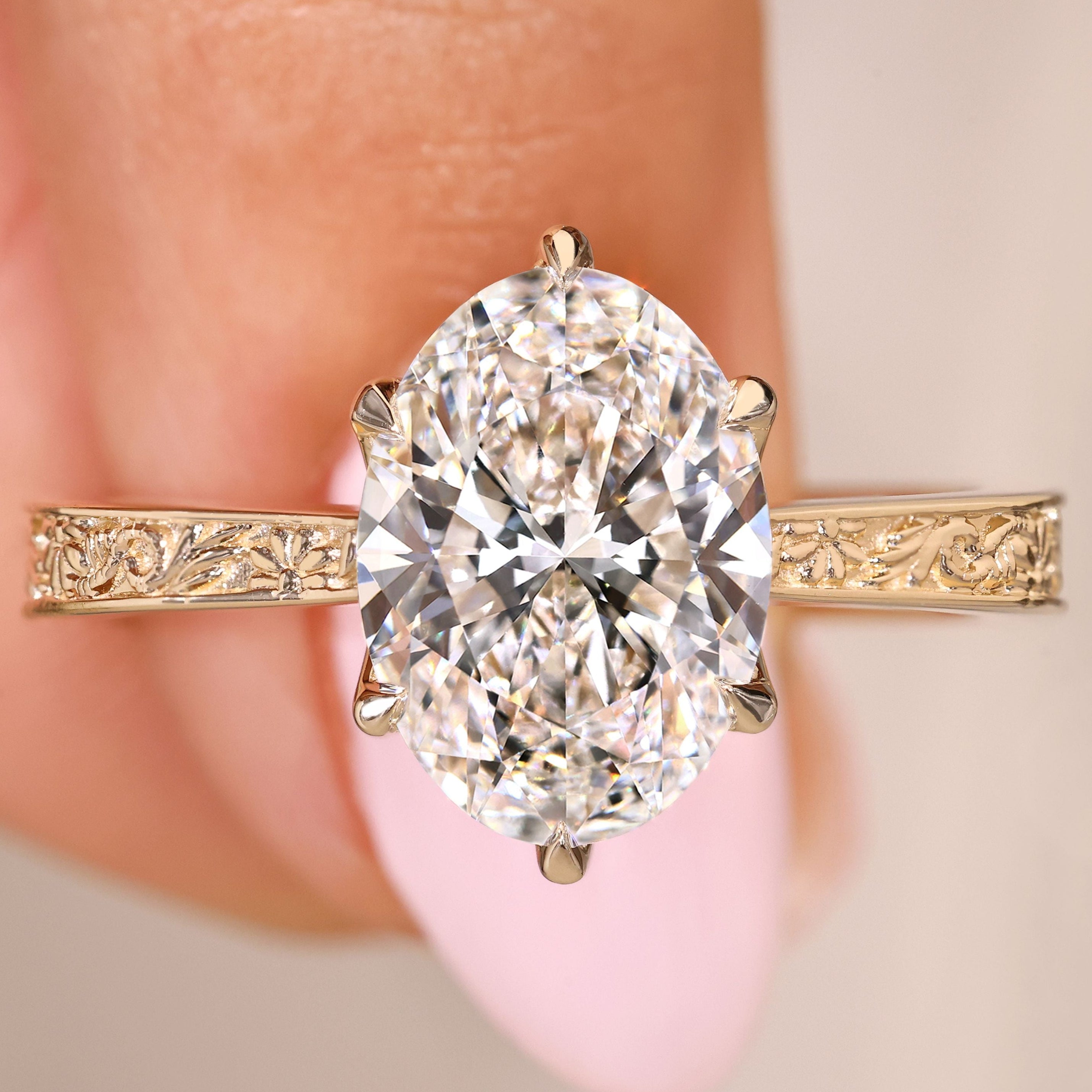
Why Prong Placement Matters for Oval Diamonds
Prong count is only part of the decision. The position of the claws influences how the diamond is framed and how well the mounting holds it.
An oval diamond has a long axis, curved sides and two narrower ends. The jeweler must account for these features when creating the setting.
Pay Attention to the Narrower Ends
The ends of an oval diamond need careful attention during setting design. An exposed edge can be vulnerable to impact, and areas with a thin girdle may need extra care.
Ask your jeweler how the mounting supports these areas. Four-prong and six-prong designs can use different layouts, so the number of claws alone does not determine how well the diamond is protected.
Check How the Claws Sit on the Stone
Prongs should grip the diamond securely without covering more of its outline than necessary. Their thickness and shape should suit the stone’s dimensions.
A setting that looks attractive in a top-down photograph may look different from the side. Ask to see both views before approving a custom ring design.
Match the Setting to the Diamond
The diamond’s length, width, girdle condition and carat weight can influence the mounting design. A jeweler should assess the actual stone before recommending a prong arrangement.
Choose a layout that fits the diamond and meets your preferences for appearance, support and daily wear.
Which Setting Offers Better Protection?
Six prongs provide more contact points than four, which can offer a useful backup if one claw becomes damaged. The Gemological Institute of America discusses this benefit in its guide to four-prong and six-prong engagement ring settings.
Prong count alone does not determine how secure a ring will be. The mounting’s construction, the diamond’s fit, and the condition of the claws all matter.
Consider these factors before choosing your setting:
- Diamond Size: The stone’s dimensions help determine the mounting it needs.
- Girdle Condition: A thin or damaged area may need extra care during setting design.
- Prong Placement: The claws should grip the diamond in suitable positions.
- Ring Height: A high-set diamond may be more exposed to knocks or snags.
- Daily Activities: If you work with your hands, a lower setting may be more practical.
- Maintenance: Both designs need professional checks to identify loose, worn or damaged claws.
If extra contact points are important to you, a six-prong setting is worth considering. If you prefer an open design with less visible metal, a four-prong setting may suit your taste. Ask a qualified jeweler to assess the mounting before purchase.
Four or Six Prongs Affect Diamond Sparkle?
Some shoppers assume that four prongs allow more light into the diamond, while six reduce its brilliance. Prong count alone is not a reliable way to judge sparkle.
A diamond’s cut quality has a greater influence on its light performance than the number of prongs holding it. The claws can cover small areas along the diamond’s edge, but their visual effect depends on their size and placement.
When comparing rings, consider:
- The diamond’s cut quality and light performance.
- How much metal covers the stone’s edge.
- Whether the claws suit the diamond’s proportions.
- How the diamond looks in different lighting conditions.
If sparkle is your main priority, compare the diamonds themselves as well as their settings. A well-cut stone can look beautiful in either design.
Suitable Ring Style and Setting for an Engagement
Your preferred ring design can help narrow your choice. Four and six prongs work with several engagement ring styles, but each creates a different look.
For a Minimalist Solitaire
A four-prong setting is worth considering if you want a clean ring with little visual detail around the center diamond. It pairs well with a plain, slim band and keeps the oval outline on display.
For a Classic Solitaire
A six-prong setting can suit a traditional design with more visible metal around the center stone. It may appeal to someone who likes a defined frame and extra contact points.
For a Pave Band
Both designs can pair with a pave band set with small diamonds. Four prongs can keep the ring looking open, while six may add more detail around the center stone.
Consider the band width, the size of the oval diamond and the metal color when comparing these designs.
For a Custom Engagement Ring
A custom ring gives you more control over the details. You can discuss prong count, claw shape, band width, setting height and how the diamond will be held.
This approach can be useful if you have a particular oval diamond in mind or want a ring that reflects your personal style. A jeweler can recommend a design that suits the stone and your daily needs.
A suitable setting for daily life
Before deciding between four and six prongs, think about how you want your ring to look and how you will wear it.
Do you prefer an open or framed appearance?
Four prongs leave more of the oval outline visible. Six create a more detailed frame around the center stone.
Do you want extra contact points?
Six prongs provide two more points of contact. This can offer an advantage if one claw becomes damaged, though the mounting still needs regular care.
Will you wear the ring every day?
Think about your work, hobbies and daily activities. A lower-profile setting may be less exposed to knocks and snags, while a raised setting may suit someone who prefers the diamond to sit higher above the band.
What are the diamond’s dimensions?
A jeweler can assess the stone’s length, width, girdle, and carat weight before recommending a mounting. Choose a setting based on the actual diamond rather than prong count alone.
Would you like a personalized design?
If a standard four-prong or six-prong setting does not match your vision, ask about different claw shapes, metal colors or other setting styles. Comparing these details can help you settle on a design that suits your preferences.
SELECTING YOUR OVAL SETTING
Under 1.50 Carats
A four-prong design can keep the oval outline open and the centre stone prominent.
4 PRONGS RECOMMENDED1.50 Carats or Larger
Six prongs offer more points of contact around a larger centre stone.
6 PRONGS RECOMMENDEDExplore the Finishing Details
Design tip: The ideal prong count depends on the diamond's dimensions, setting design and jeweller's advice.
Final Thoughts
Choosing four or six prongs for an oval diamond comes down to the look you prefer, the support your stone needs, and the quality of the mounting. Four prongs create a more open appearance, while six provide extra contact points and a more defined frame.
Focus on the diamond’s dimensions, the placement of the claws and the way the ring will fit into your daily life. A well-made setting should complement the oval shape and hold the stone securely.
At Avideri, you can explore engagement ring designs featuring lab-grown diamonds and moissanite or discuss a ring made around your preferences. Browse the Avideri engagement ring collection or explore custom ring design to find a style that feels right for you.


