


A marquise cut diamond runs long and narrow, tapering to a sharp point at each end with a gentle curve through the middle. The shape can create an elegant, lengthening effect on the finger and give a ring strong visual presence for its carat weight.
This guide explains what to look for and how a marquise diamond cut differs from more familiar shapes. It also covers where moissanite and lab grown diamonds fit into the decision.
What Is a Marquise Cut Diamond?
Love This Design?
Explore More at @aviderijewelry
A marquise cut diamond features an elongated brilliant-cut shape, with a pointed tip at each end and a curved center.
Its outline is sometimes called a navette shape because of its boat-like appearance.
The marquise cut is a showstopper. Its elongated shape stretches the diamond across your finger, giving you serious size for the carat, plus all the fire and sparkle you'd expect from a brilliant cut.
Contrary to a popular belief, a marquise cut diamond is not simply a stretched oval. Its pointed ends, curved wings, and central belly give it a distinct look, and create a few buying considerations that are specific to this shape.
Marquise Diamond Anatomy: Belly, Wing, and Point
Knowing the basic anatomy of a diamond marquise cut makes it easier to compare stones and understand what you are seeing in a product video or grading report.

The belly is the widest part of the stone, located at its center. The wings are the curved sides that taper from the belly toward each end. The points are the two tips of the marquise, which need thoughtful protection in the finished ring. The keel line runs along the underside of the stone from one point to the other.
When comparing marquise stones, look at whether the two points sit on the same central axis and whether the wings appear balanced. A small asymmetry can be more noticeable in this shape than it would be in a round diamond.
Marquise Cut Diamond Proportions
A well-proportioned marquise cut diamond should have an outline you enjoy, balanced symmetry, and light performance that looks lively in motion. Measurements are useful starting points, but they do not replace looking at the actual stone.
Length-to-Width Ratio: How It Changes the Look
The length-to-width ratio, often written as L/W ratio, has a major effect on the character of a marquise.
Most jewelers consider 1.75 to 2.15 the classic range. A ratio near the lower end, around 1.6 to 1.7, produces a wider, more rounded shape that some buyers compare to a football. A ratio above 2.0 creates a longer, narrower silhouette.
Neither look is automatically better. A wider marquise can feel soft and substantial, while a longer shape may create a more pronounced lengthening effect on the finger.
Depth and Table Percentage
Depth and table percentage can affect the balance between face-up spread and light return.
A depth between 56% and 64% and a table between 52% and 63% generally strike the right balance. A shallow stone within that range spreads more across the face, but pushes too shallow, and the stone starts to look flat and glassy under regular light. Compare a few stones side by side using video, photos, and a close look at symmetry before you settle on one.
Symmetry: A Key Quality Check
The two points of a marquise cut diamond need to sit on the same line, and the wings need to mirror each other. A stone that's off just slightly shows it immediately, since there's no round outline to hide behind.
A grading report may note symmetry, but you can still watch the stone in a clear video or see it in person. One wing that bulges more than the other, or a point that leans off-center, gives the whole outline an uneven look.
The Bow-Tie Effect: What It Is and How to Assess It
A bow-tie shows up as a darker band running across the center of the stone, most visible when the diamond catches light at certain angles.
It is common in marquise diamonds, though its appearance can vary considerably from one stone to another.
A faint bow-tie may simply create contrast within the stone. A more obvious dark band, however, can distract from the overall brightness of the diamond. The goal is not to search for perfection on paper, but to choose a stone whose light performance looks balanced to your eye.
How to Evaluate the Bow-Tie Before Buying
While a grading report guarantees the 4Cs, to know how prominent the bow-tie will look in every lighting condition, you can check out a 360-degree video when buying online.

Watch how light moves across the center as the stone turns. You are looking for a marquise that appears bright and balanced, without a dark area that remains prominent from multiple angles. If possible, compare two or three stones side by side; this makes differences in bow-tie severity easier to spot.
Choosing the Right Color and Clarity
Color and clarity should be considered in relation to the metal, setting, and overall look you want from the ring.
Color Recommendations
The pointed ends of a marquise can sometimes show color more readily than the center. If you are choosing white gold or platinum, H color or above is a common starting point for shoppers who want a colorless-looking appearance. In yellow or rose gold, a J to K color grade can work well because the warmth of the metal becomes part of the overall design.
Review each stone in the intended setting color where possible. Lab grown diamonds and moissanite give buyers additional options across different price points, but the visible color should still be assessed from the individual product images or videos.
Clarity Recommendations
Because a marquise uses brilliant faceting, it can hide some inclusions more effectively than a step-cut shape such as an emerald cut. SI1 clarity may be eye-clean in some stones, but placement matters as much as the grade itself.
Pay particular attention to inclusions near the points. These are areas where you want a clean, well-protected appearance. VS2 can be a practical choice for buyers seeking a clean-looking stone without paying for clarity characteristics that are difficult to notice without magnification.
Marquise Cut Diamond Ring Settings
For an engagement ring with a marquise cut diamond, the setting affects both the stone’s appearance and protection around its pointed ends.
V-Prong Solitaire
A V-prong setting places a V-shaped prong over each point of the stone. It helps protect the tips while keeping much of the diamond visible.
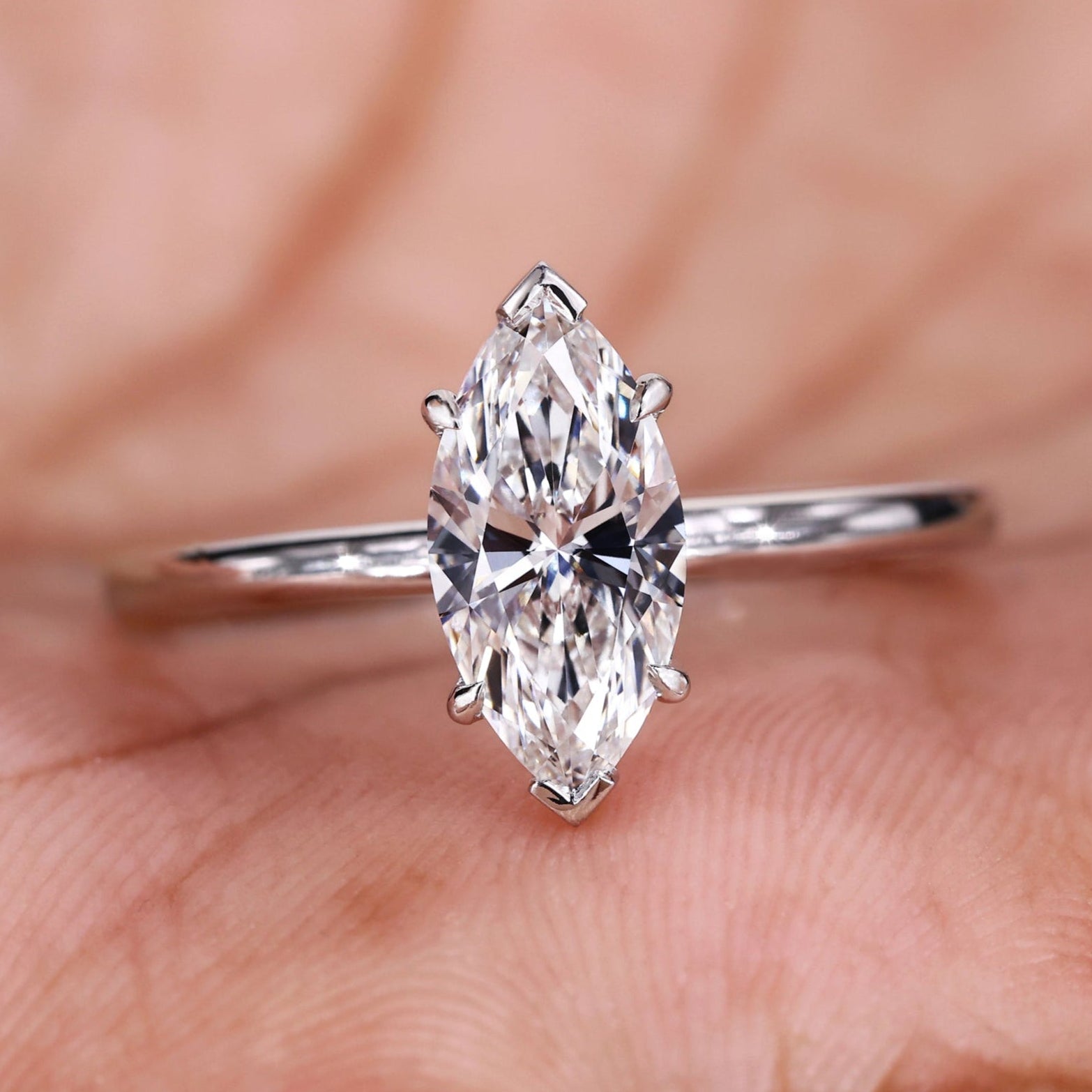
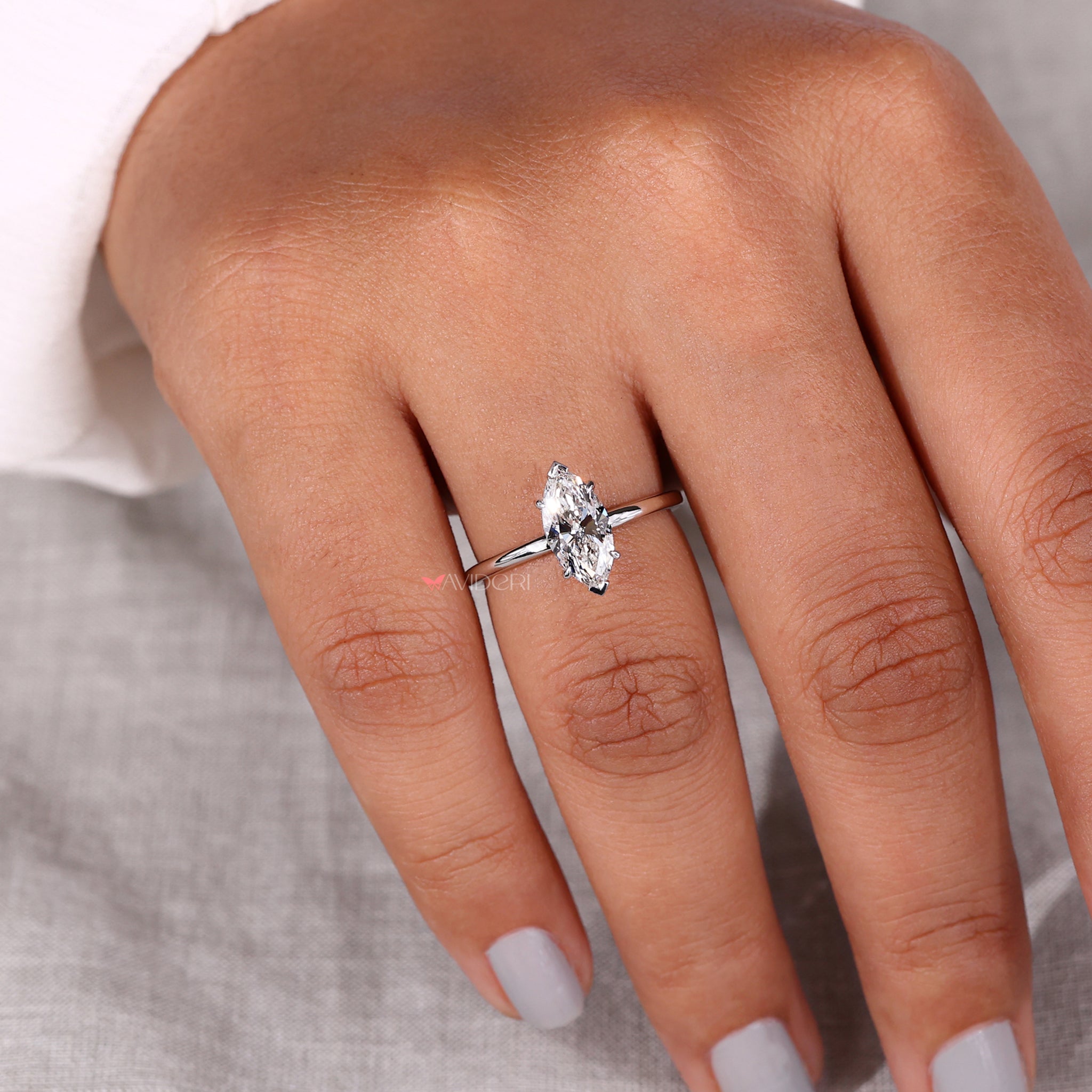
V-Prong Marquise Solitaire Ring
This setting works well for a classic north-south orientation, where the marquise points up and down the finger. It can also suit an east-west design if you prefer a more contemporary look.
Halo Setting
A halo surrounds the center stone with smaller accent diamonds or gemstones. It adds visual width and can make the center stone appear larger.
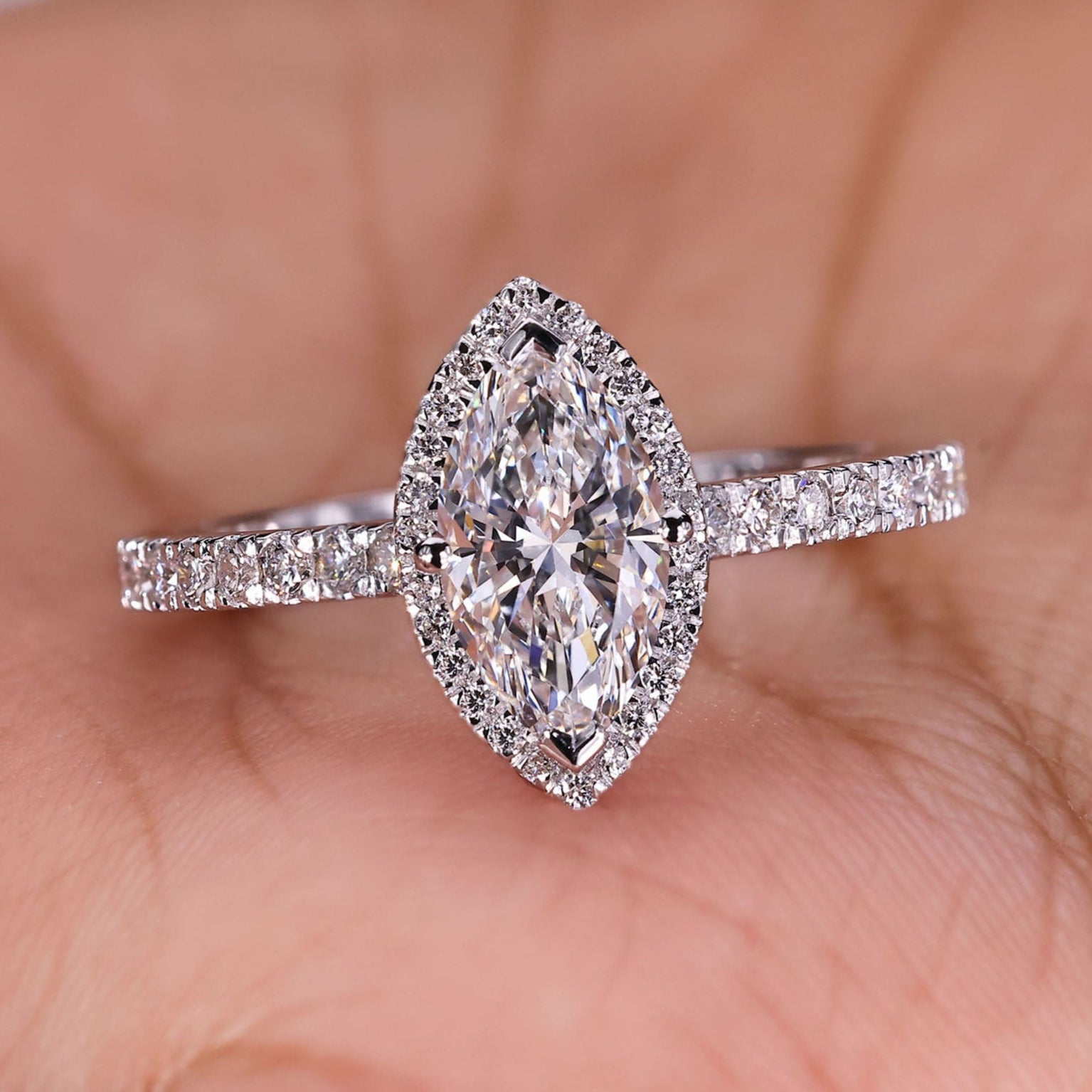
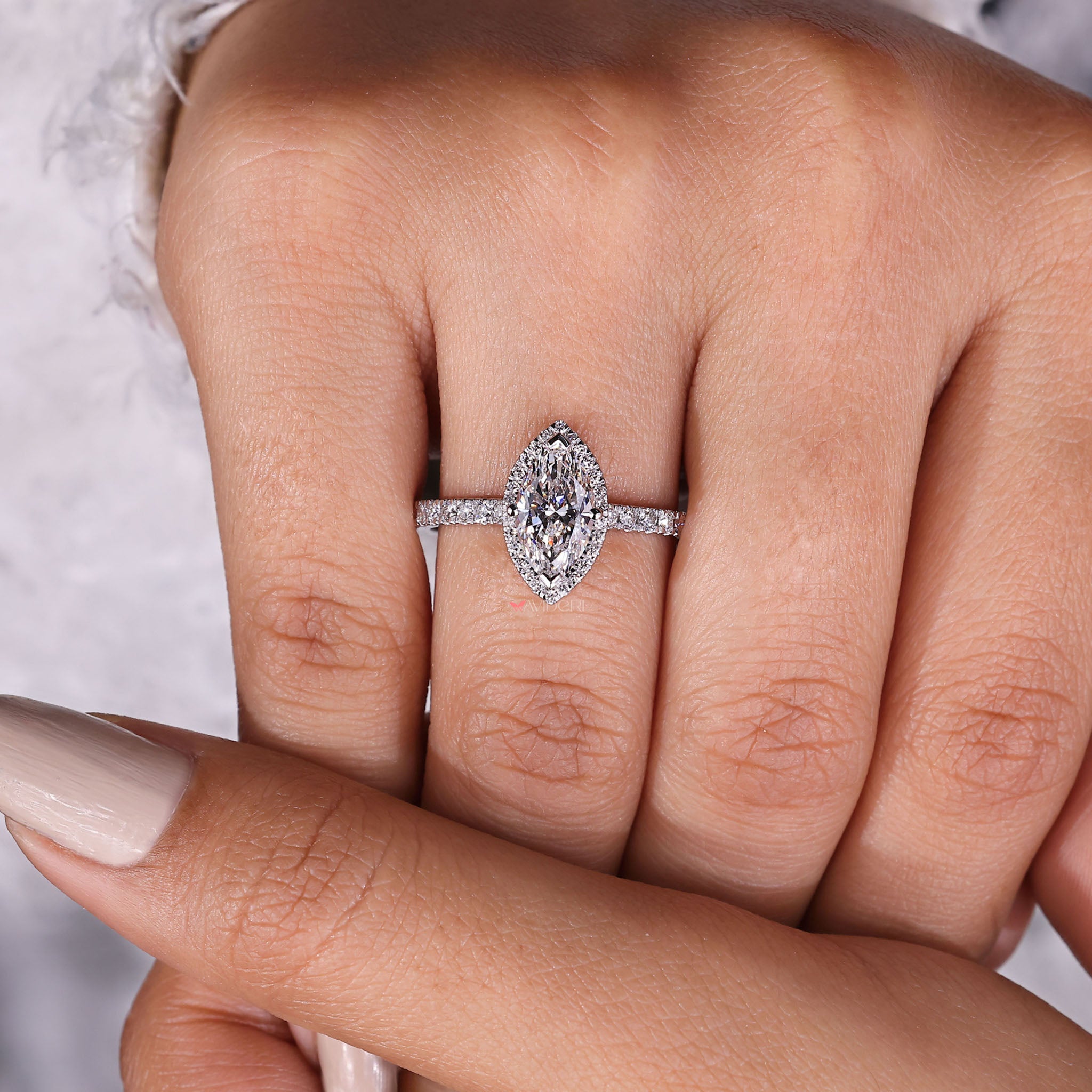
Marquise Halo Engagement Ring
For a marquise, a halo can also create more metal and detail around the pointed ends. Compare the finished proportions carefully, especially if you prefer a distinctly elongated look.
Bezel Setting
A bezel setting wraps metal around the edge of the stone. It offers a clean, modern appearance and provides substantial coverage at the points.
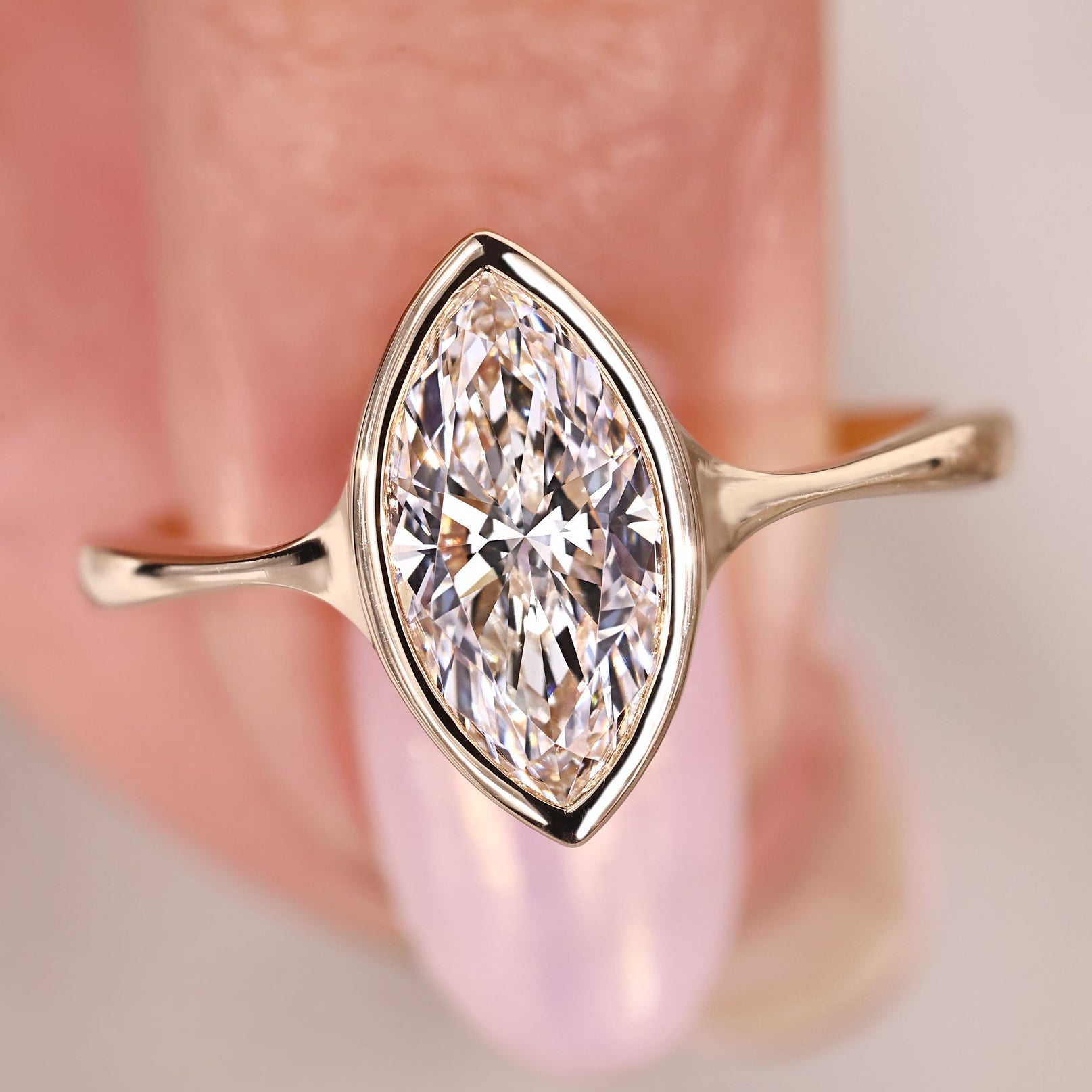
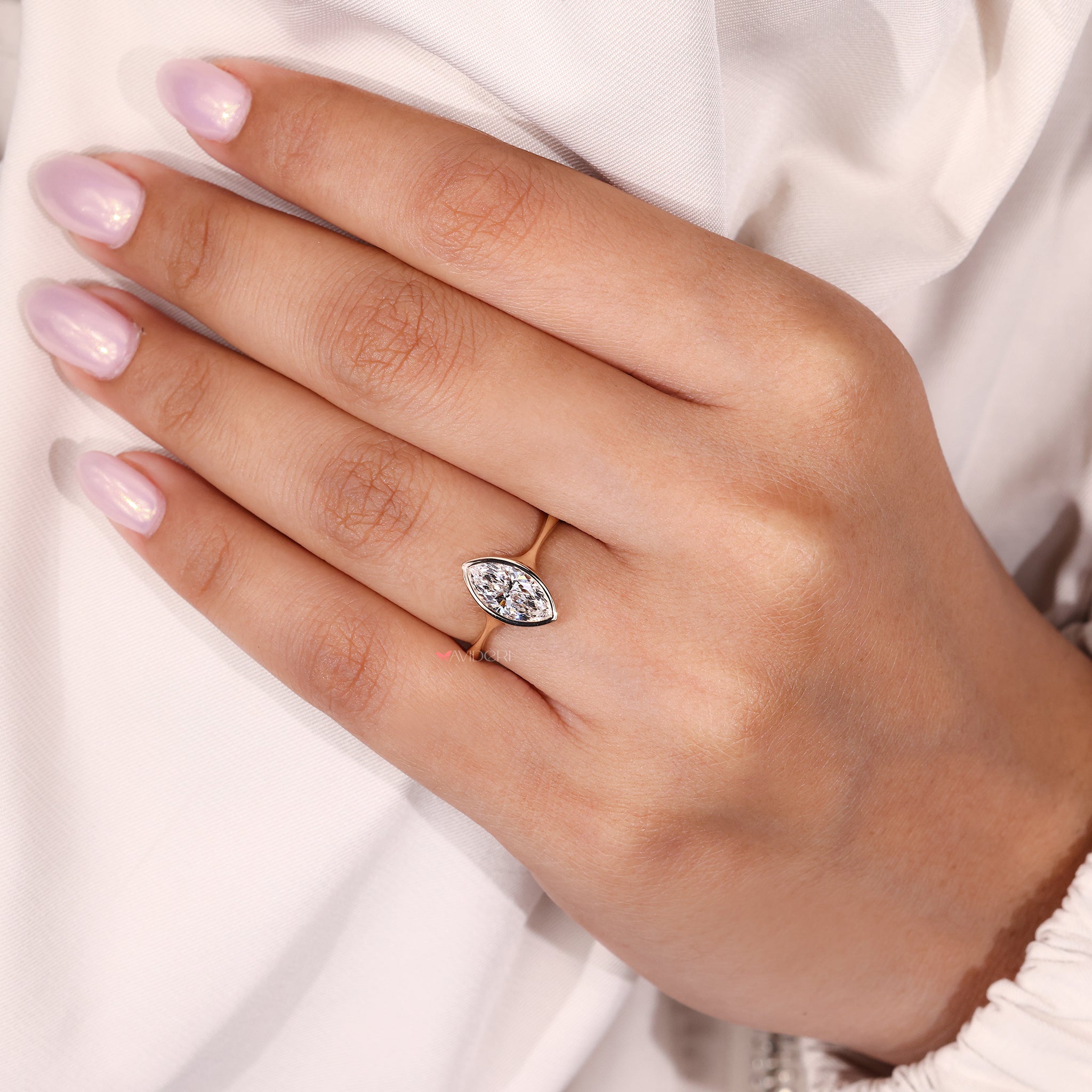
Marquise Bezel Diamond Ring
The amount of metal used can slightly change how much of the diamond’s edge is visible, so look at finished-ring images before deciding. A bezel may be the right choice if you prefer a streamlined design and added protection for everyday wear.
East-West Orientation
An east-west setting turns the marquise horizontally across the finger rather than vertically. This changes the visual effect: instead of drawing the eye up and down the finger, it creates a wider spread across the hand.
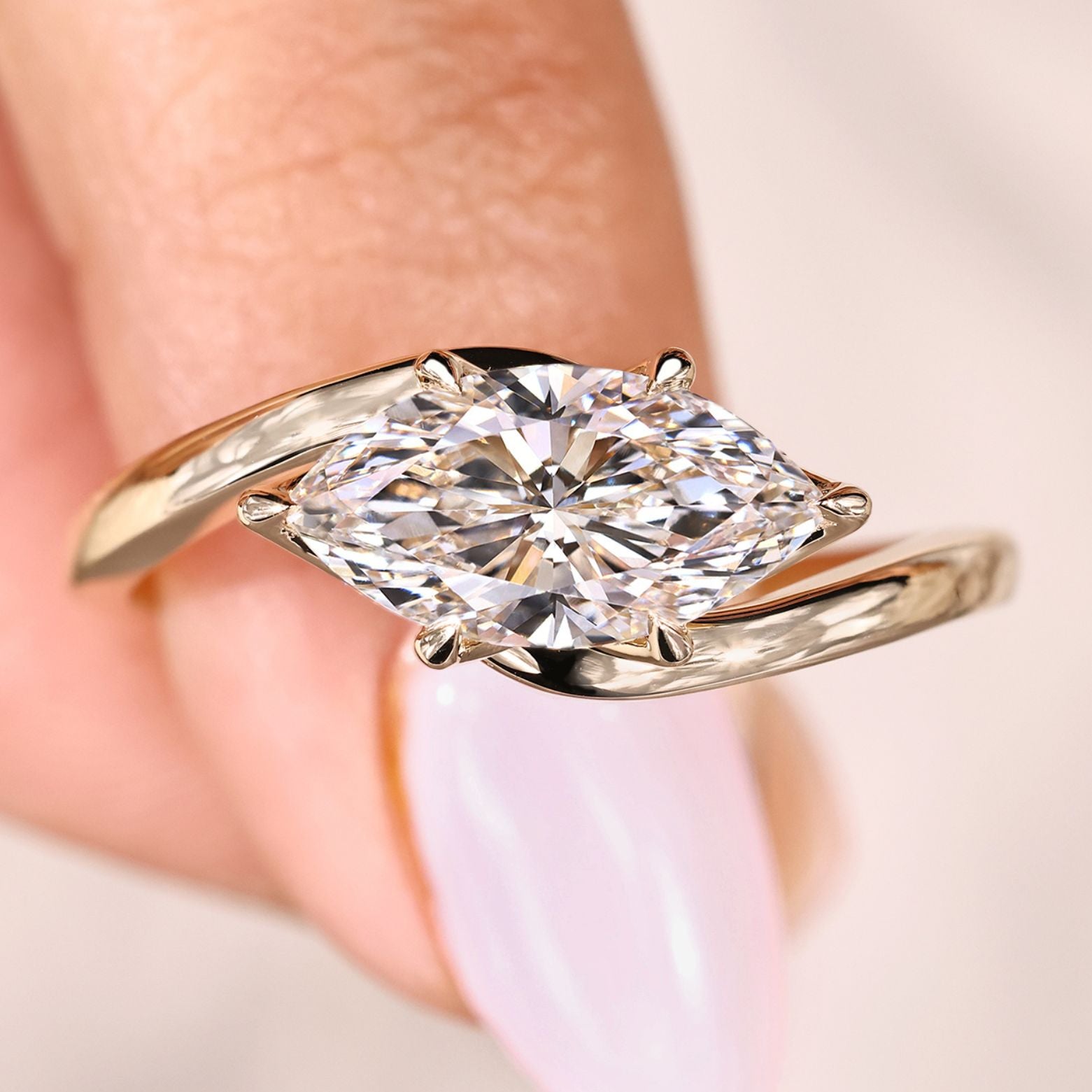
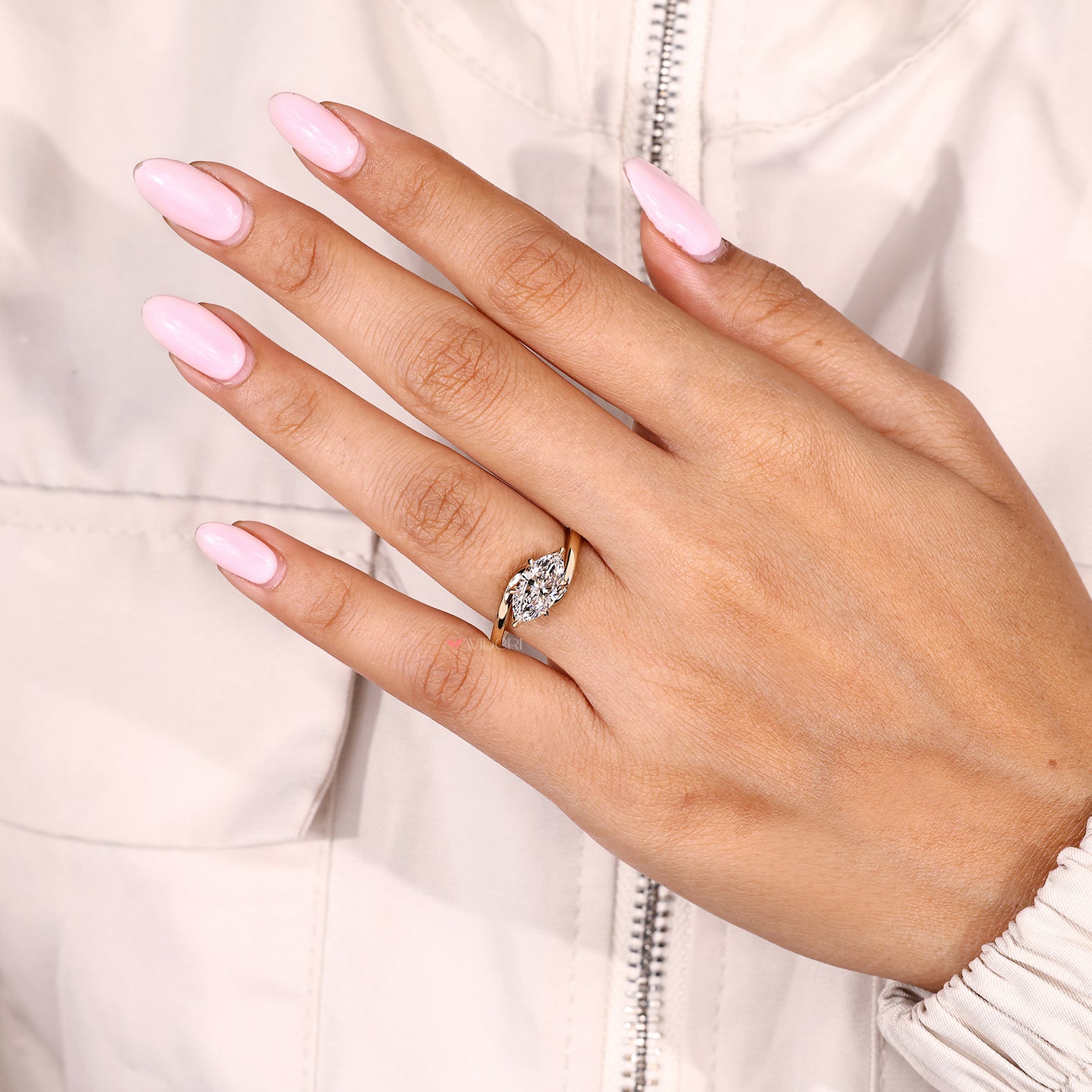
East West Marquise Engagement Ring
It is a useful option for buyers who like the marquise shape but want a less traditional engagement ring design.
Marquise Cut Diamond: Pros and Cons
A marquise can be a striking choice, but it is worth weighing both sides before deciding.
Pros
- Its elongated outline can create a flattering, lengthening effect on the finger.
- It often offers a generous face-up presence relative to its carat weight.
- Brilliant faceting gives the shape lively sparkle.
- It is a distinctive alternative to round, oval, and cushion cuts.
- It works in classic solitaire, halo, bezel, and east-west designs.
Cons
- Bow-tie severity varies between stones and should be checked in a video or in person.
- The pointed ends require a protective setting, such as a V-prong or bezel.
- Selection may be narrower in certain sizes, qualities, and price ranges.
Marquise Moissanite and Lab Grown Diamond Rings at Avideri
Avideri offers marquise moissanite and lab grown diamond engagement rings for those who want this distinctive shape in different materials and budgets.
Moissanite can be a strong option for shoppers who enjoy bright fire and want to explore larger visual sizes. Lab grown diamond rings carry the identical physical and chemical properties of natural diamonds, barring the premium price tag.
When browsing, compare each ring’s proportions, setting, and product details rather than choosing on carat weight alone. The right marquise diamond ring should feel balanced on the hand and suit the style you want to wear every day.
Conclusion
A marquise cut diamond can be an appealing choice for shoppers who desire an elongated silhouette. It can also suit those looking for a ring that feels distinct from more common shapes. Focus on the L/W ratio, symmetry, bow-tie effect, color, clarity, and setting before making your final choice.
Browse Avideri’s marquise moissanite and lab grown diamond engagement rings, or book a virtual appointment so our expert team can assist you in comparing your options.
A Marquise Ring Designed Your Way
If you haven't found the right Marquise Ring yet, work with our team to create a custom design tailored to your preferred shape, setting, metal, and budget.


