


Most engagement ring guides are sorted by cut, carat, and budget. This one sorts by something buyers actually browse by first: whether the design pulls from nature or not. Floral engagement rings and their botanical variations now make up a meaningful share of custom ring requests. A vine-wrapped band or a cluster of petal-shaped prongs reads as considered in a way a plain solitaire doesn't always manage. This guide breaks down the six major styles of nature inspired engagement rings, how to choose between them, and where lab grown diamond and moissanite fit.
Not every style suits every stone or metal; mismatched pairings are one of the more common regrets we see in custom builds, and we'll flag them as we go.
What are Nature Inspired Engagement Rings?
Nature themed engagement rings cover more ground than the name suggests. The category includes any ring where the metalwork, setting, or overall silhouette pulls from botanical or organic forms, flowers, leaves, vines, branches, or abstracted versions of any of those. That's broader than "vintage," which leans on period-specific details like filigree borrowed from a particular decade. A nature-inspired ring can be brand new in construction and still read as organic.

The look isn't new; René Lalique was building leaf and insect motifs into jewelry in the 1890s, and Art Nouveau design pushed organic forms into the mainstream soon after. What's changed is the stone: nature themed engagement rings today are just as likely to be set with lab grown diamond or moissanite as a mined stone, which wasn't an option a century ago.
Types of Nature Inspired and Floral Engagement Rings
When the topic is nature inspired engagement rings, there are six styles that show up most often in feel or in full botanical execution, each with its own distinctive appeal.
Floral Engagement Rings
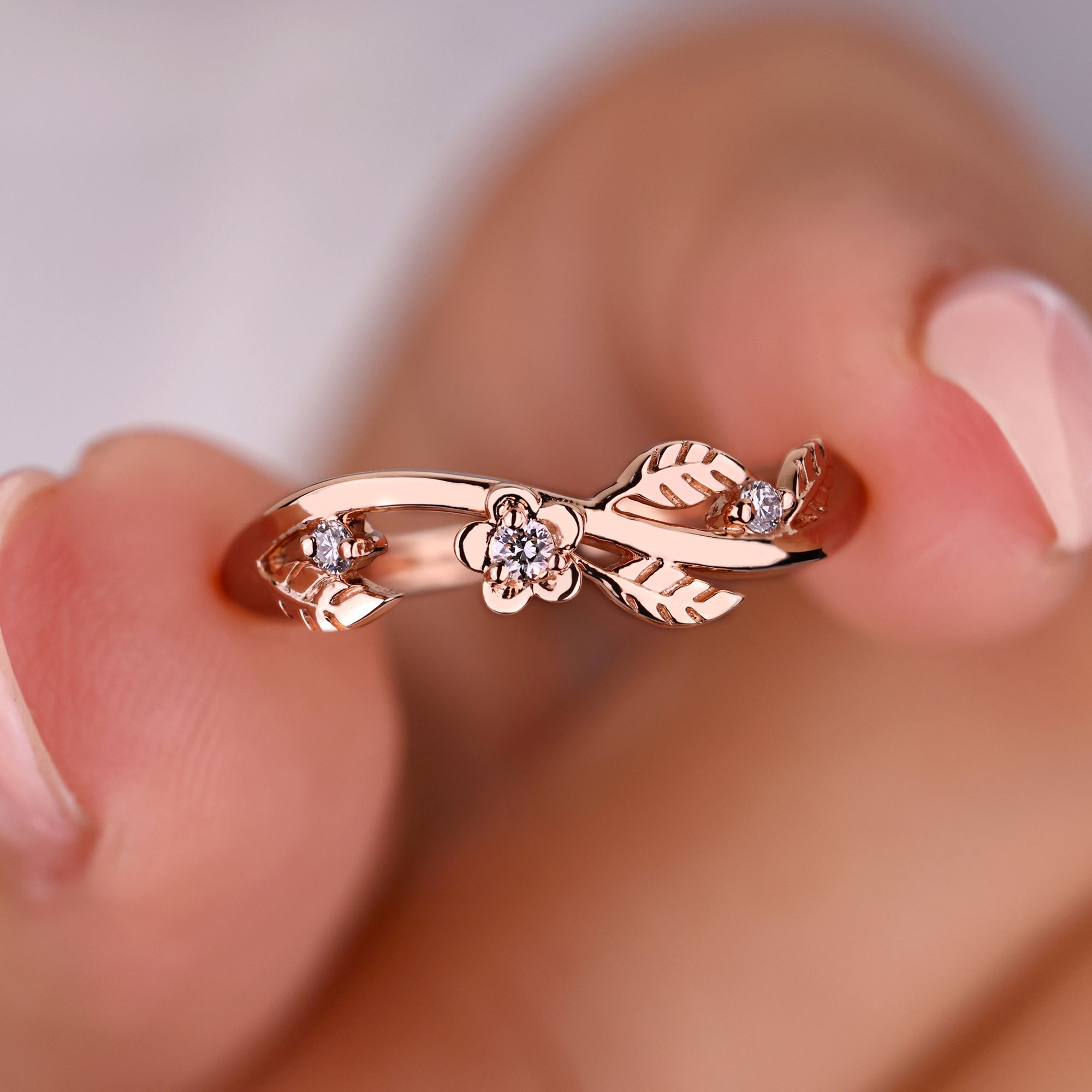
Petal-shaped prongs, flower-cluster settings, or blooms worked directly into the metalwork define this look, from a single 2mm petal accent at the shoulder to a full multi-petal cluster wrapping a 1.5-carat center stone. It's the most popular of all nature inspired rings, and the safest starting point if you're nervous about picking something too unusual. A floral engagement ring can be set with either lab grown diamond or moissanite; either works.
Leaf and Vine Rings
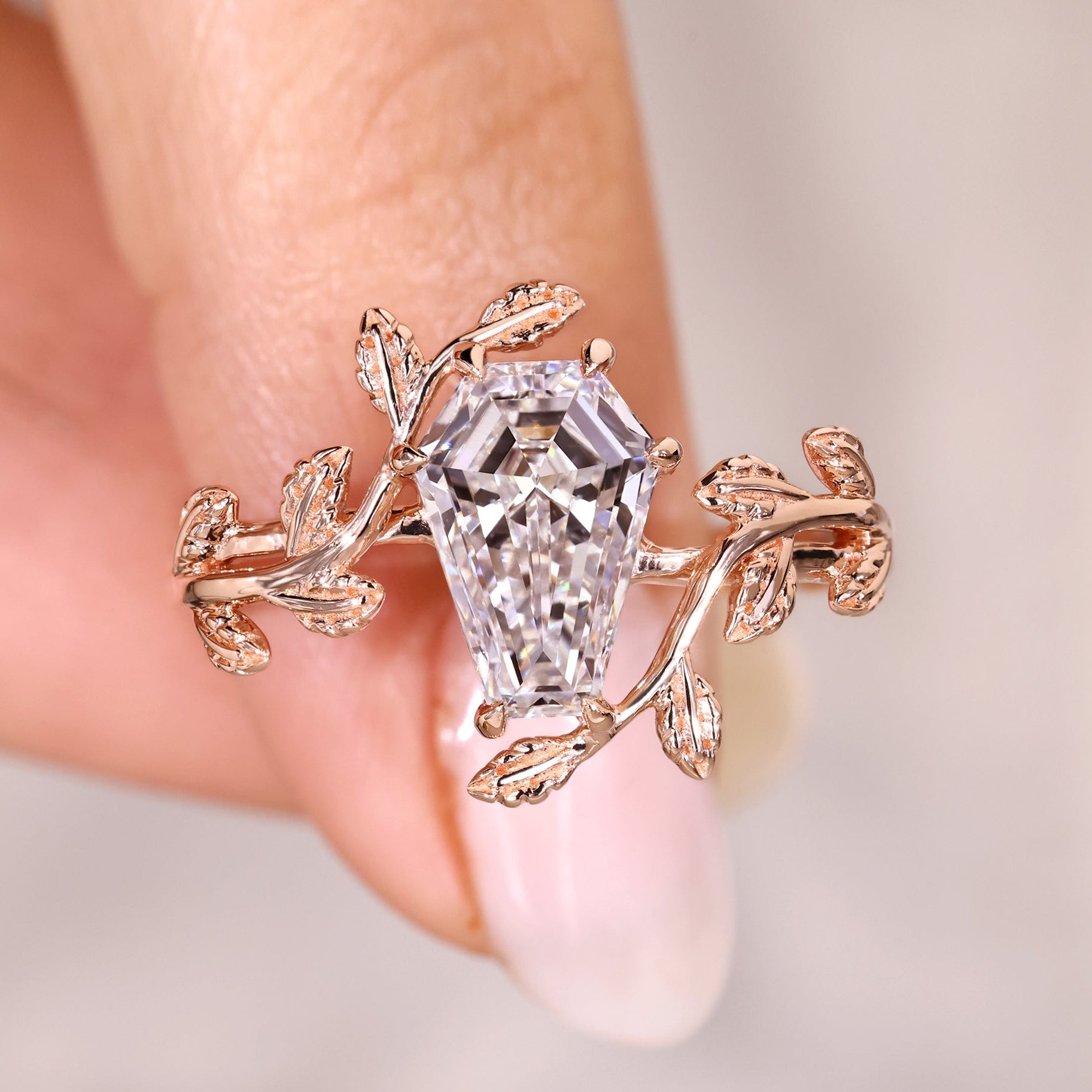
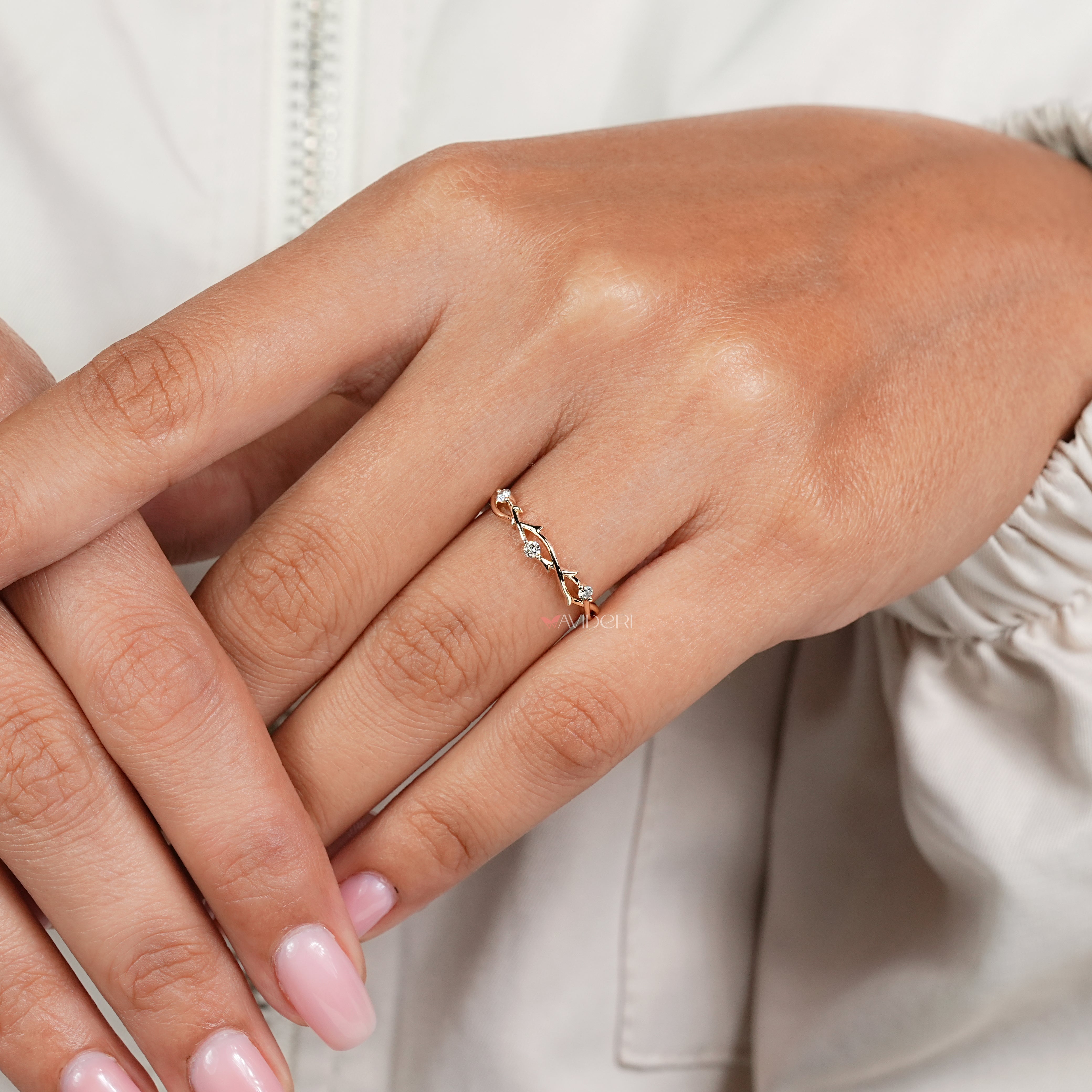
Leaf motifs along the band, twisted vine shanks, or foliage worked into the metalwork frame the center stone rather than compete with it. The curving lines elongate the finger more than a straight band does, and pavé set along the vine keeps the sparkle continuous instead of concentrated at the center. This is the style we point people toward when they love the botanical idea but don't want it to read as literally "flower." Vine work is more abstract and, in our view, ages better.
Branch and Twig Designs
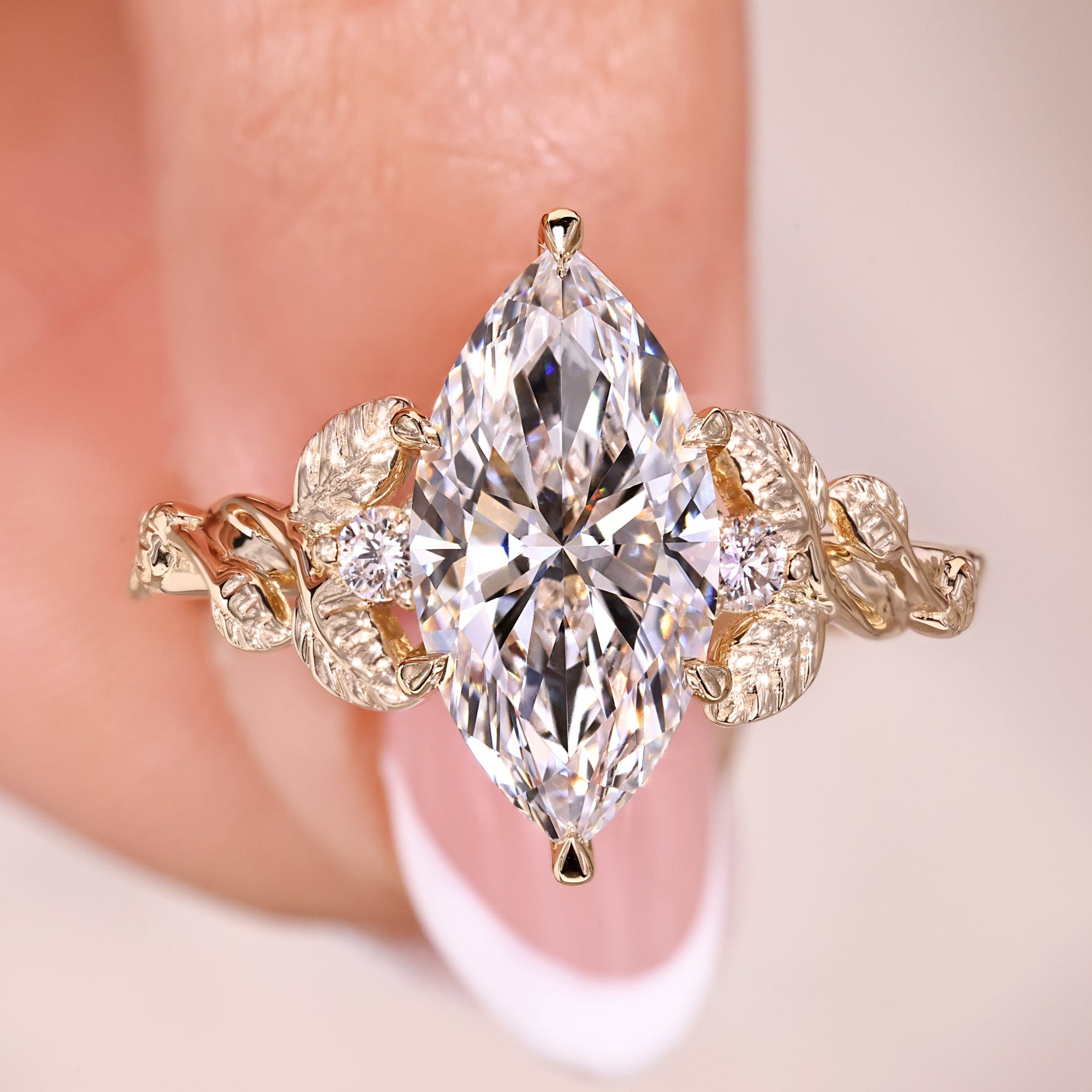
Branch and twig designs draw buyers who want their ring to feel like a piece of sculpture rather than a piece of jewelry. The asymmetry gives each piece a one-of-a-kind character; no two branches curve the same way, and that individuality is exactly what pulls in buyers who find floral or symmetrical settings too predictable.

Floral Engagement Rings
Leaf and Vine Rings
Branch and Twig Designs
Three-Stone Nature Inspired Rings
Nature-Inspired Halo Rings
The halo does the heavy lifting here, amplifying the center stone's presence so the ring reads larger and more elaborate than the carat weight alone would suggest. Every additional stone and prong adds to that layered, detailed look, giving the ring a fuller, more intricate silhouette from every angle.
Three-Stone Nature Inspired Rings
Three stones, a center with two smaller side stones, sit inside a botanical framework, often with leaf-shaped prongs angled like petals. The symbolism of 'past, present, future' draws many buyers to this style, but the format also offers a practical advantage worth knowing. Two smaller side stones let you size up the center visually without inflating total carat weight and price, as fast as one larger stone would.
Subtle Botanical Accents
A solitaire or simple setting with one nature-inspired detail: a single leaf at the shoulder, a small floral engraving, petal-tip prongs. This is the pick for buyers who work with their hands often, or who simply don't want their ring to start a conversation every time someone notices it.
How to Choose Your Nature Inspired Engagement Ring
Four things decide whether a nature inspired engagement ring actually works day to day: how loud you want it, what shape stone you're setting, which metal, and how much upkeep you're willing to do.
Motif Intensity: Subtle Botanical vs. Full Floral
Nature-inspired design exists on a spectrum. A minimalist daily-jewelry wearer will get more long-term satisfaction from a subtle vine accent than a full cluster centerpiece; the opposite is true if you already gravitate toward statement pieces. This is usually the fastest way to cut the six styles above down to two or three worth actually trying on.
Stone Shape: What Works With Nature Motifs
Oval and pear cuts do the most work here; their tapered points echo a leaf or petal, suiting vine, leaf, and halo designs with no extra effort from the setting. Round brilliants are the safer, more traditional match for floral clusters, where the symmetry is already part of the design. Cushion cuts work in vintage-nature hybrids with milgrain detailing, but we'd think twice about them in a strongly botanical halo; the soft corners compete with the petal shaping instead of complementing it.
Metal Type: Which Suits Which Motif
Yellow and rose gold are the more forgiving choices for a nature themed engagement ring; the warmth reads as organic, and rose gold has become close to the default for floral designs. White gold and platinum can work too, but only if the detail is cut deep enough to read without a warm tone helping it along; on a subtle accent, platinum can wash the detail out entirely. Torn between the two for a floral cluster? Lean towards the warm metal.
Wearability: Practical Considerations
For everyday durability, three-stone and halo styles are the strongest choices in this collection. Their stones sit close to the band and the settings have fewer exposed edges, so they hold up well to daily wear, even for those whose work involves constant use of their hands. Branch-and-twig designs offer more sculptural texture, and pairing them with platinum or a slightly lower setting keeps that organic look practical for everyday wear.
Nature Inspired Wedding Rings: Pairing Your Band
A curved engagement ring next to a straight wedding band leaves a visible gap at the base. It's the most common pairing regret we hear about, and it's avoidable if you think about it before the band gets ordered. Here's how to think about nature inspired wedding rings.
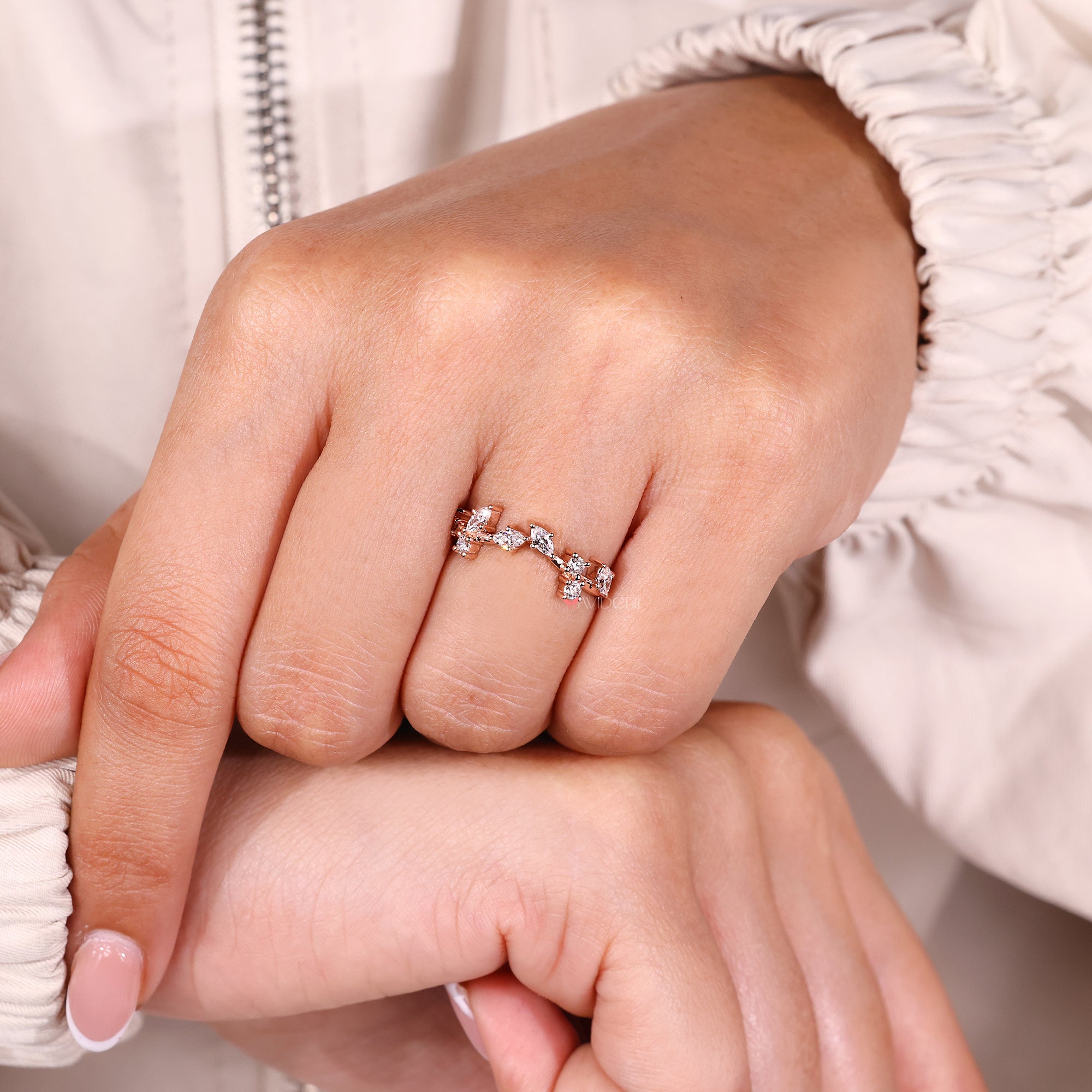
Curved and Contoured Bands
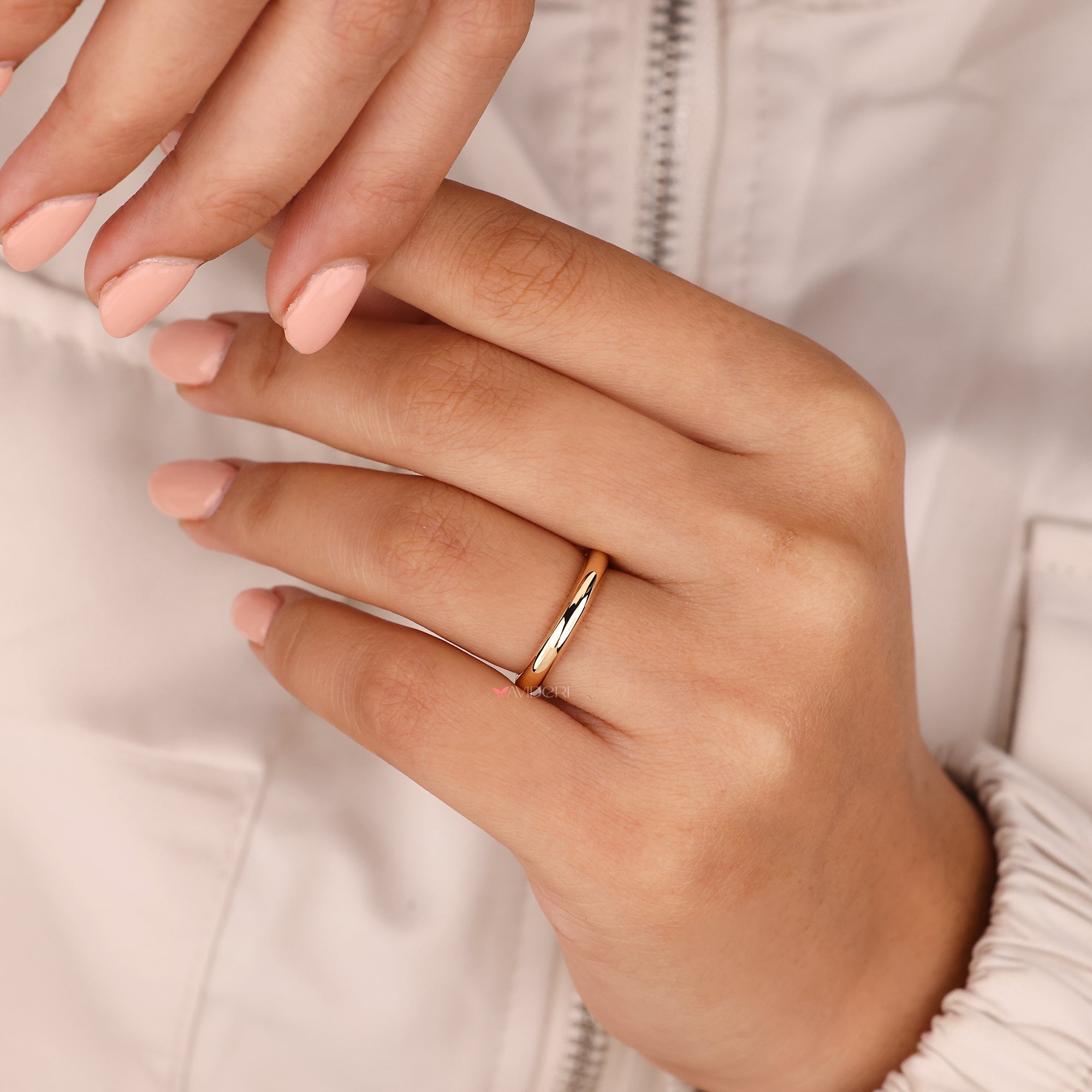
This is the fix for the gap problem mentioned above. It works for nearly every halo or floral centerpiece, and it's the default we'd recommend unless you have a specific reason to choose plain instead.
Plain Metal Bands
A simple, plain gold or platinum band next to a detailed engagement ring keeps the engagement ring as the clear focal point. We'd suggest this route mainly if your engagement ring is already visually busy; pairing two ornate pieces can start to look cluttered rather than intentional.
Matching Nature Motif Bands
Some buyers want continuity instead of contrast: a wedding band that carries the same leaf or vine motif as the engagement ring, worn stacked against it. Avideri's curved and stackable collections are built to pair this way, a vine-shank band alongside a vine-motif engagement ring, for example, rather than a mismatched pattern.
Lab Grown Diamonds and Moissanite in Nature Inspired Rings
Stone choice affects the price of nature inspired lab grown diamond rings more than design does; a 1.5-carat floral halo in mined diamond can run well into five figures; the same design in lab grown diamond typically lands far lower, and in moissanite lower still.
Lab Grown Diamond Nature Inspired Rings
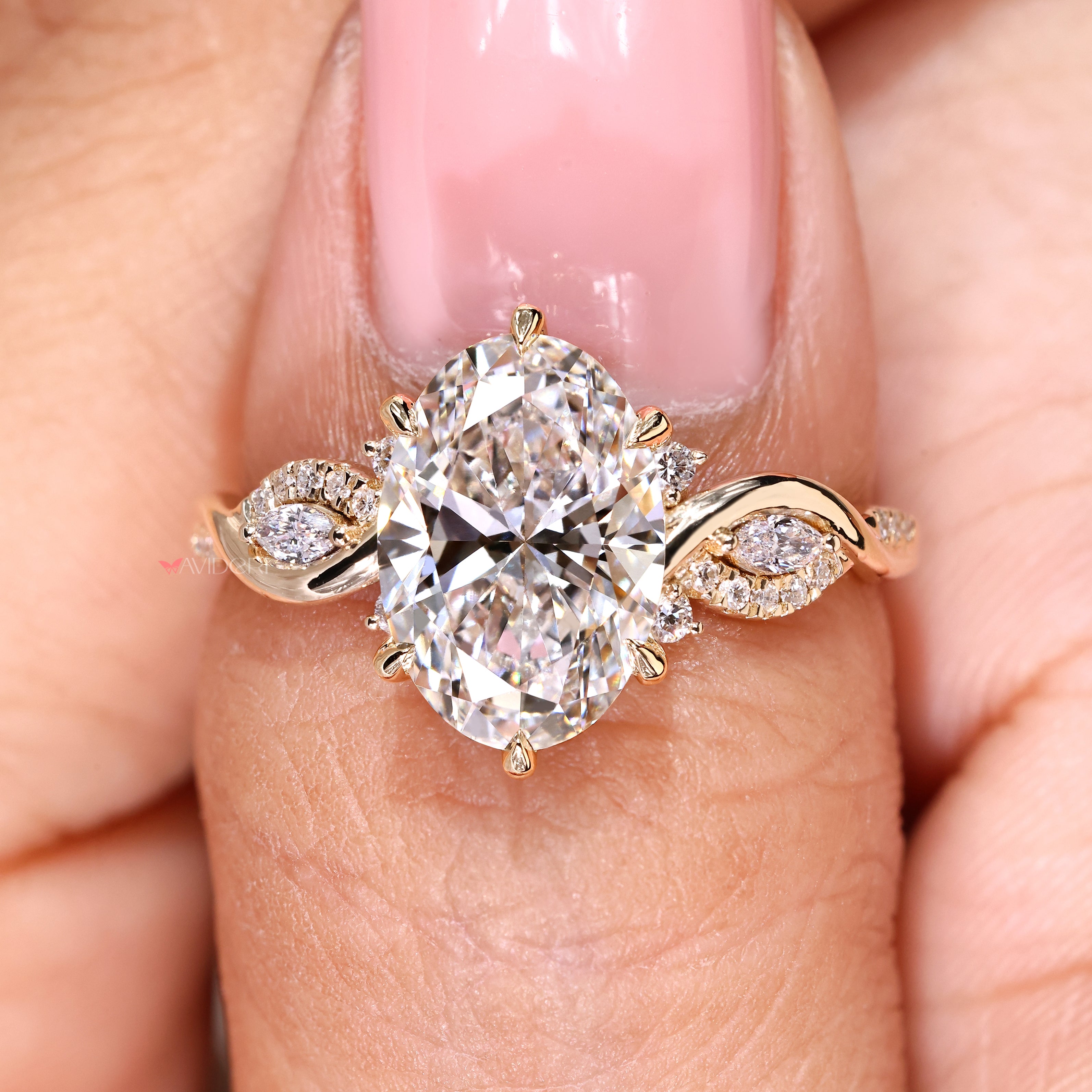
Oval Cut Engagement Ring In Half Twisted Shank
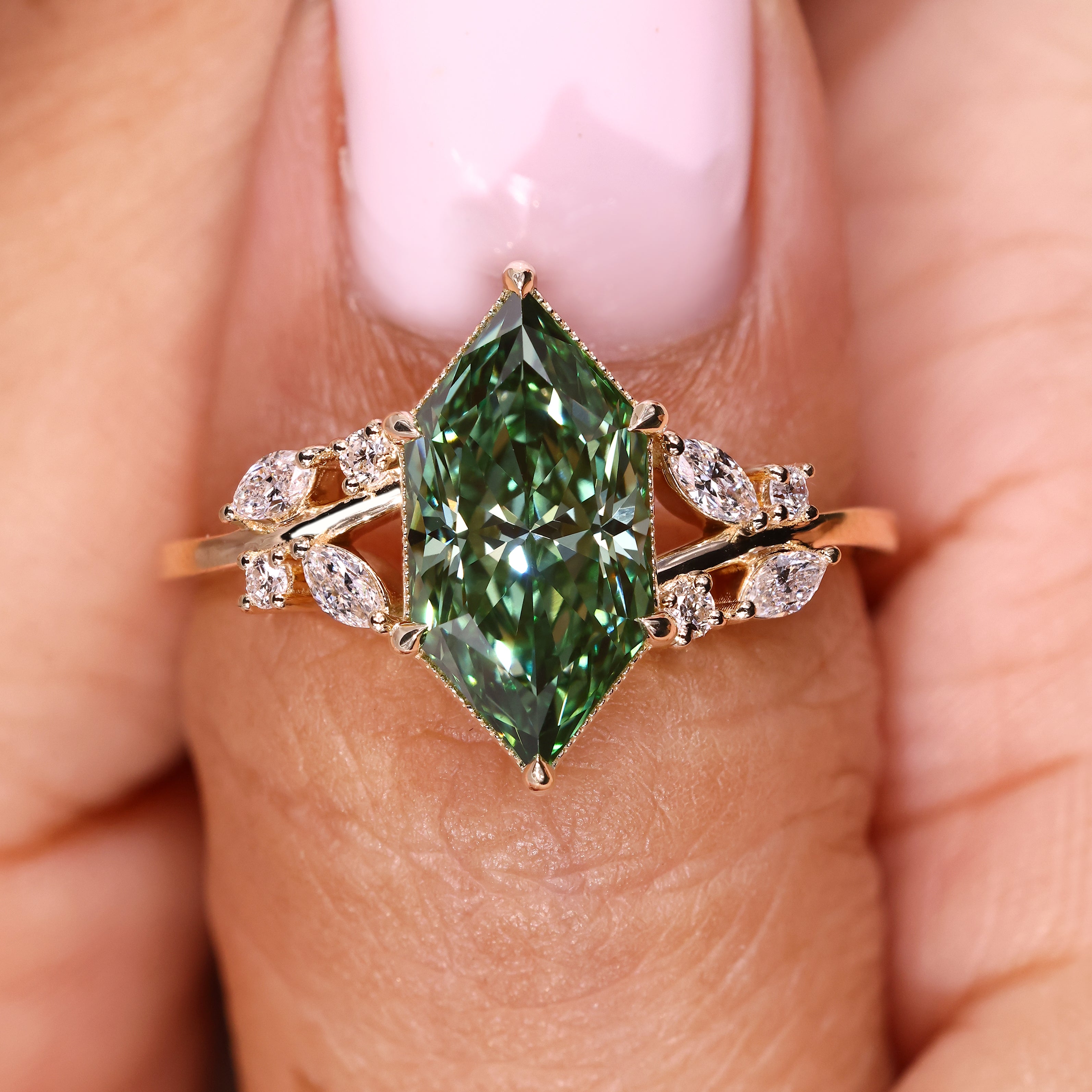
Green Dutch Marquise Cut Engagement Ring In Tapered Shank
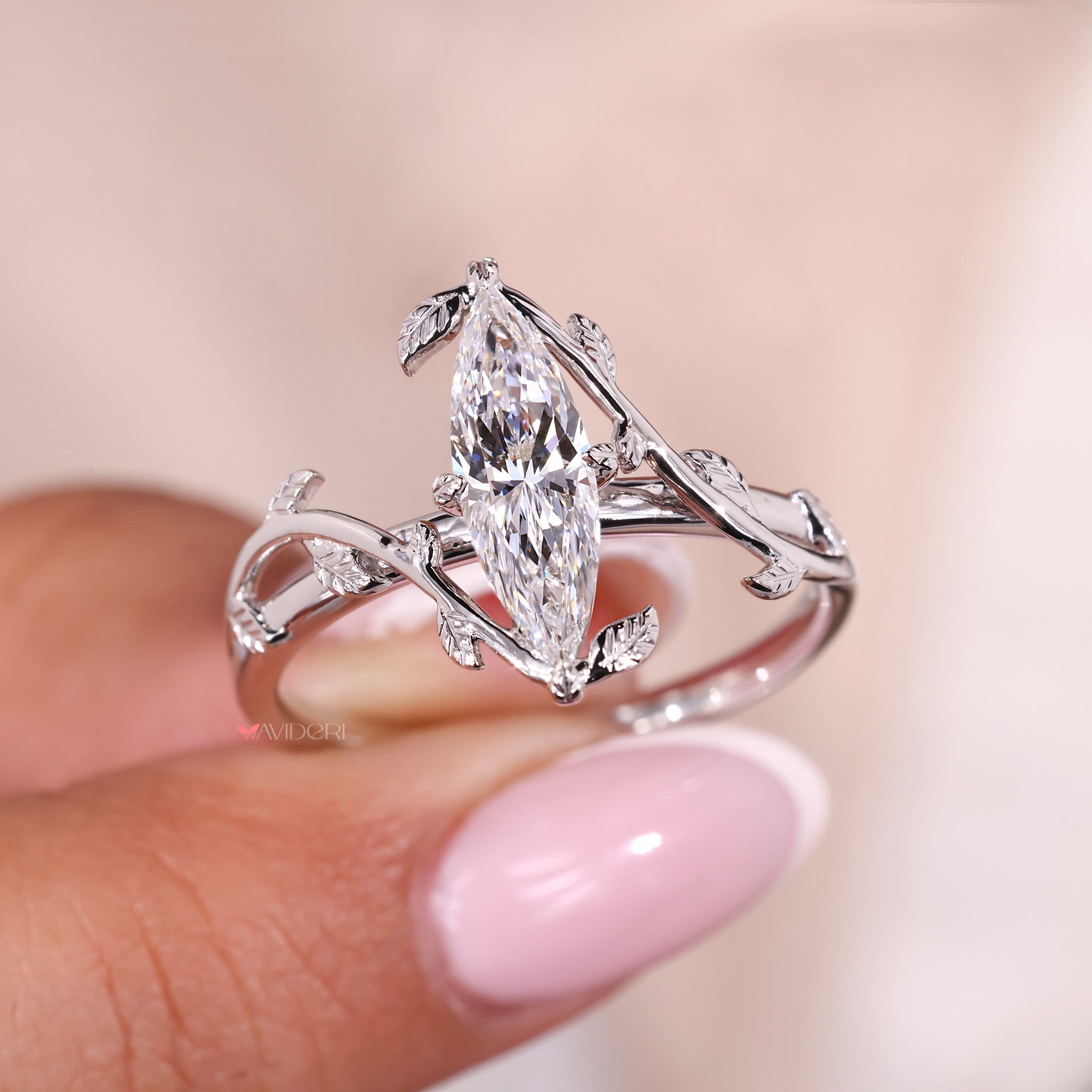
Marquise Diamond Ring
Lab grown diamonds are IGI-certified and chemically identical to mined diamonds, at a significantly lower cost. In nature-inspired settings, where the metalwork already carries much of the design statement, that savings can go toward craftsmanship instead of paying a premium for a mined diamond, a particularly good trade in halo designs, where accent stone costs add up fast.
Moissanite Nature Inspired Rings
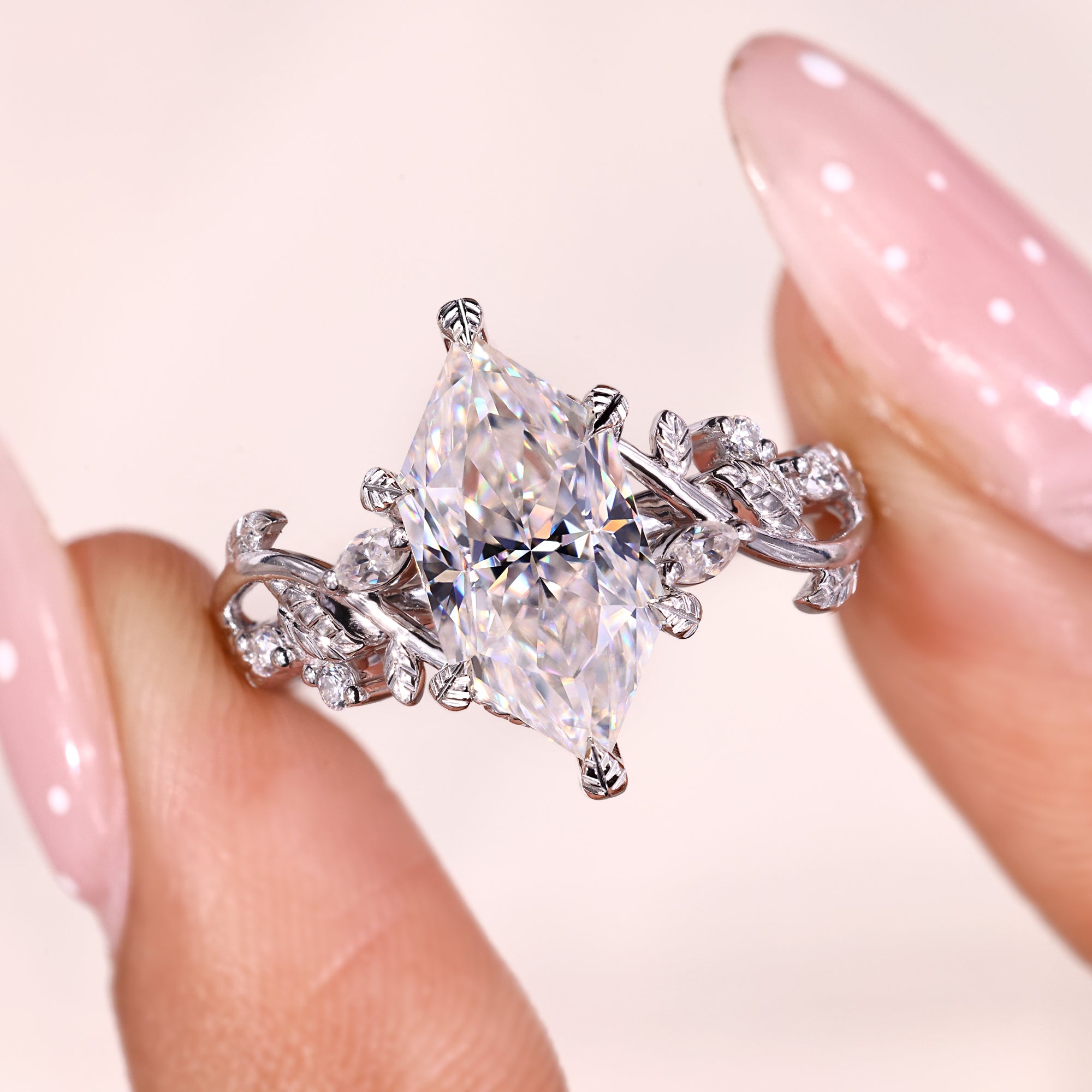
Dutch Marquise Moissanite Nature Inspired Engagement Ring
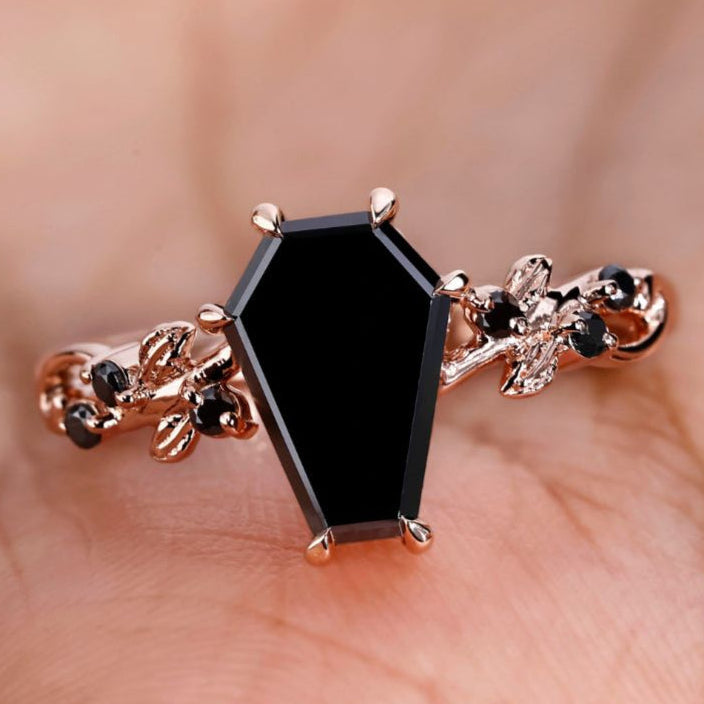
Coffin Engagement Ring with Black Moissanite
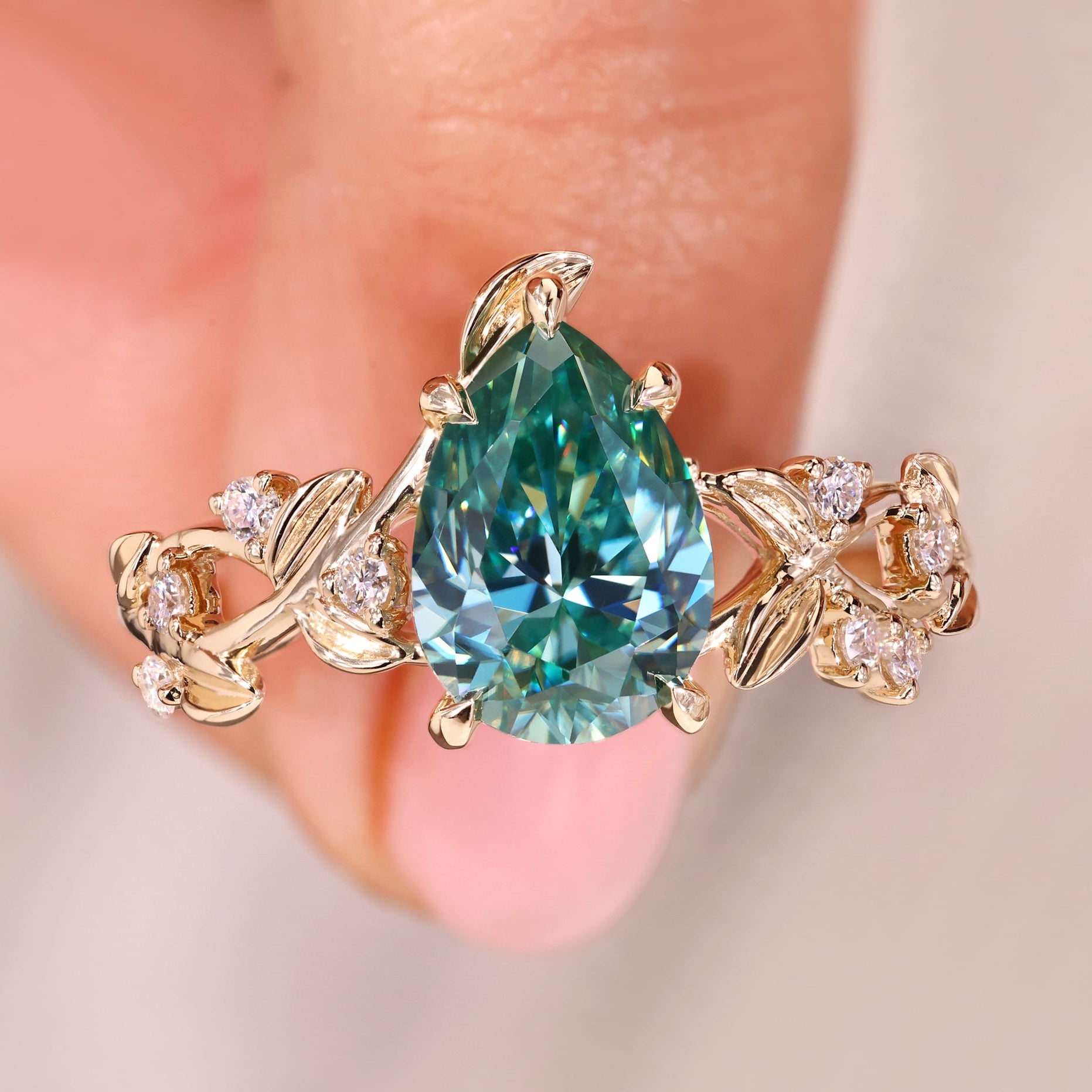
Nature Inspired Pear Cut Engagement Ring
Moissanite's higher refractive index delivers more fire than diamond, noticeably more rainbow flash under direct light, at a fraction of the per-carat cost. It also holds up well day-to-day: 9.25 on the Mohs hardness scale, just below diamond's 10, so it resists scratching better than most gemstones used in organic settings. For budget-conscious buyers choosing between the two, we'd lean toward moissanite for halo and vine designs, where the extra brilliance does more visual work than certification does.
Conclusion
If the six styles above feel like too many options, start with the motif intensity question, subtle or full, since it cuts the list roughly in half immediately. Stone and metal choices tend to sort themselves out from there. Our take: moissanite in a leaf-and-vine or halo setting offers the best value-to-impact ratio in this category, though a lab grown diamond centerpiece is equally worth it if long-term resale value matters to you. Explore Avideri's nature-inspired engagement ring collections, or book a virtual appointment if you want a second opinion before deciding.
Make Your Nature Inspired Ring Personal
Start with the details you love and customize your diamond, setting, metal, and band to create a nature-inspired engagement ring that feels uniquely yours.


