


An enhancing ring gives your engagement ring the extra shine and stability it can't create alone. Most people discover ring enhancers while searching for a wedding band, then realize the two aren't the same thing at all. Engagement ring enhancers get confused with wedding bands constantly, but the two solve different problems. An enhancer frames an existing stone, while wedding ring wraps and enhancers stand in for a separate band you'd otherwise buy.
What is a Ring Enhancer? Wedding Ring Wraps and Enhancers Explained

A ring enhancer, sometimes called a ring guard, ring wrap, or ring jacket, is a purpose-built band that frames the engagement ring rather than sitting apart from it. A standard wedding band sits flush beside the engagement ring, but an enhancer curves to hug its profile from both sides, so the two rings read as one continuous piece. That framing adds visible sparkle and makes the center stone look larger, giving an otherwise simple solitaire a fuller bridal-set silhouette.
Enhancers are wedding bands to go around engagement ring designs, built to nest against the exact setting you already have rather than sit generically near it. The category covers a wide range of looks, from diamond-set engagement ring enhancer bands in a pavé line to smooth curved metal with no stones at all. What they share is the fit: they fit into the engagement ring instead of just sitting next to it.
Ring Enhancer vs. Ring Guard vs. Ring Wrap: Terminology Clarified
These names all point to the same product. Ring enhancer is what most jewelers and shoppers call it today. Ring guard and ring wrap are older terms for the same shape, still common in search and in older product listings. A ring jacket is the one real variation: it encases the center stone itself rather than wrapping around the band, which changes how it sits on the finger. Outside that distinction, treat the terms as interchangeable.
Ring Enhancer vs. Wedding Ring - Key Differences
The two categories solve different problems, and the table below lays out where they diverge.
| Feature | Ring Enhancer | Wedding Ring |
|---|---|---|
| Purpose | Frames and elevates the engagement ring | Marks the marriage, worn beside the engagement ring |
| Design | Curved, wrap-around, or double-band to hug the center stone | Straight or gently curved band |
| Visual Impact | Bold and decorative, built to add sparkle and size | Understated and classic |
| Fit | Shaped around the engagement ring | Sits flush next to the engagement ring |
| Can it replace a wedding band? | Yes, increasingly common | The traditional ceremony choice |
| Stone Options | Lab grown diamond, moissanite, or plain metal | Lab grown diamond, moissanite, plain metal |
| Best For | Solitaires that need uplift, anniversary upgrades, stacking | Ceremony exchange, everyday simplicity |
The behavioral difference matters more than the visual one. You exchange a wedding ring at the ceremony, and it stays beside the engagement ring for good. You add an engagement ring enhancer piece whenever you decide, purely to change how the existing ring looks on the hand. Both fall under the broader umbrella of wedding ring wraps and enhancers, but only one carries the ceremonial weight.
Can You Wear Both?
Yes, and plenty of people do. A three-ring stack of an engagement ring, an enhancer, and a wedding band is valid and increasingly common in bridal jewelry. The enhancer sits closest to the engagement ring, wrapping it directly, while the wedding band takes the outside position. Keep the enhancer closest to the engagement ring and the wedding band on the outside, and the stack looks intentional instead of mismatched.
Types of Engagement Ring Enhancer Bands
Enhancers break down by design style more than by shape alone, since that's how most people actually shop for them.
Diamond Enhancer Wedding Bands

A diamond enhancer wedding band sets lab grown diamonds or moissanite along a curved profile that wraps the engagement ring. It's the most popular version of the category, adding brilliance above or below the center stone, sometimes both. You'll find it in pavé, channel, and prong settings, each changing how much sparkle sits close to the finger versus spread along the band.
Curved and Contoured Enhancers

A curved enhancer arcs around the base of the engagement ring's setting rather than sitting straight. It works especially well with halo rings and other settings with a raised or unusual profile, sitting flush against the setting for a seamless look. You can get it in plain metal or set with diamonds and moissanite, depending on how much extra sparkle you want.
Double-Band Split Enhancers

Two narrow bands frame the engagement ring, one on each side, leaving the center stone visibly raised between them. It reads like a three-ring stack without needing a separate wedding band at all, which makes it one of the more dramatic options in the enhancer category. Buyers who want that layered look without an extra ring tend to gravitate toward this style.
Shape-Specific Enhancers: Marquise, Pear, and Oval


Some enhancers follow the exact outline of the center stone: a V-shape for marquise and pear points, a soft arc for oval and cushion cuts. That precision matters most when the stone shape is irregular. A shape-matched enhancer follows the stone's exact outline, sitting flush against marquise, pear, oval, and cushion cuts alike. Avideri offers custom fits built around your engagement ring's specific stone shape, so ask our experts about a shape-matched enhancer for your stone.
Can a Ring Enhancer Replace a Wedding Band?
Yes, it can, and a growing number of couples choose exactly that. Using an enhancer ring as a wedding band gives you two things a plain band can't: ceremonial symbolism and a visual upgrade, since the piece frames the engagement ring instead of just sitting near it. Some couples wear the enhancer as the sole wedding band from day one. Others add it years later as a deliberate upgrade, and a few wear it alongside a separate wedding band, using the enhancer purely as the connective piece.
Wearing an Enhancer as Your Wedding Band: What to Know
If the enhancer is standing in for the wedding band, exchange it at the ceremony the same way you would a traditional band. It sits in the same finger position but wraps around the engagement ring instead of resting flush beside it. Some couples move the engagement ring to the right hand just before the ceremony, then slide both rings back into place afterward, which makes the exchange itself easier.
Adding an Enhancer After the Wedding
This is the anniversary route: start with a simple band at the ceremony, then add a diamond enhancer years later as a milestone upgrade. It also suits couples who want to keep the ceremony jewelry plain and plan to build sparkle over time. An enhancer at year five or year ten works well as a milestone gift, one that upgrades wedding bands to go around engagement ring setups that started out simple.
Ring Enhancers in Lab Grown Diamond and Moissanite at Avideri

Diamond Band With Round Cut
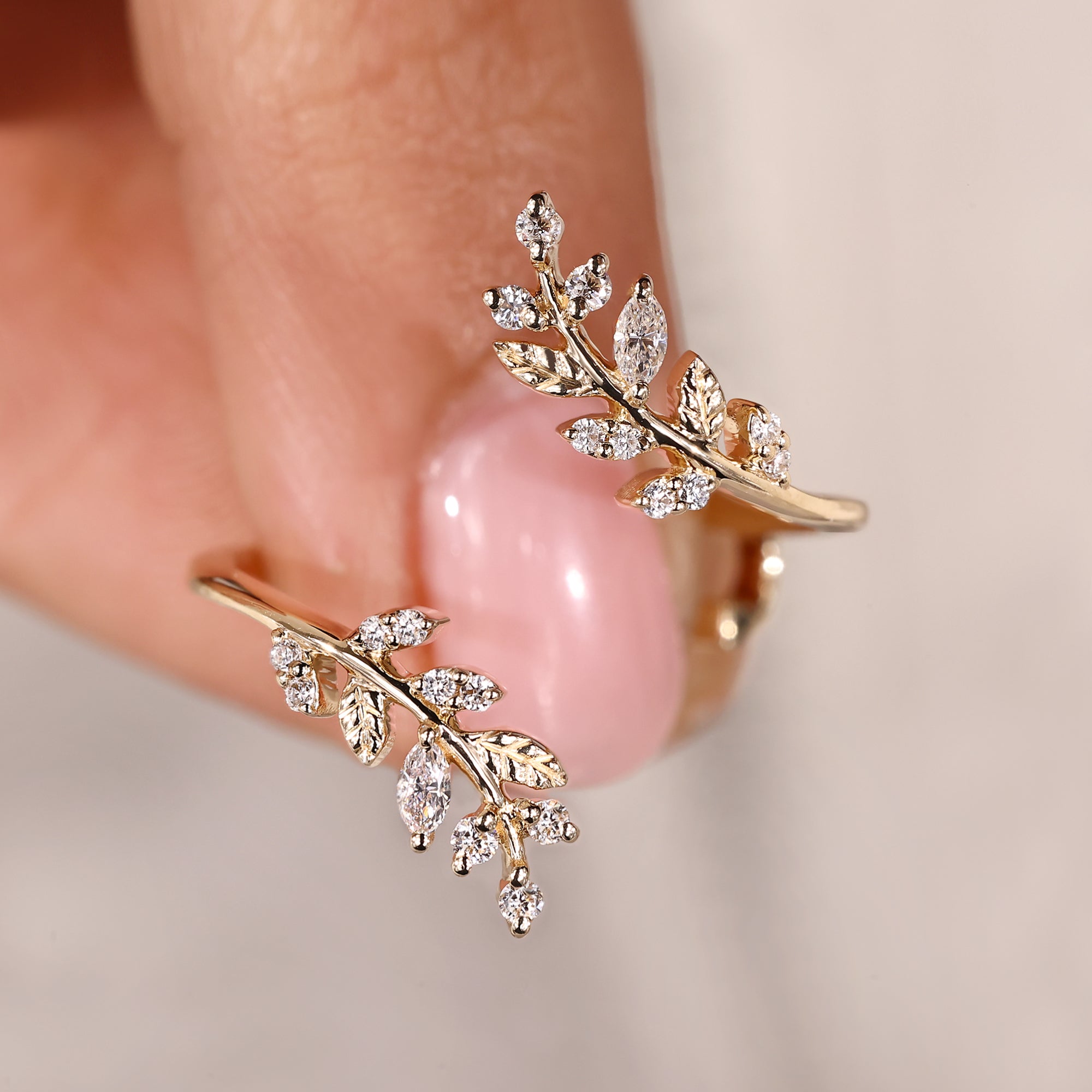
Marquise Wedding Band In Nature Inspired Style
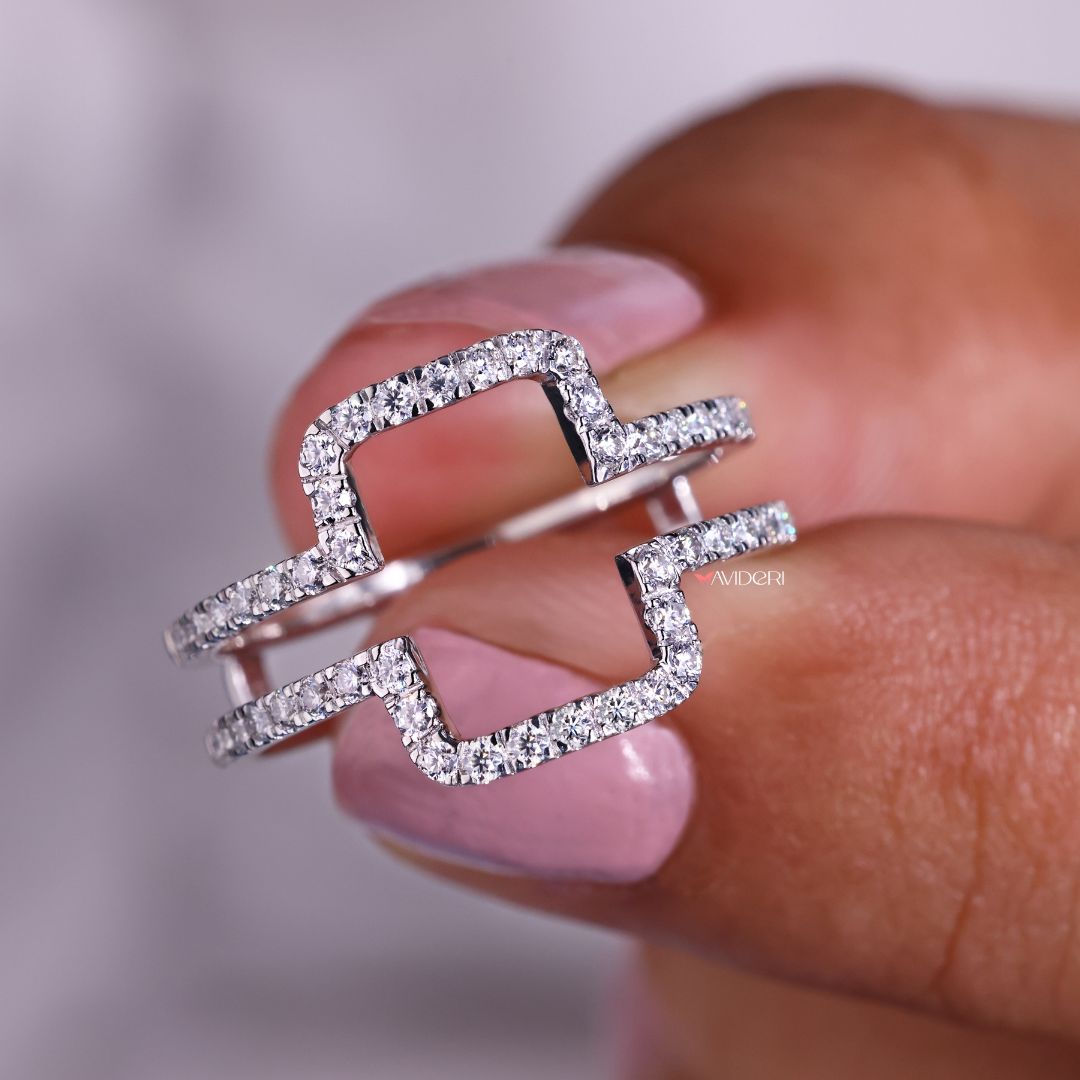
Round Moissanite Wedding Band
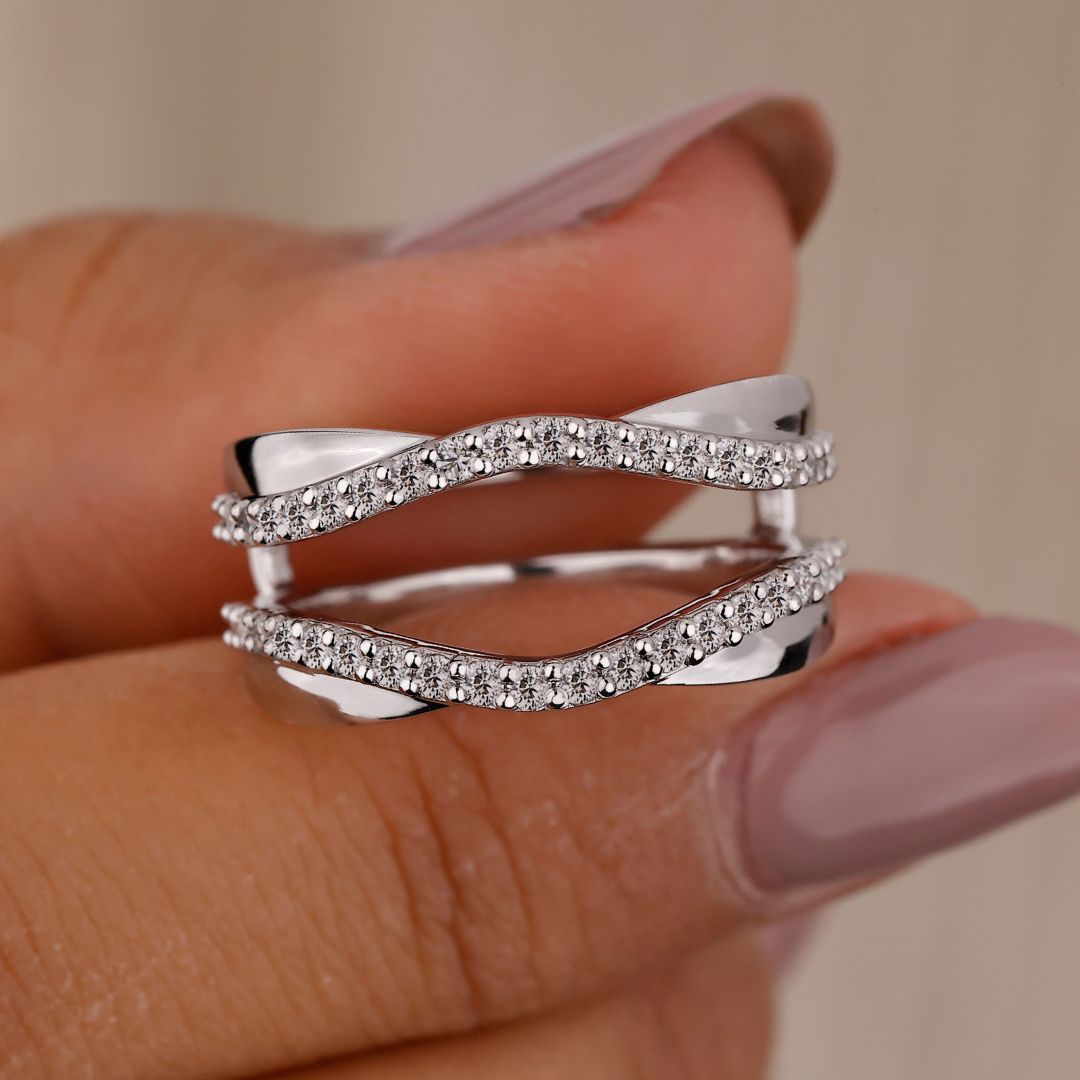
Wrap Guard Round Moissanite Wedding Band
Avideri's enhancer collections come in both lab grown diamond and moissanite, and the choice comes down to what you're prioritizing. You’ll find the rings set with IGI certified lab grown diamonds and each stone is chemically and optically identical to mined diamonds. It typically costs 30 to 50 percent less than a mined equivalent of the same size and grade. It's the right call if certification and the word diamond matter to you.
Moissanite carries a higher refractive index, throwing more fire per carat at a lower price point, which makes it the pick for buyers chasing maximum sparkle on a tighter budget. Avideri offers both stones across the same enhancer styles and settings, so the decision rests on stone preference rather than design limitations.
How to Choose a Ring Enhancer
A few practical checks make sure the enhancer you order is the one that actually fits.
Check Compatibility With Your Engagement Ring
The height and shape of your engagement ring's setting decide which enhancer will actually fit. High-profile settings and tall center stones, halo rings included, need a deeper curved enhancer to clear the raised metal. Low-profile solitaires are more forgiving and work with nearly any style. Always have your engagement ring's exact dimensions on hand before ordering a custom enhancer.
Choose Stone Type: Diamond or Moissanite
Go with lab grown diamond if you want IGI certification and grading that matches your engagement ring's paperwork. Choose moissanite instead if you're chasing maximum fire, particularly when the engagement ring is also moissanite, since matching stone types keeps the whole set visually consistent.
Match the Metal
The enhancer should match your engagement ring's metal exactly, or mix metals on purpose as a real design choice. Decide which route you want before ordering, so the combination reads as a deliberate style choice rather than a mismatch.
Consider Width Relative to the Engagement Ring Band
An enhancer noticeably wider than your engagement ring's band tends to dominate the whole hand. A slimmer profile usually looks more balanced, so your engagement ring enhancer bands feel like part of the original ring instead of competing with it.
Conclusion
A ring enhancer is one of the more flexible pieces in a bridal set. It can add extra sparkle and structure to a solitaire or stand in as the wedding band itself. Avideri builds its enhancer collections, in both lab grown diamond and moissanite, to match the engagement ring you already have. Explore our lab grown diamond and moissanite ring enhancer collections, or book a virtual appointment for help with a custom fit.
Ready to Complete Your Ring?
Pair your engagement ring with an enhancer featuring lab grown diamonds or moissanite. Select the stone, metal, and style that work best with your existing ring.


