

Many buyers who come across the Dutch marquise assume it's simply a regional name for the same familiar cut. But the truth is, it isn't. While both shapes (marquise and Dutch marquise) share pointed ends and brilliant faceting, the Dutch marquise has a distinctly different silhouette. It is wider, more geometric, and less elongated than its classic counterpart. The clearest difference is the side profile, which gives each cut its own proportions, presence, and overall feel.
What is a Regular Marquise Cut Diamond?
The regular marquise is a long, boat-shaped brilliant cut with fully curved sides that taper to sharp points at each end. Also known as the navette, French for "little boat," the shape is often associated with King Louis XV of France and the well-known story that he commissioned a diamond cut to resemble the smile of his mistress. In its standard brilliant-cut form, the marquise is known for an elongated outline and strong visual spread. This shape can make it appear larger face-up than some other diamonds of similar carat weight. When comparing a Dutch marquise diamond vs a marquise, this dramatic length-to-width presence is one of the classic cut's defining traits.

Key Characteristics
- Long, narrow silhouette
- Curved sides forming a blade-like, elegant profile
- Sharp points that require V-prong or bezel setting protection
- A degree of bow-tie effect in every stone, with severity varying by cut quality
What is a Dutch Marquise Diamond?
The Dutch marquise takes the classic shape and swaps the curved arcs for straight, angled sides. That change gives it a six-sided, elongated hexagon outline instead of a smooth boat shape. Its center usually appears fuller, so the Dutch cut often reads wider and more structured than the traditional cut's elongated sweep.
You may also see the shape described as a Rupee cut, a name that refers to its elongated, diamond-like outline.
This is best understood as a modern, antique-influenced interpretation rather than a standardized mainstream diamond shape. Buyers should know they're comparing a niche cut with plenty of character against a long-established classic.

Key Characteristics
- Six straight edges forming a pointed hexagon
- Shorter, wider profile than the regular marquise
- Fuller-looking center than many regular marquise cuts
- Same pointed ends, still requiring V-prong or bezel protection
- A bow-tie effect that should still be judged stone by stone
Dutch Marquise vs. Regular Marquise - The Key Differences
The defining distinction between the two comes down to the side profile: curved versus straight. Here's how the two shapes stack up when you put Dutch marquise vs regular marquise side by side.
| Feature | Regular Marquise | Dutch Marquise |
|---|---|---|
| Silhouette | Long, narrow, fully curved sides, blade-like, dramatic | Shorter, wider, straight angled sides, elongated hexagon outline |
| Side Profile | Smoothly curved arcs from belly to point | Straight angular edges - six-sided geometric outline |
| L/W Ratio | Typically 1.75-2.15, longer and thinner | Typically 1.85-2.10, fuller center, less extreme elongation |
| Bow-Tie Effect | Present - can be more prominent in narrow cuts | Present but often less severe due to wider midsection |
| Visual Weight | Maximum finger elongation, dramatic presence | Balanced, architectural - modern elegance |
| Setting Risk | Sharp points need V-prong or bezel protection | Pointed tips still need V-prong protection |
| Style Character | Bold, fashion-forward, royal history | Geometric, contemporary, vintage-meets-modern |
| Best For | Maximum drama and finger length effect | Distinctive look with a more structured, modern feel |
Also Read: Marquise vs Oval: Which diamond shape should you pick?
Shape and Silhouette - The Main Difference
The regular marquise has fully curved sides that bow outward, much like a football or the hull of a boat. The Dutch marquise, by contrast, has straight, angled sides, closer to a playing-card diamond stretched lengthwise. A regular marquise looks like it's mid-motion, all curve and taper. A Dutch marquise reads more like a stone set in a vintage brooch, angles doing the work instead of a sweep.
Sparkle - Both are Brilliant Cuts
Both shapes use brilliant-style faceting, delivering strong light return, fire, and flashes of white brilliance. A Dutch marquise can look lively across its wider surface, while a well-cut regular marquise can be just as brilliant. In either shape, cut quality matters because poorly proportioned stones are more likely to show distracting darkness through the center.
Bow-Tie Effect - A Shared Characteristic
Each shape can display some version of the bow-tie: a dark shadow across the center that appears in many elongated brilliant cuts. In the Dutch marquise, the wider midsection may make that shadow look softer in some stones, but it still depends on the individual cut. It's always worth inspecting the actual stone in person or requesting a 360° video before buying online.
Price Comparison
Both cuts can cost less per carat than a round brilliant diamond of comparable quality, but the final price still depends on the individual stone, material, certification, and retailer. Between the two, the regular marquise may run slightly higher when market recognition and demand are stronger. In a Dutch marquise vs marquise diamond comparison, a moissanite or lab grown version of either cut can cost significantly less than a mined diamond counterpart. It allows buyers to size up in carat weight for less.
Settings for Each Shape
Pointed ends make protective settings essential for both shapes, though the styles that suit each lean into different aesthetics.
Regular Marquise Settings
- V-prong solitaire: The classic choice, safeguarding both delicate points while keeping focus on the stone's dramatic length.
- Bezel setting: Wraps the diamond in a full metal frame for a more modern look and added protection.
- Halo setting: Amplifies the marquise's visual size while reinforcing its pointed tips against everyday wear.
- East-west orientation: Reduces snagging risk and creates a bold, horizontal look that feels fresh against the traditional north-south setting.
Dutch Marquise Settings
- V-prong solitaire: Draws attention to the shape's distinct geometric outline rather than smoothing it over.
- Bezel setting: Emphasizes the Dutch marquise's sculptural, hexagonal form for a clean, architectural edge.
- East-west orientation: Particularly striking on this cut, since its straight sides form an unusually crisp horizontal line.
- Vintage-inspired details: Milgrain and filigree pair naturally with the shape's antique European heritage for a romantic finish.
Consider Moissanite for Either Shape
Both shapes are available in moissanite rings at Avideri. Moissanite throws more fire than diamond. Its higher refractive index bends light hard, and elongated cuts stretch that sparkle across every facet. In addition, we also carry lab grown diamonds with IGI certification.
Which Should You Choose?
Neither shape is objectively better; the right pick depends on the look and feel you're after.
Choose the Regular Marquise If…
You want maximum finger elongation with a dramatic, bold look. You're drawn to the organic, flowing curves of a traditional marquise over sharp geometric angles, and you appreciate a shape with a long royal and fashion history behind it.
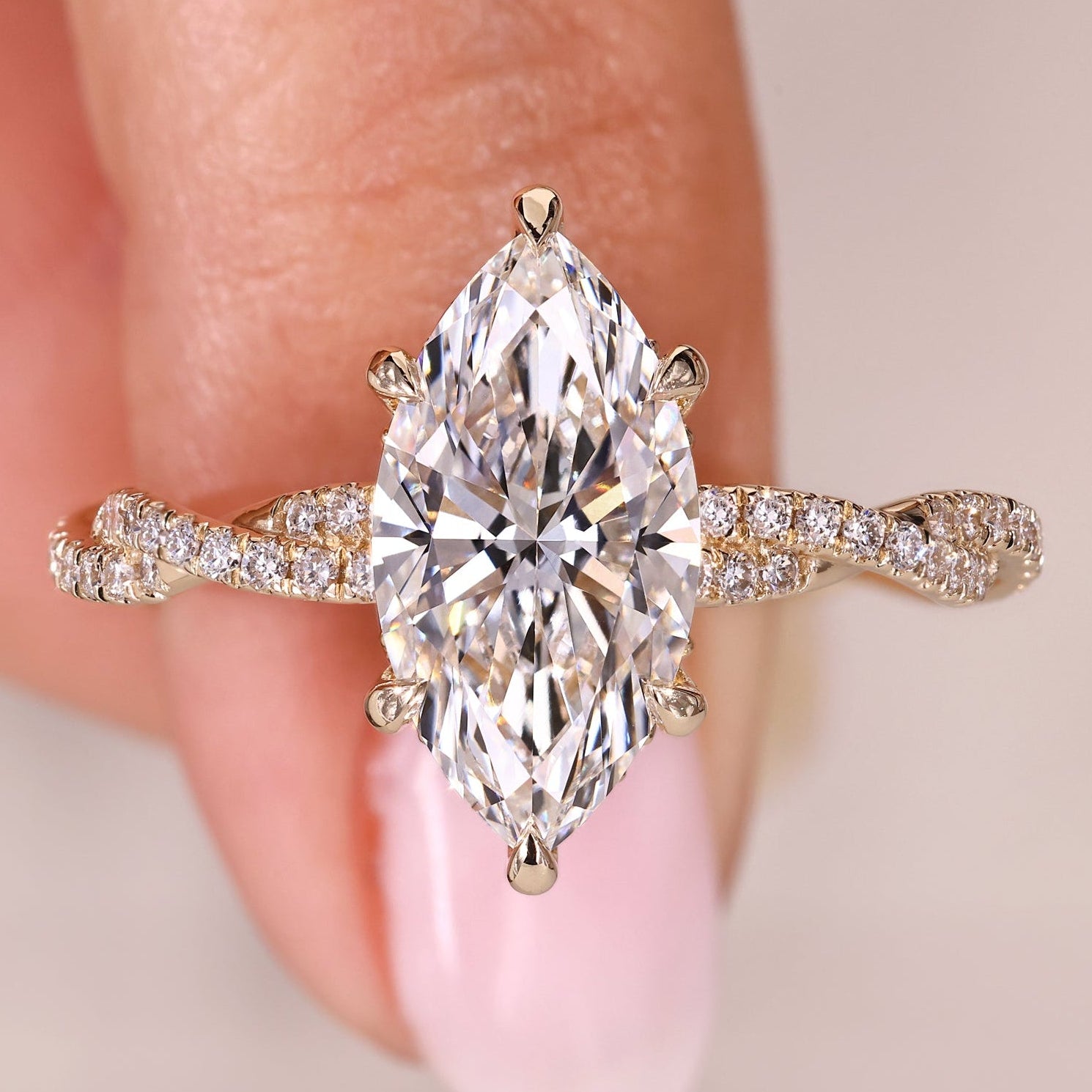
Marquise Cut Diamond Ring with Round Diamond Twisted Pave Style Band
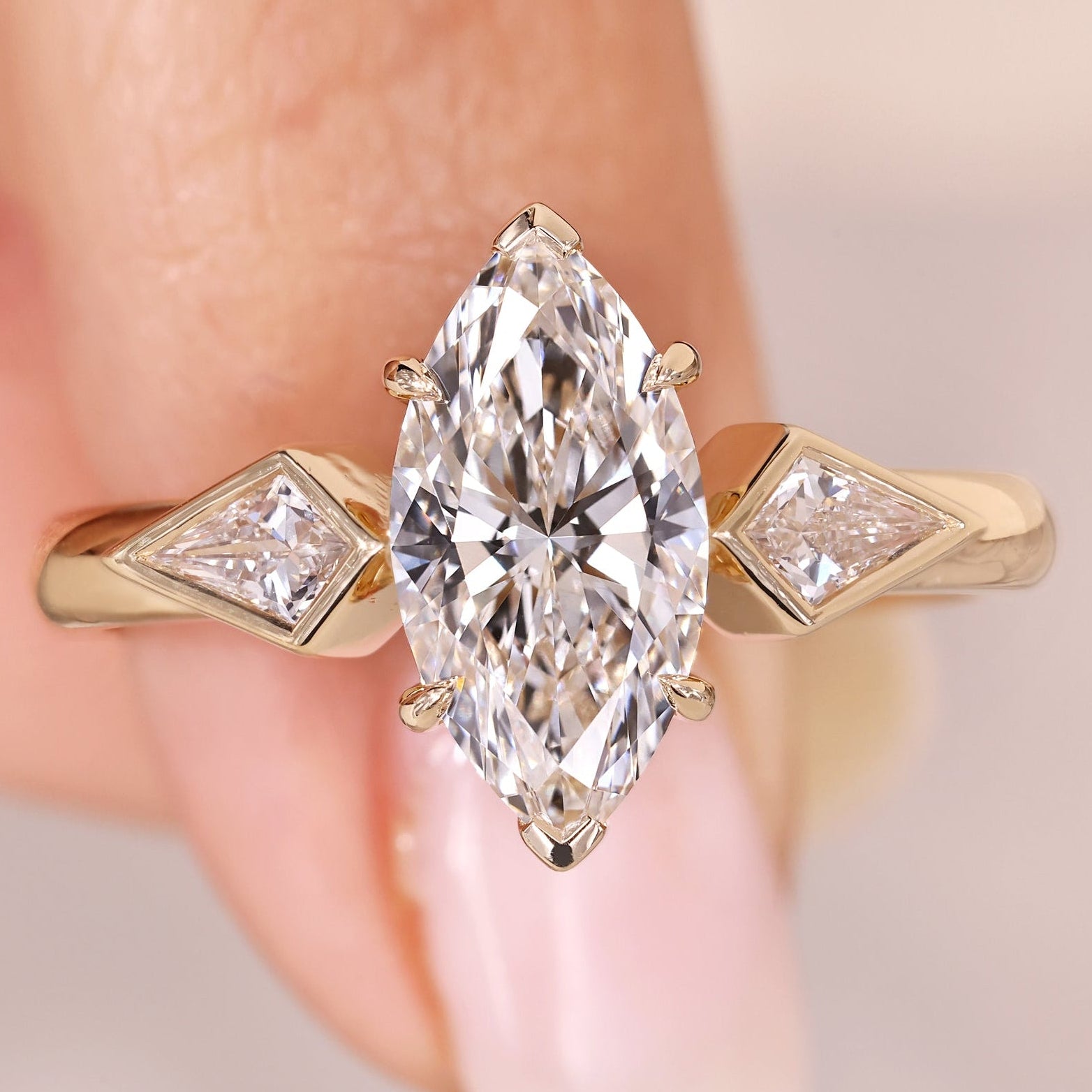
Marquise Diamond Ring in Three Stone Style
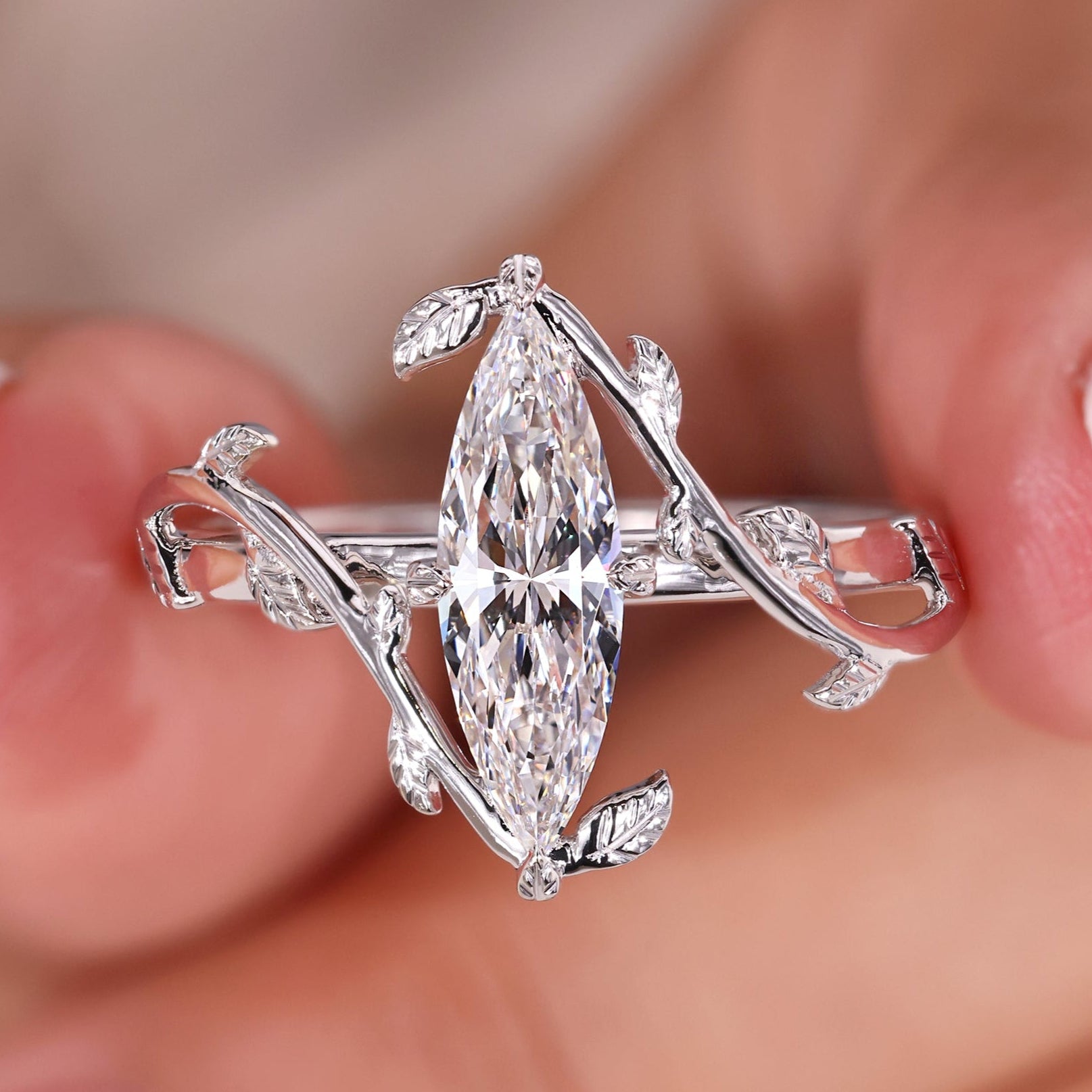
Marquise Cut Diamond Ring with Marquise and Round Side Stone
Choose the Dutch Marquise If…
Some buyers who see a Dutch marquise for the first time don't immediately clock it as a marquise at all; that's part of the appeal. If a balanced, geometric outline matters more to you than maximum elongation, or you'd rather minimize the bow-tie effect than treat it as part of the shape's character, this is the cut to look at.
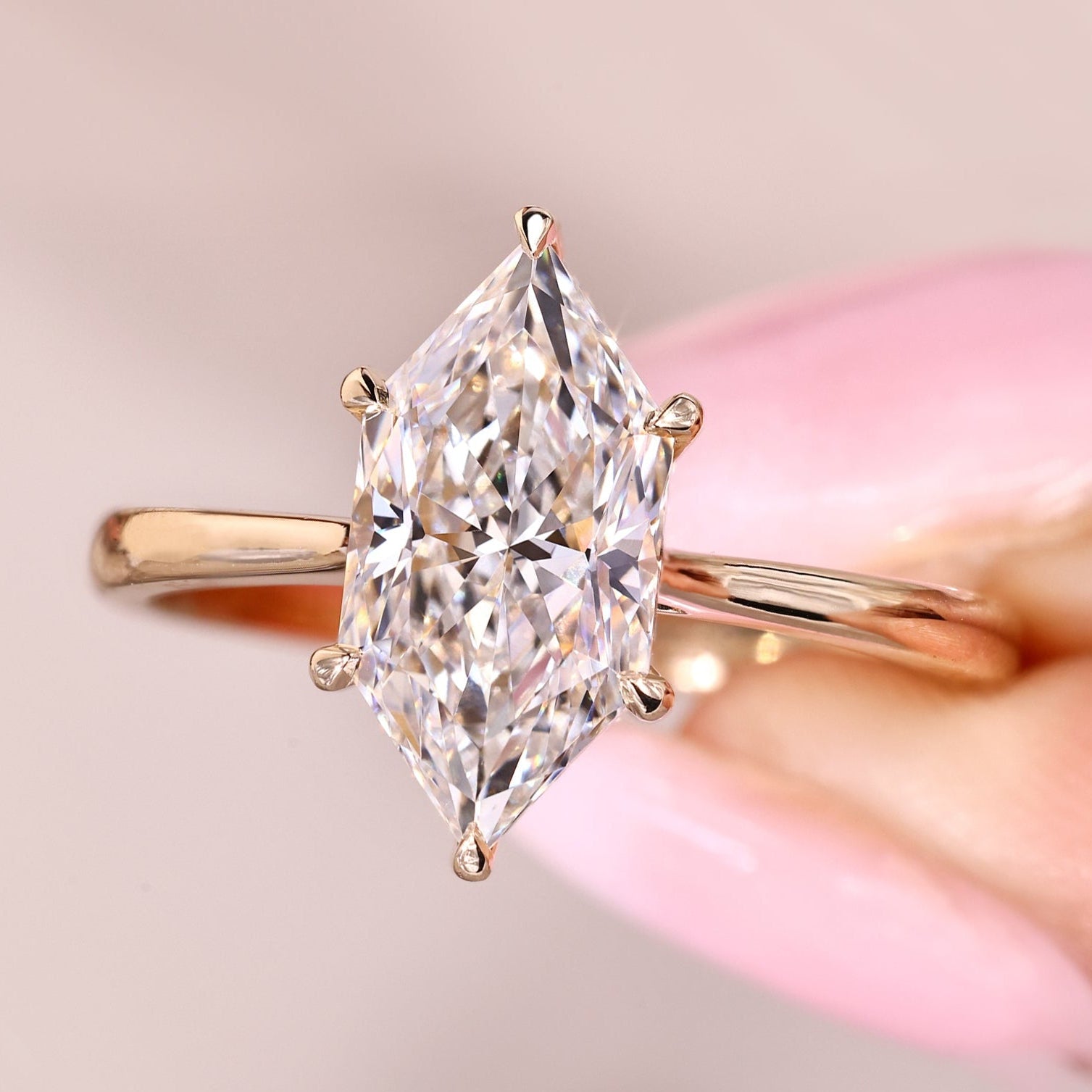
Dutch Marquise Diamond Ring In Hidden Halo Style
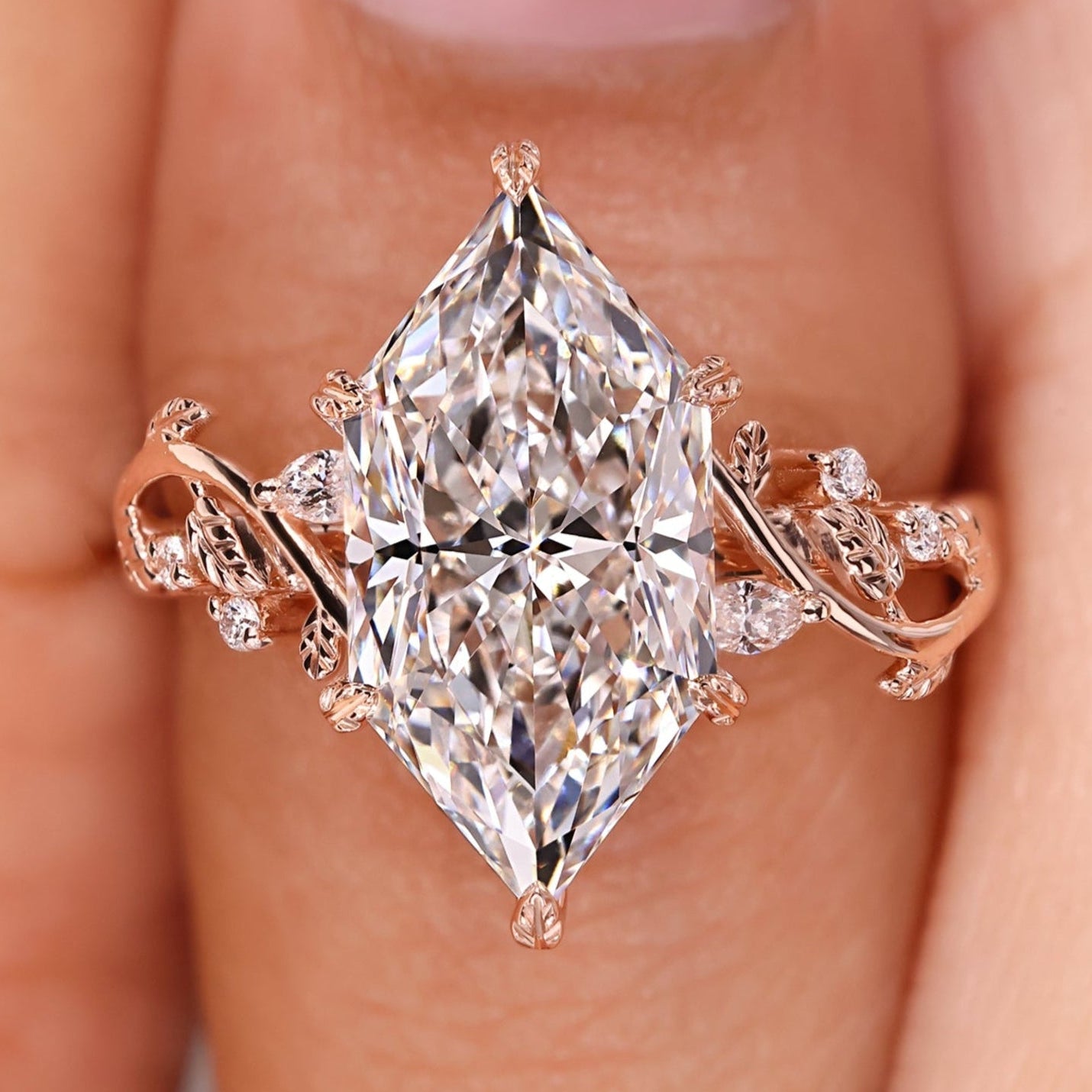
Dutch Marquise Diamond Nature Inspired Engagement Ring
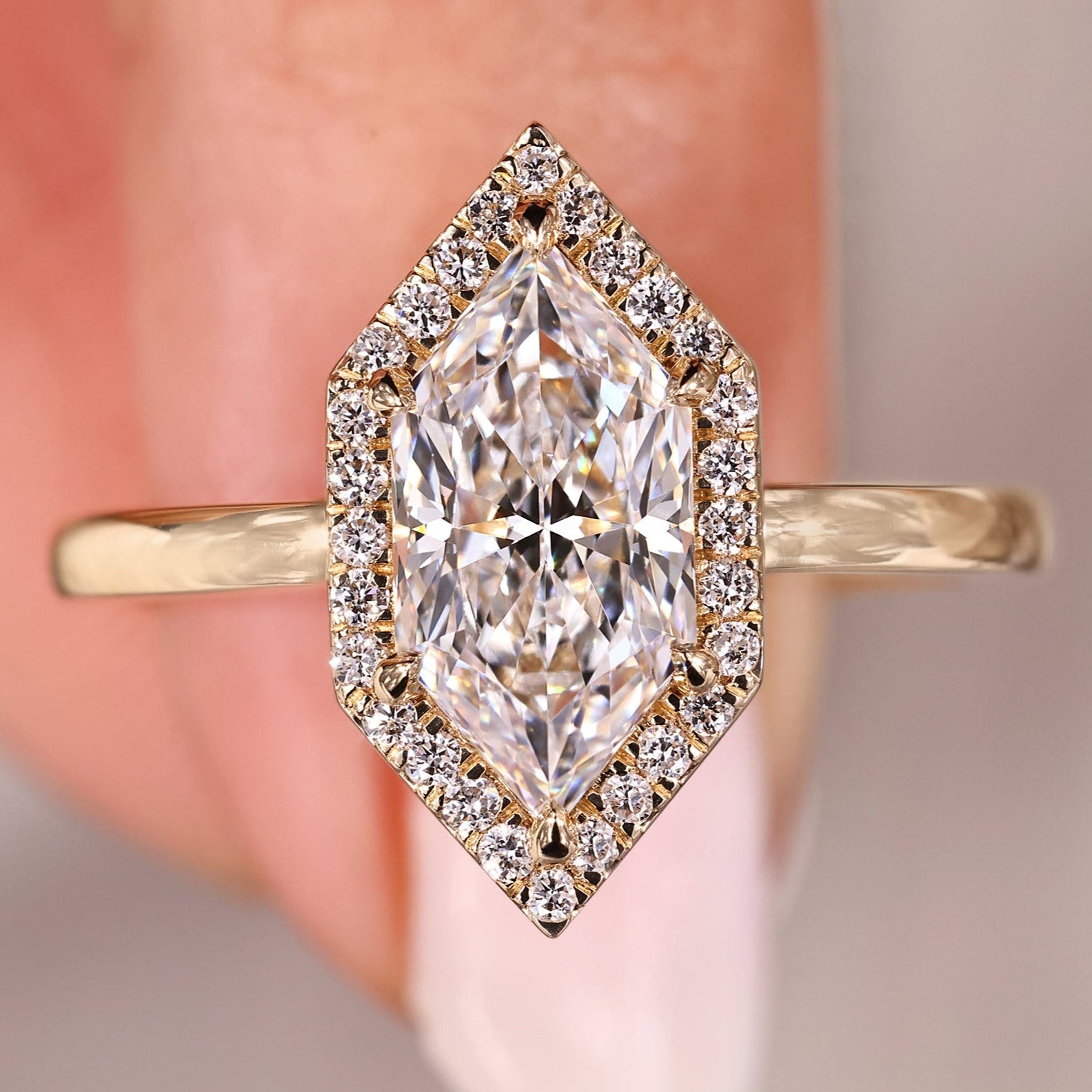
Dutch Marquise Halo Diamond Engagement Ring
Conclusion
The Dutch marquise isn't just a variation in name; it's a genuinely different silhouette, with straight geometric sides standing in contrast to the regular marquise's flowing curves. When it comes to Dutch marquise vs marquise comparisons, the right choice simply depends on whether you're drawn to classic drama or architectural edge. Explore Avideri's marquise collections and see the two side by side, the classic sweep against the geometric edge, before deciding which one fits your style.
Ready to Choose Your Marquise?
Every love story is different, and your ring should be too. Create a custom Marquise ring with the diamond, setting, and details you love most.


