

Lab grown diamond engagement rings are having a moment, and honestly, it's about time. Walk into any jewelry store these days, and you'll find couples asking questions their parents never thought to ask: “Where did this diamond come from?” “What's the environmental cost?” “Can we get something just as beautiful without the baggage?”
Lab grown diamonds answer all three questions the way people want to hear. They're real diamonds, grown in weeks instead of millennia, without the mining scars or murky supply chains. Plus, they cost less. Not "cheap knock-off," more like "wait, we can afford the bigger one?" for less.
The choice feels pretty straightforward once you dig past the marketing noise. Same sparkle, same hardness, same everything that makes a diamond a diamond. Just a cleaner story behind it.
What Are Lab Grown Diamond Engagement Rings?
Picture a tiny diamond seed placed in a chamber that recreates the intense heat and pressure found miles underground. Scientists essentially speed-run the geological process using either HPHT (High-Pressure, High-Temperature) or CVD (Chemical Vapor Deposition). Both methods produce actual carbon crystals arranged in that signature diamond structure.
No one can tell the difference by looking. The only way to distinguish them involves expensive lab equipment that detects trace elements or growth patterns. For everyone else? It's just a gorgeous diamond catching light on someone's hand.
Here's what trips people up sometimes: they hear "lab grown" and think "fake." Wrong category entirely. Cubic zirconia is fake. Moissanite is a different stone. Lab diamonds are chemically identical to mined ones, which means they pass every test that defines what a diamond actually is. Getting hung up on origin is like refusing champagne because it wasn't made in a specific cave in France. The bubbles still taste the same.
When you choose engagement rings with lab grown diamonds, you're picking the modern option that happens to make more sense. Mining companies spent decades convincing everyone that rarity equals value, but scarcity doesn't make something better, just harder to get.
Why Choose Lab Grown Diamonds for Engagement Rings?
The environmental impact of diamond mining hits hard once you see the numbers. Traditional diamond mining moves tons of earth for every carat found, leaves giant pits scarring landscapes, and consumes staggering amounts of water and energy. Lab facilities have an impact too, but it's measurably smaller and happens in controlled industrial settings instead of in the wilderness.

Then there's the human cost that doesn't show up in marketing brochures. Conflict diamonds still exist, labor conditions remain questionable in some regions, and supply chains lack transparency. Lab diamonds sidestep that whole mess. You know exactly where your stone came from and who made it.
But let's be real, the price difference seals the deal for most people. The best lab grown diamond engagement rings run approximately 30 to 40 percent less than mined equivalents. That's not pocket change. That's upgrading from a half-carat to a full carat. It lets you choose the setting you actually want instead of settling. That's having money left over for, you know, literally anything else you need when starting a life together.
And because supply isn't tied to what miners happen to pull from the ground, jewelers stock more bounty. Want an oval cut in a specific size? Probably available. Looking for a fancy color? Lab-grown options expand your choices without expanding your budget into fantasy territory.
What to Look for Before You Buy
Cut determines whether your diamond sparkles like it's supposed to or just sits there looking dull. A well-cut stone bends light in ways that make people stop mid-sentence. Poor cuts waste potential, no matter how perfect the diamond looks on paper. This matters more than most people realize when they start shopping.
Clarity grades those tiny imperfections trapped inside during formation. Most inclusions stay invisible without magnification, so paying premium prices for flawless stones often feels unnecessary. The sweet spot sits around VS2 to SI1, clean to the eye, and reasonable on the wallet.
Color gets graded D through Z, with D being completely colorless and Z showing noticeable yellow tints. Most engagement rings with lab-grown diamonds land between D and J. Anything in that range looks white when set, though color nerds claim they can spot the difference. Most of us can't, especially once the diamonds are in a setting under normal lighting.
Carat just measures weight. Bigger numbers usually mean bigger stones, but cut quality affects size appearance more than people expect. A beautifully cut 0.9 carat often looks larger than a poorly cut 1.0 carat.
And here's where certification becomes your friend. IGI and GIA both grade lab-grown diamonds using the same standards as mined stones. That certificate isn't just paperwork; it's proof of what you bought and protection if you ever need to insure or resell. Skipping certification to save fifty bucks? Terrible trade-off.
Metal choice shapes both durability and style. Platinum lasts forever but costs more upfront. White gold gives you that same silvery look for less, though it needs replating every few years to maintain color. Yellow gold brings warmth. Rose gold skews romantic and vintage.
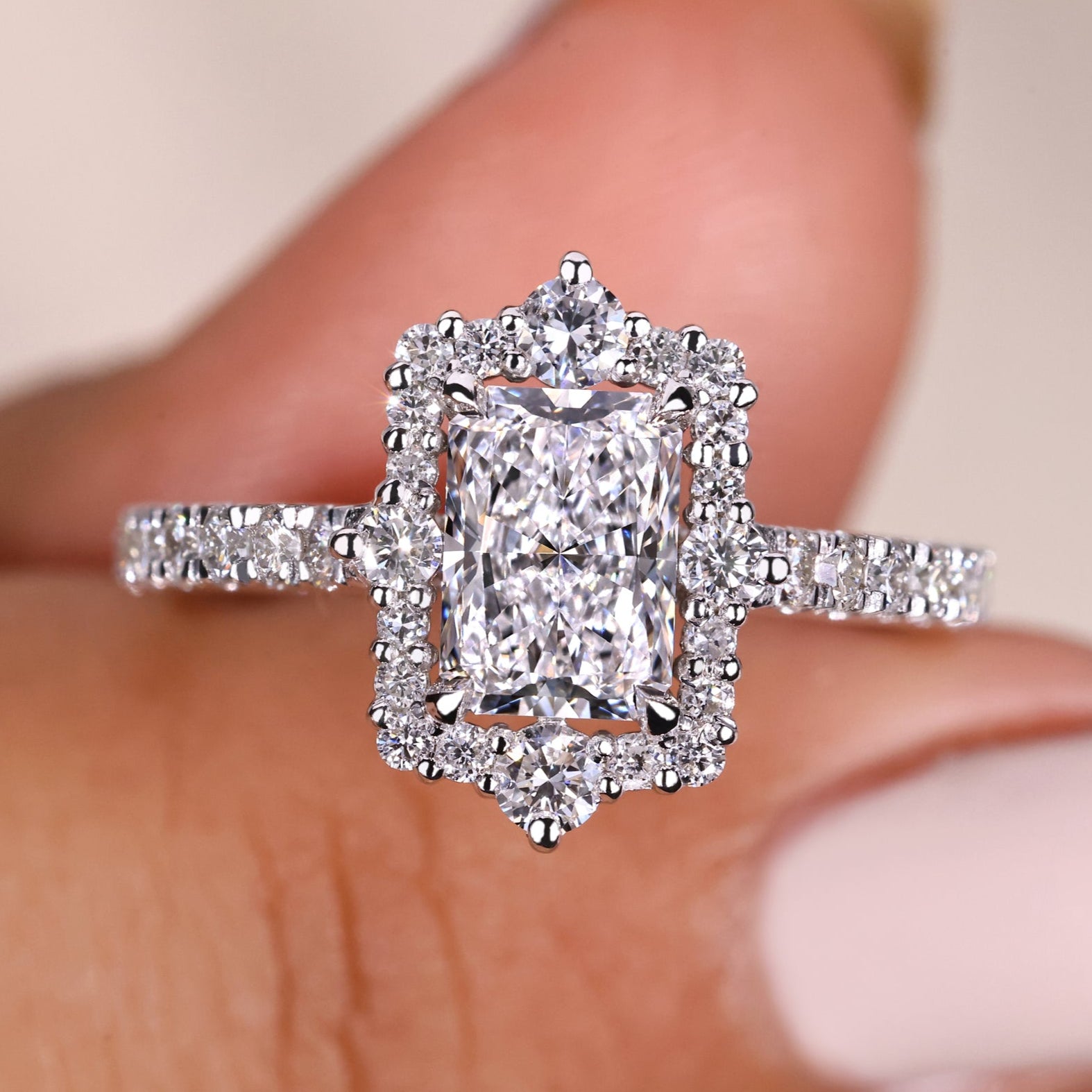
Settings protect and showcase the diamond. Prongs hold stones securely while showing maximum surface area. Bezels wrap metal around the diamond for serious protection, which is great if you're active. Halos surround the center stone with smaller diamonds for extra sparkle. Lab-grown diamond engagement ring prices shift based on all these choices, but the gap between lab and mined stones stays consistent across every category.
10 Best Lab Grown Diamond Engagement Rings in 2026
1. Classic Solitaire Round Brilliant
This is the ring everyone pictures when someone says "engagement ring." One round diamond, four prongs, clean lines. Platinum or white gold setting. No frills, no distractions, just a beautiful stone doing what it does best.
Round cuts maximize light return better than any other shape, which explains why they've dominated for decades. This design works because it doesn't try too hard. A solid one-carat stone with strong cut quality and well-balanced clarity and color grades is a common starting point for this look.


2. Vintage Inspired Cushion Cut Halo
A cushion-cut center stone gets surrounded by a ring of smaller lab diamonds, all sitting in rose gold with those tiny beaded details along the edges. The look screams vintage romance without actually being old.
Halos make center stones look larger, sometimes up to half a carat bigger visually. If you love antique aesthetics but want a brand new ring, this nails that balance. Your final spend will typically vary based on the center stone’s size and overall quality.


3. Modern Emerald Cut Three Stone
Three emerald cuts lined up in a row create this super clean, architectural look. The step-cut facets produce flashes of light instead of constant sparkle, giving it a more sophisticated, less "look at me" vibe.
This works especially well for people who lean towards minimalist design but still want something special. The straight lines and symmetry feel modern and intentional. White gold suits the geometric aesthetic perfectly. For this style, pricing typically varies based on the stone sizes and the overall quality of the full three-stone set.


4. Delicate Pave Band Princess Cut
A princess cut sits atop a thin band, completely covered in tiny diamonds. Maximum sparkle per square inch. The modern square shape contrasts nicely with the curved band, and the whole thing catches light from every angle.
The lower profile makes this practical for active lifestyles, with less chance of snagging on clothes or getting banged into things. Pricing typically varies based on the center stone size and the amount of pavé coverage you choose along the band.


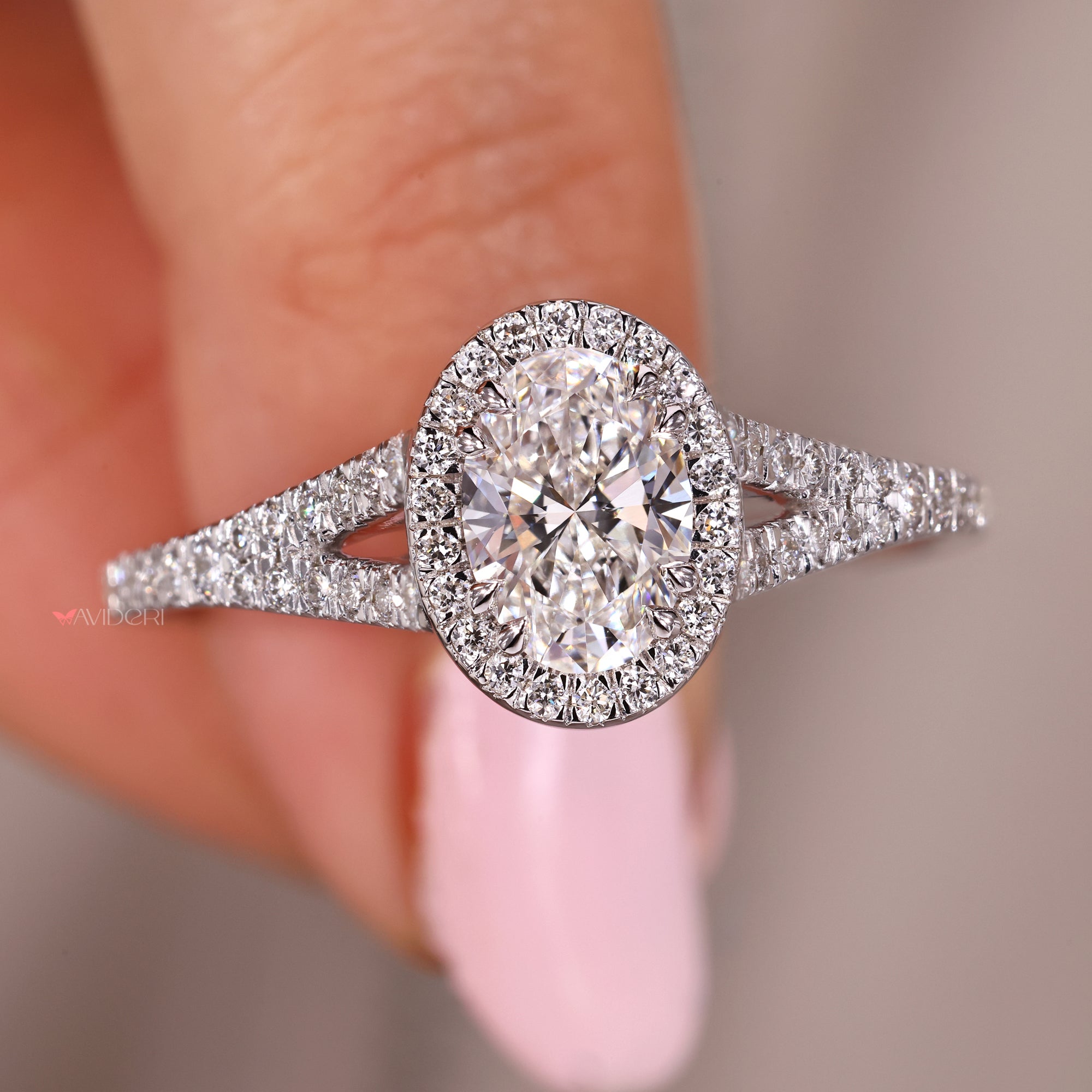
5. Split Shank Oval Cut
An oval diamond perches where a split band curves around both sides before meeting at the back. The elongated shape makes fingers look longer and more elegant, while the split shank adds just enough detail without going overboard.
Yellow gold gives this a warmer, slightly bohemian feel that works for people who don't want the typical white metal look. The overall cost typically depends on the oval’s proportions, its color, and its quality grades.


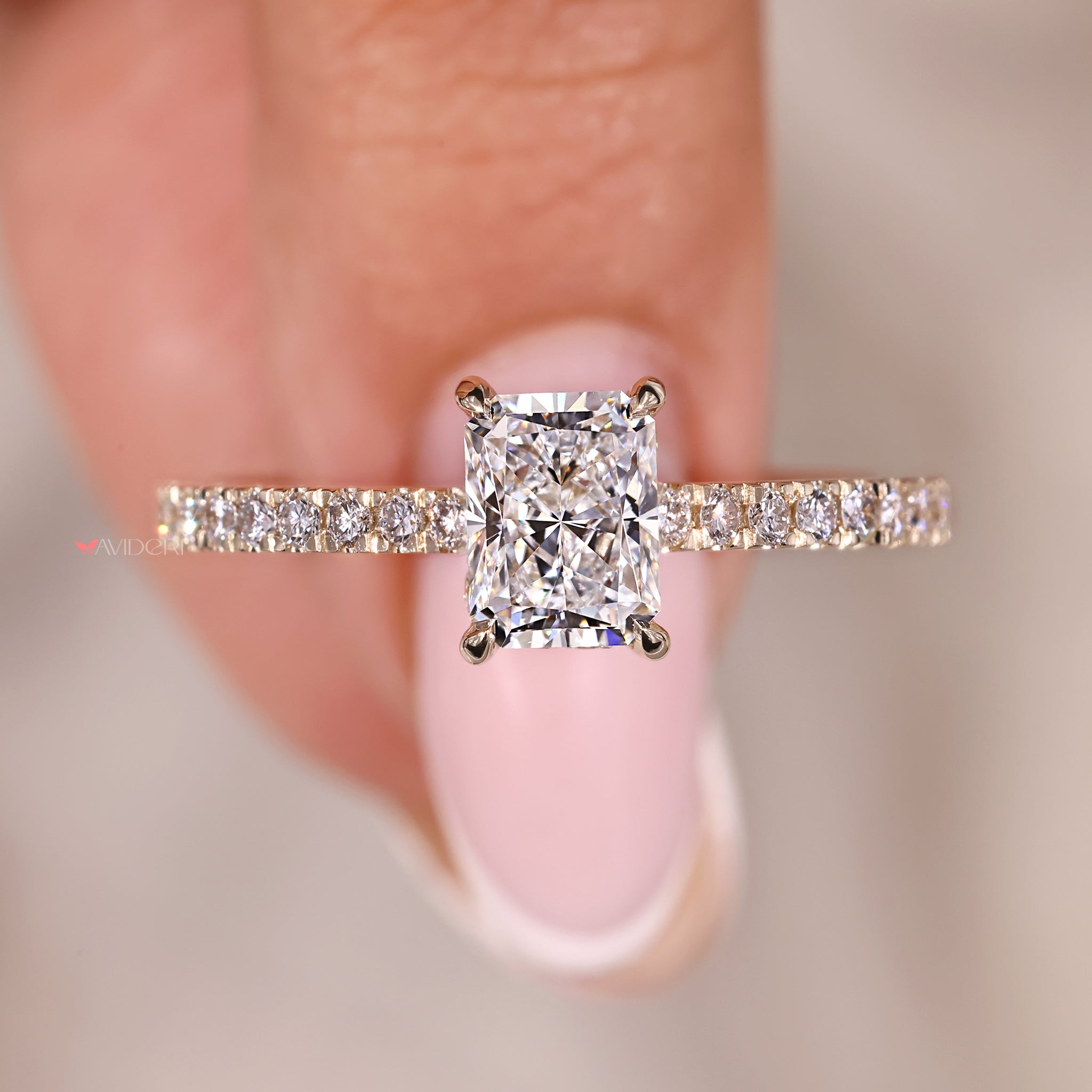
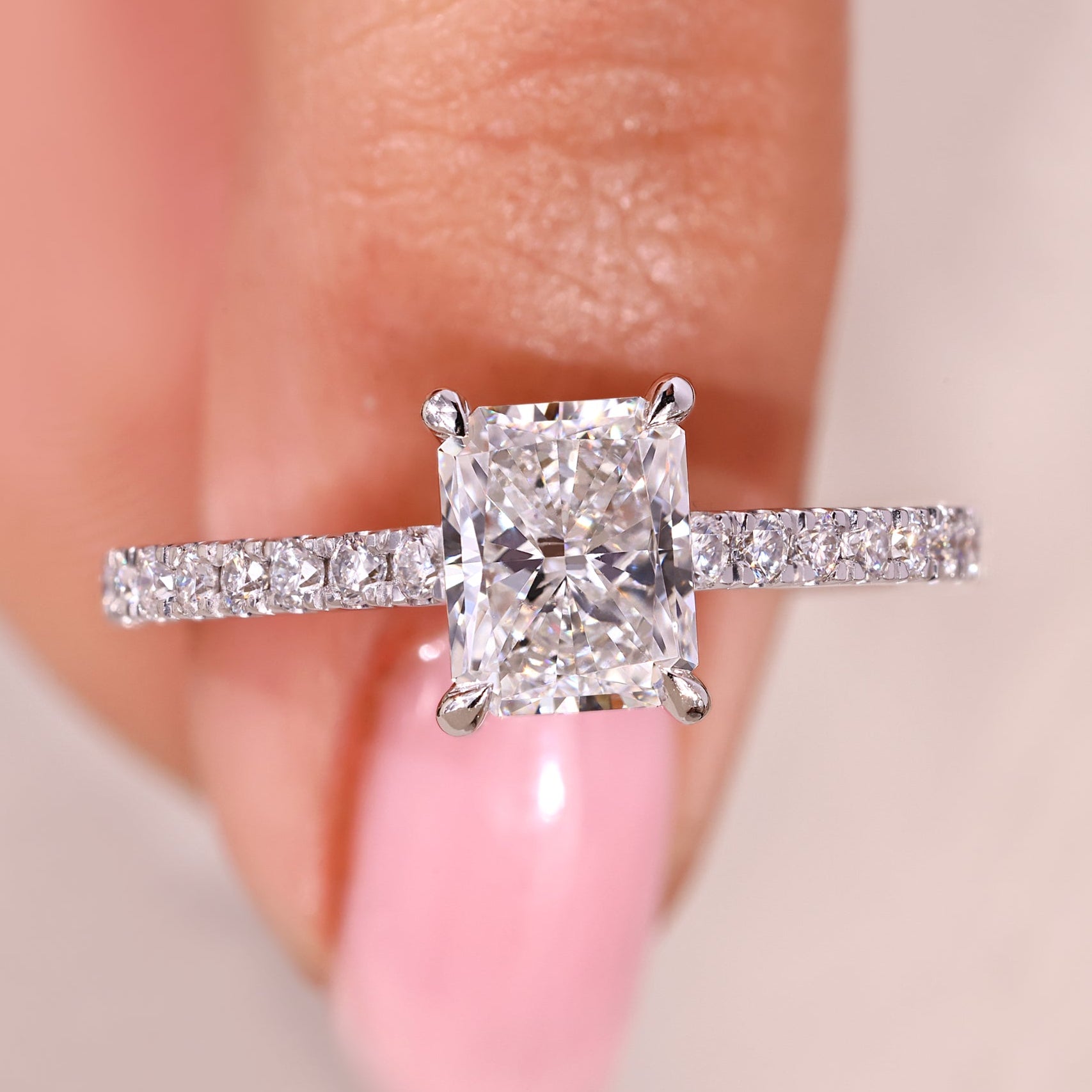
6. Radiant Cut with Cathedral Setting
Think of the radiant cut as a more brilliant, energetic take on the emerald cut. You get that clean, rectangular silhouette, but with a "crushed ice" sparkle that actually competes with a round diamond for brilliance. Placing it in a cathedral setting uses elegant arches to lift the stone off the finger, giving the ring a bit of "main character" energy without needing a single accent stone.
It’s an all-time standout choice because it looks substantial and intentional, especially when paired with a classic yellow gold band. The final price usually depends on the weight of the center radiant cut diamond and your choice of metal.
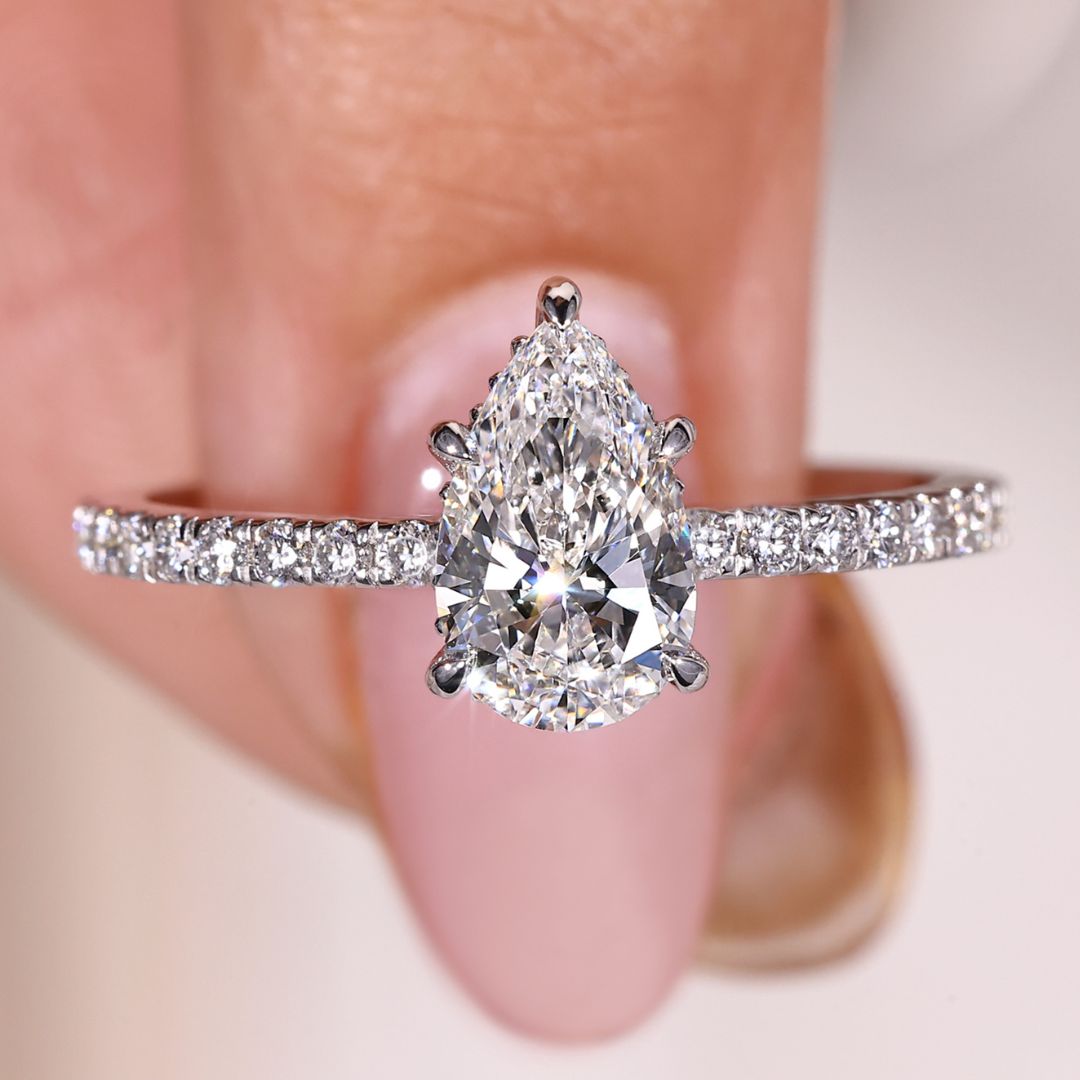
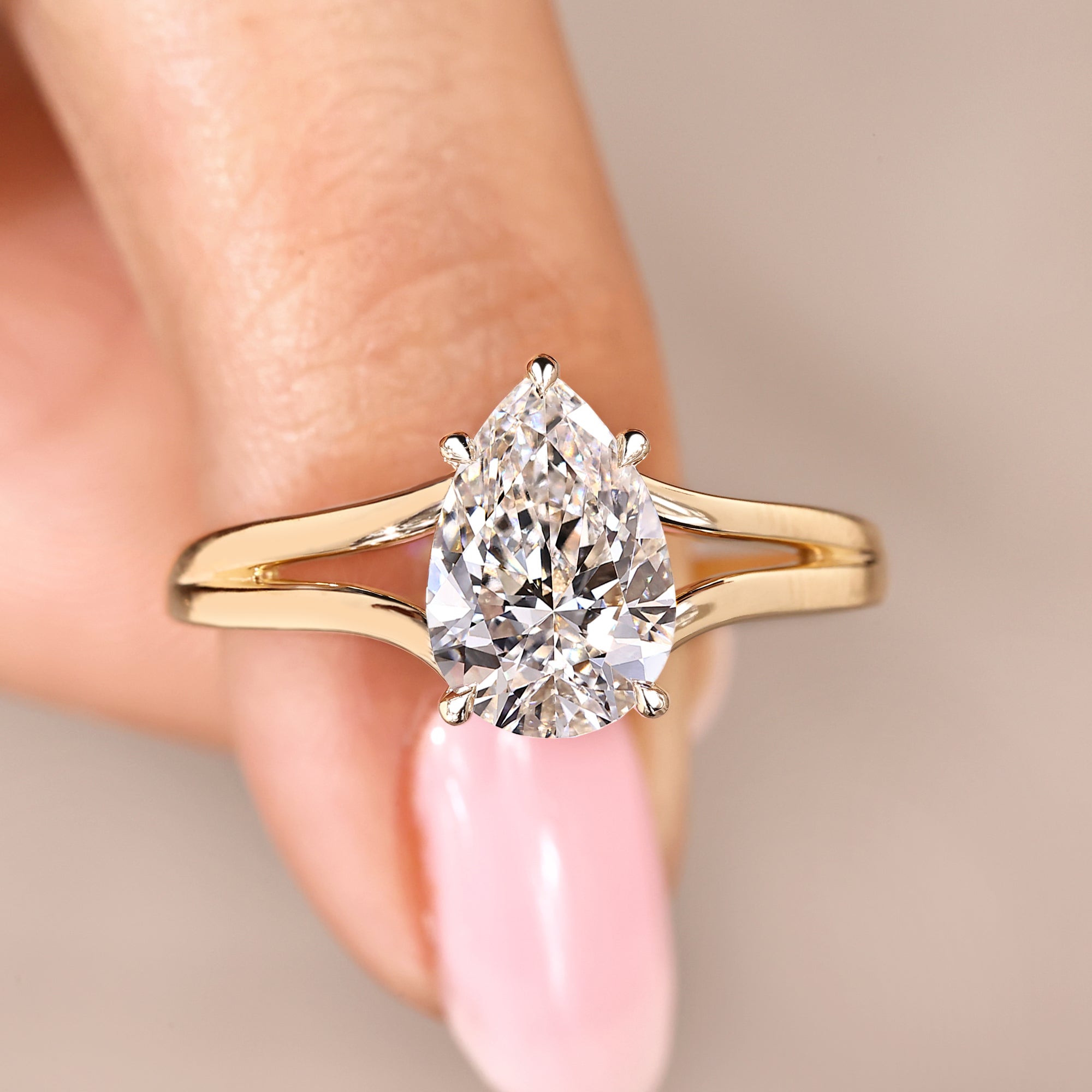
7. Pear Shaped with Hidden Halo
A pear-cut diamond looks like a teardrop, and underneath it sits a hidden halo that you can only see from the side. This clever detail adds sparkle without cluttering the top view. The asymmetrical shape feels unique without being weird.
People either love pears immediately or need time to warm up to them; there's rarely middle ground. If you're in the love camp, this style gives you something a bit different from what everyone else is wearing. Overall cost typically varies based on the pear’s size and quality, plus the hidden halo details and metal choice.

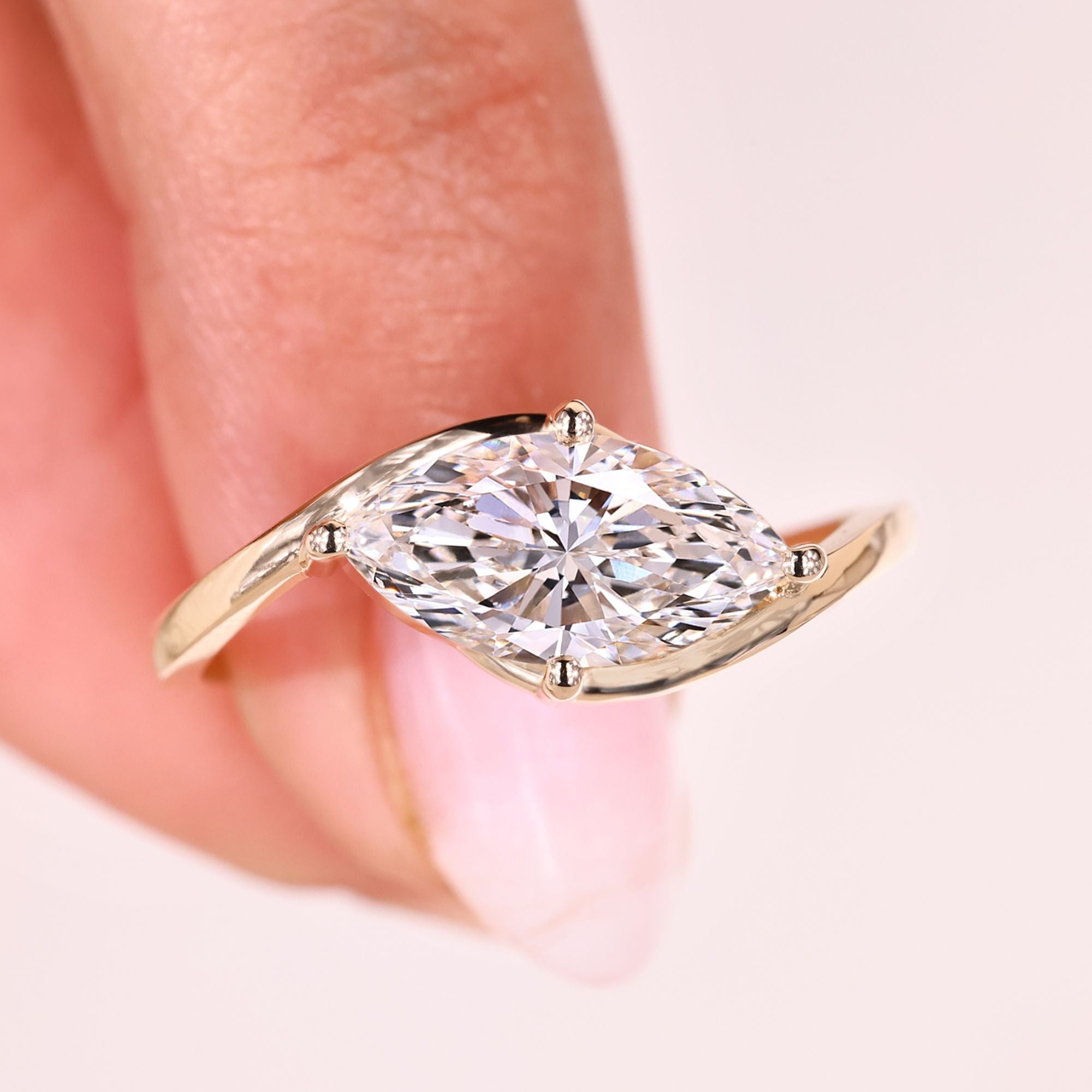
8. East to West Set Marquise
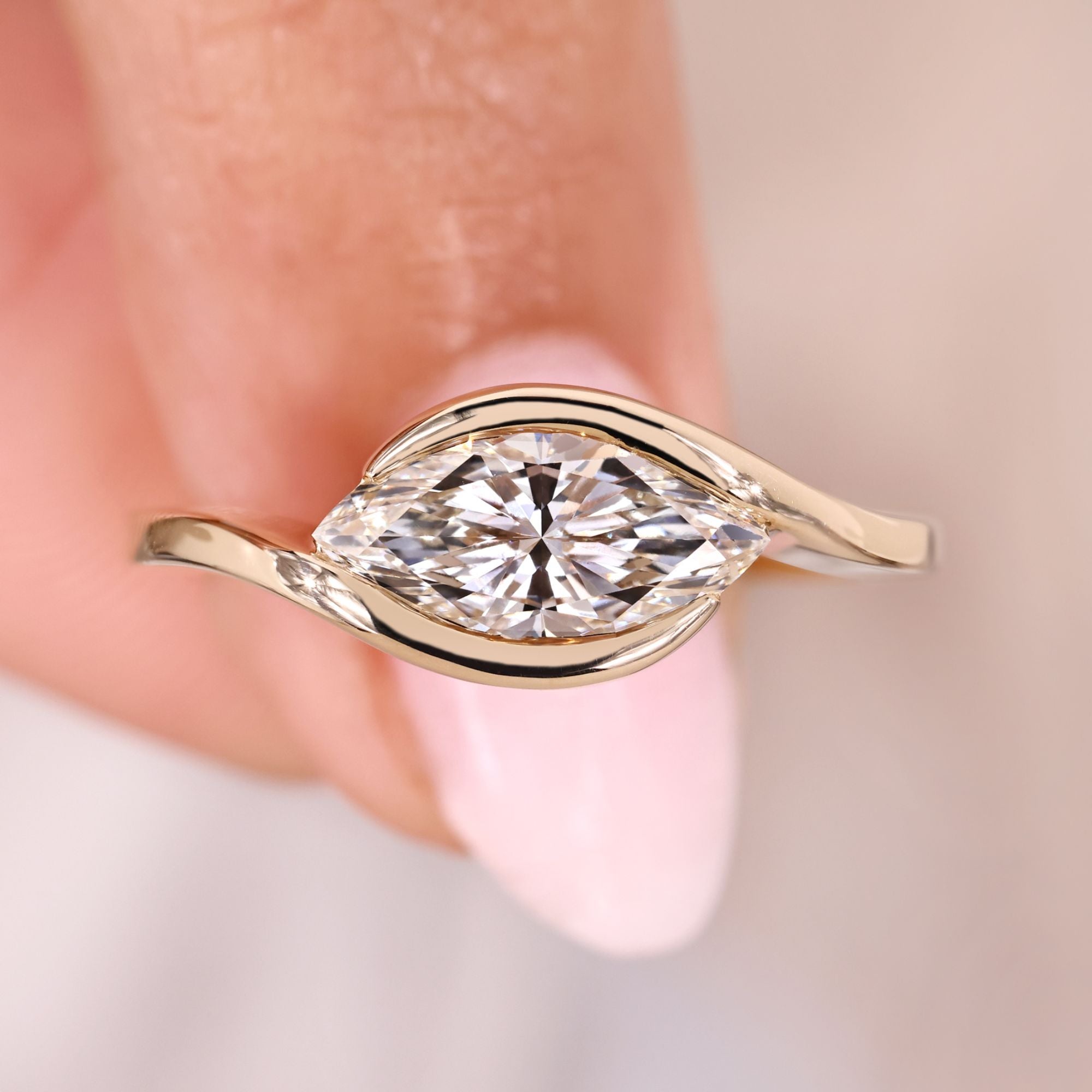
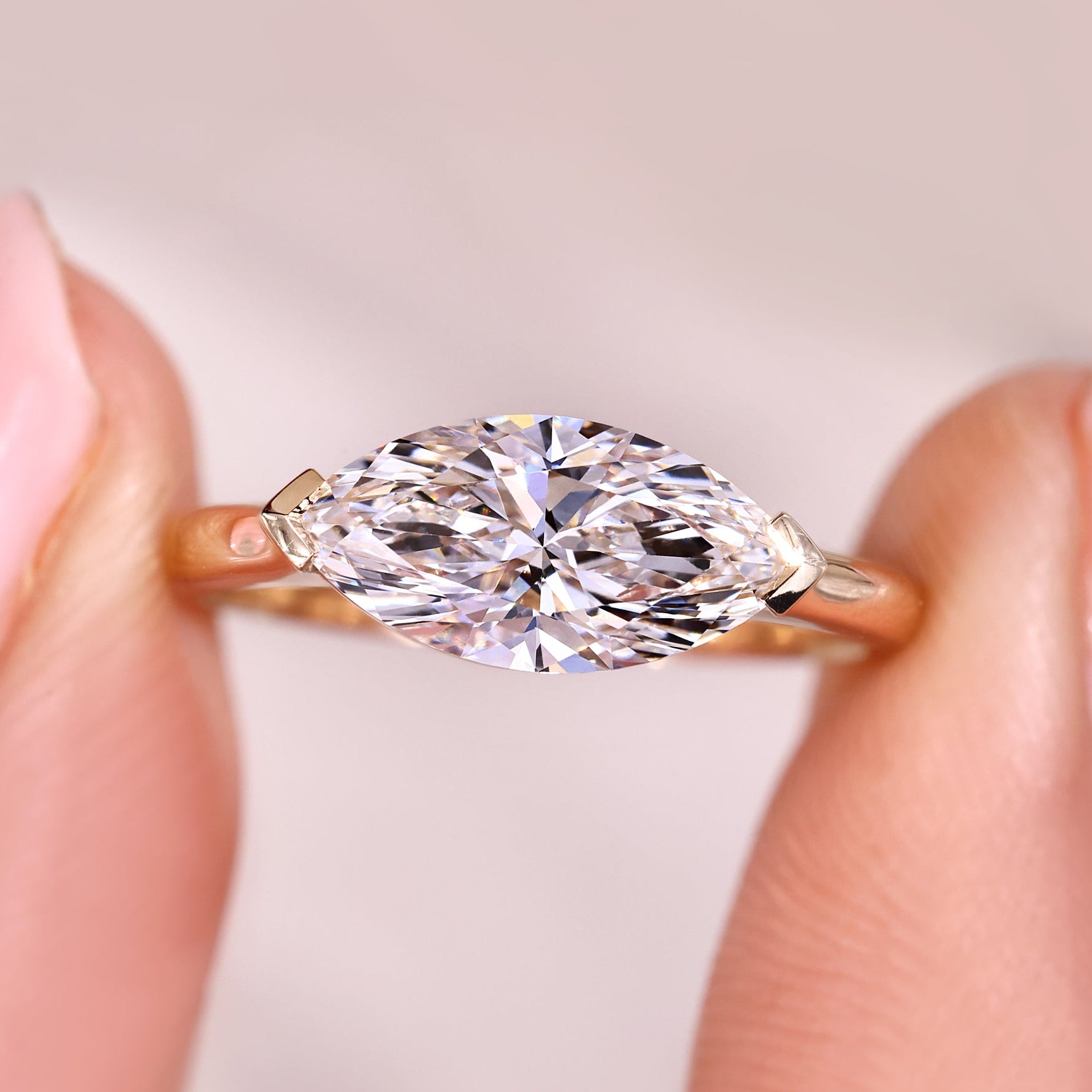
Instead of pointing up and down like usual, this marquise diamond sits horizontally across the finger. The unconventional orientation looks fresh and fashion-forward while staying totally wearable.
Marquise cuts maximize surface area, so they look bigger than their actual carat weight. Set sideways, they create interesting negative space that makes the whole design feel intentional and modern. Pricing typically varies based on the marquise’s size and quality, along with the setting style and metal choice.
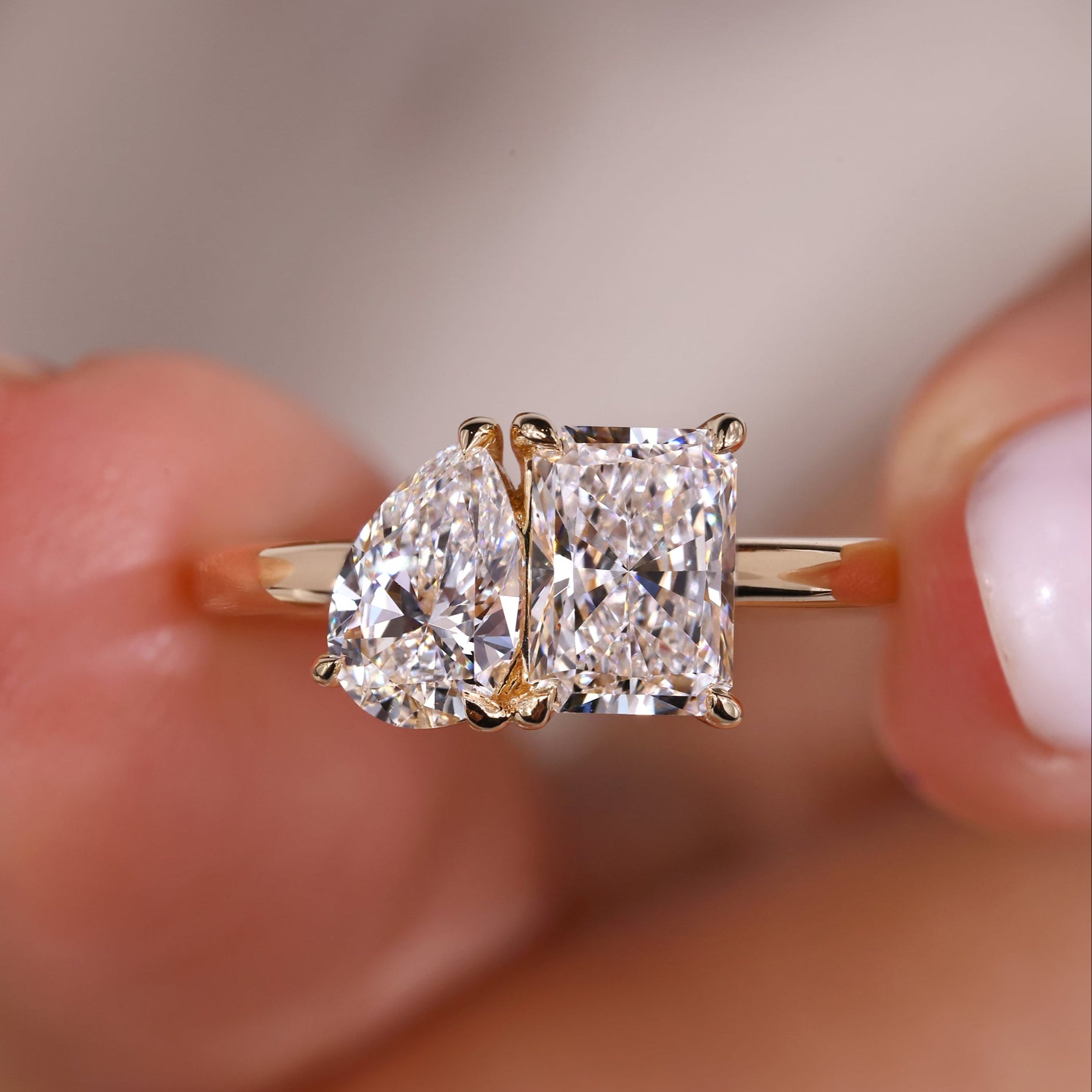
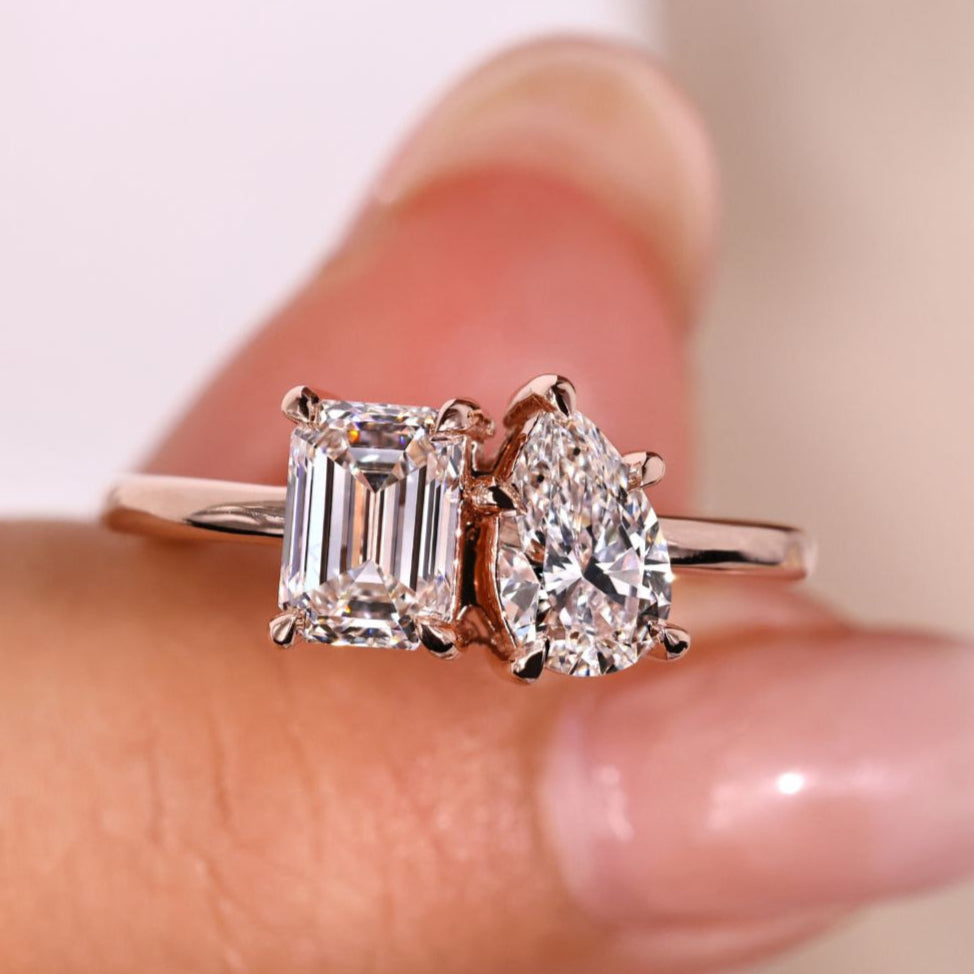
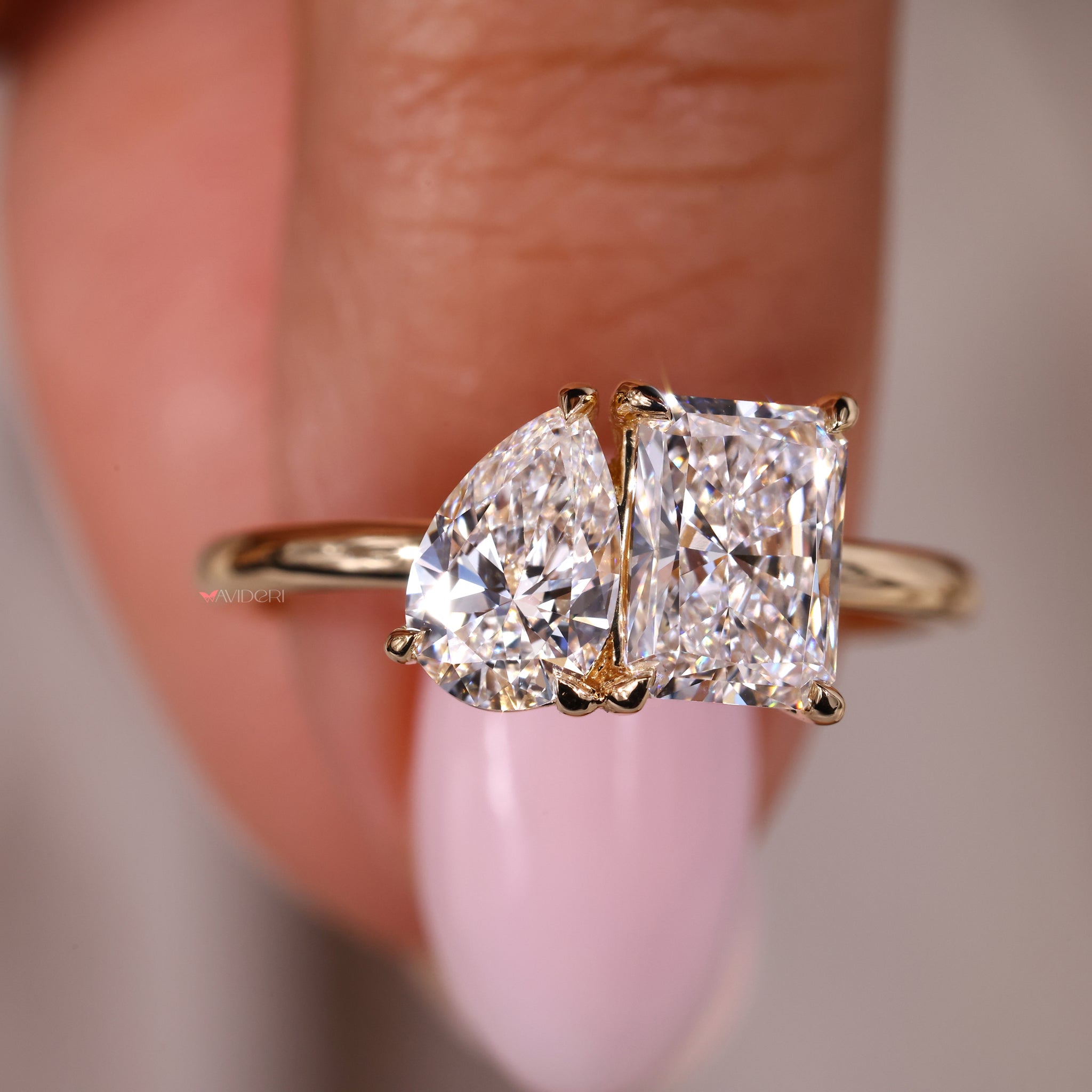
9. Romantic Toi et Moi (Two-Stone) Ring
The Toi et Moi is having a massive moment because it completely ignores the "one ring, one stone" rule. This design features two different diamond shapes, often a pear and an oval, nestled together in a flowing two-stone setting. It’s essentially a partnership in ring form, representing two unique individuals coming together.
This is the go-to for anyone who finds traditional rings a bit too symmetrical or "safe." Because you’re balancing two different focal points, the cost is going to depend on the combined carat weight and the specific quality grades of the two stones you pick.
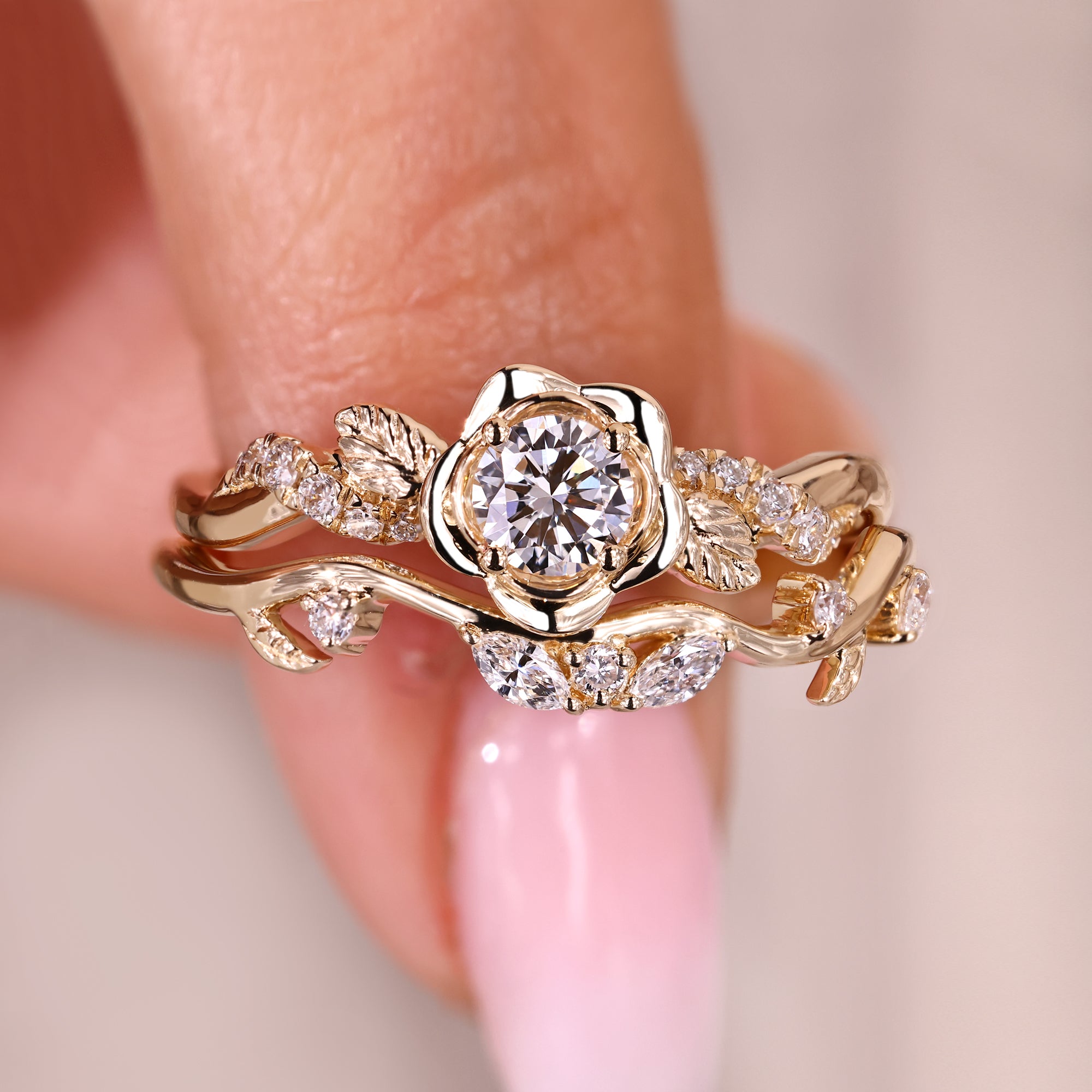
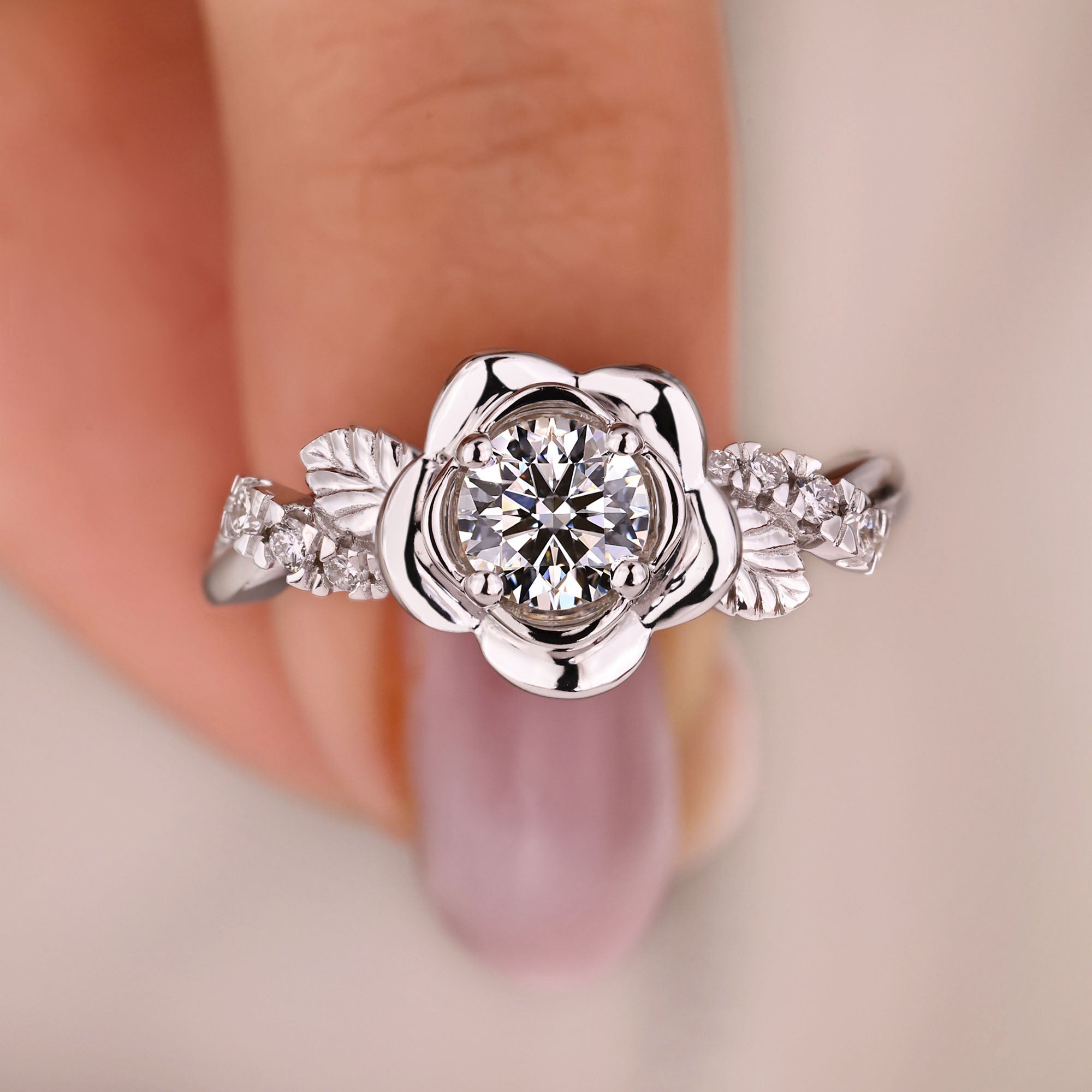
10. Nature Inspired Leaf Band with Round Diamond
A round diamond sits in a band decorated with delicate leaf and vine motifs pressed into the metal. The organic details bring nature vibes to the precious metal without looking costume-y.
Rose gold enhances the botanical theme beautifully, giving the whole piece a romantic, slightly whimsical feel that still works for everyday wear. Overall cost typically varies based on the center stone’s size and quality, as well as the intricacy of the leaf-and-vine detailing.

Conclusion
A list of rings is helpful, but the real win is clarity: couples know what matters, what is nice to have, and what will annoy them after six months of daily wear. The strongest picks tend to share the same quiet strengths, like secure settings, good cut choices, and proportions that look great on the hand instead of only in a zoomed photo. The smartest next step is to compare a few styles side by side, check certification details, and choose the option that feels honest for the moment you’re marking. Think about what feels right for your relationship, and take the next step that aligns with that feeling.
If you’re ready to turn all this research into the perfect ring, Avideri is an excellent place to start. Discover lab grown diamond and moissanite engagement rings with IGI-certified stones, plus we offer bespoke customization service if you want something truly personal. Recycled metals, conflict-free sourcing, insured shipping, and a 30-day money-back window keep the “cleaner story” practical too.
Design Your Dream Ring
Find something that truly feels right for you and create a lab grown diamond piece that reflects your story and emotions.


