


Choosing between an emerald and oval engagement ring can be harder than it first seems. Both diamond shapes have an elongated look and can give the finger a longer appearance, but their facet patterns create very different visual effects. An emerald cut is known for broad flashes of light and a mirror-like look, while an oval cut brings more noticeable sparkle from its brilliant-cut facets. Price, clarity, proportions, setting, and everyday wear can also affect which one makes more sense for you. This guide breaks down the differences so you can compare an emerald vs oval engagement ring with confidence.
Where Emerald and Oval Cuts Come From
The History of the Emerald Cut
The emerald cut dates back to the 1500s, when lapidaries developed step-cut facets to help protect fragile emeralds during cutting. The style was later adapted for diamonds and became closely associated with the Art Deco era of the 1920s and 1930s. Its straight lines, symmetry, and broad reflections still give emerald cut diamonds their structured appearance today.
The History of the Oval Cut
The modern oval brilliant cut is generally credited to diamond cutter Lazare Kaplan in the early 1960s. Inspired by the round brilliant, it uses brilliant-cut facets in an elongated shape, creating strong light return with a softer, rounded outline. Today, the oval cut is known for its sparkle and longer appearance across the finger.
Emerald vs Oval at a Glance
| Factor | Emerald Cut | Oval Cut |
|---|---|---|
| Cut style | Step cut | Brilliant cut |
| Light performance | Broad flashes and mirror-like reflections | More sparkle and scintillation |
| Face-up appearance | Broad, open look | Elongated appearance with strong finger coverage |
| Clarity | Inclusions can be easier to see | Facets can make some inclusions less obvious |
| Color | Body color can be easier to notice | Color can still be visible, depending on the stone |
| Durability | Cropped corners still need protection | Rounded outline offers fewer exposed corners |
| Maintenance | Requires regular cleaning to keep the open facets clear | Regular cleaning helps maintain sparkle |
| Price | Often lower per carat, depending on quality and market demand | Pricing varies with cut quality, proportions, and demand |
| Best suited styles | Art Deco, geometric, vintage-inspired | Solitaire, halo, three-stone, modern and traditional designs |
For shoppers comparing an emerald vs oval diamond, the biggest difference is the way each one handles light. From there, clarity, proportions, setting, and budget can help narrow the choice.
What Is an Emerald Cut Engagement Ring?

Shape and Facet Design
An emerald cut is usually rectangular with cropped corners and long, parallel step facets. Its large table creates a “hall of mirrors” effect, with broad flashes of light instead of the smaller sparkle seen in brilliant cuts.
Style and Overall Appearance
Its geometric shape suits Art Deco-inspired, vintage, and modern settings. Proportions also affect the look, with longer stones appearing narrower and wider stones giving more finger coverage.
What Is an Oval Engagement Ring?

Shape and Facet Design
An oval diamond is an elongated brilliant cut with rounded ends and curved sides. Its brilliant-cut facets usually create more visible sparkle than an emerald cut, though the result depends on the diamond’s proportions and cut quality.
Style and Overall Appearance
An oval combines round-brilliant sparkle with an elongated shape, making it suitable for solitaires, three-stone, and halo settings. Its length-to-width ratio can create either a wider or more elongated look.
Emerald vs Oval: The Key Differences

Sparkle and Light Performance
Emerald diamonds use step-cut facets that create broad flashes and reflections. Their large, open facets give the stone a clear, mirror-like appearance as light moves across the surface, rather than producing lots of small flashes.
Oval diamonds use a modified brilliant-cut pattern with smaller facets that break up light into more visible flashes. This creates a livelier sparkle, making an oval engagement ring noticeably more scintillating than an emerald cut.
Face-Up Size and Finger Coverage
Carat weight tells you how much a diamond weighs, but it does not tell you exactly how large it will look from above.
An oval diamond can appear large for its weight because of its elongated outline and face-up surface area. Emerald cuts can also provide substantial visual coverage because of their broad table and rectangular shape.
When comparing an emerald vs oval diamond, look at the actual length and width measurements rather than comparing carat weight alone.
For more context on elongated diamond shapes, compare the Dutch marquise cut vs marquise cut to see how their proportions affect the overall look.
Finger-Lengthening Effect
Both shapes can create a longer visual line along the finger because they are elongated.
A longer oval can emphasize this effect, while an elongated emerald can create a similar vertical line with a more geometric appearance. A wider proportion in either shape produces a different result.
There is no single diamond shape that works best for every hand. Ring size, stone measurements, setting style, and personal preference all affect how the ring looks.
Clarity and Color
Clarity deserves extra attention when buying an emerald cut. Its large table and open step facets can make inclusions easier to notice, especially when they sit near the center of the diamond.
An oval's brilliant faceting can break up the view of some inclusions, although you should still examine the individual stone rather than assuming a particular clarity grade will always look clean.
Color can also be more noticeable in an emerald cut because of its open appearance. When comparing color grade, look at the actual diamond in addition to its certificate.
Durability and Everyday Wear
Both shapes can work well for everyday wear when paired with a secure setting. Emerald cuts have cropped corners that benefit from protective prongs, while oval diamonds have rounded ends but still need a suitable girdle thickness. The setting and overall ring design play an important role in protecting either shape.
The Bow-Tie Effect in Oval Diamonds
The bow-tie effect is a darker band that can appear across the center of an oval diamond. It results from how the diamond's facets interact with incoming light and the viewing position.
Some degree of contrast can be present in oval diamonds, but a very strong dark area may affect how evenly the stone looks.
When shopping for an oval, view it from different angles and distances. Do not judge the stone only from a single photograph.
Emerald vs Oval on the Finger

How Proportions Change the Look
The length-to-width ratio describes how long a diamond is compared with how wide it is.
If you are also considering other elongated shapes, this guide to marquise cut vs oval cut can help you compare their proportions and appearance.
A narrower oval can create a more elongated look, while a wider oval appears rounder. The same applies to emerald cuts: a longer rectangle creates a different appearance from a wider one.
Depth also matters because two diamonds with the same carat weight can have different visible measurements. A deeper stone may carry more weight below the table without giving you the same face-up size.
Choosing for Your Hand
An emerald vs oval on hand comparison can tell you more than looking at loose stones on a screen.
Try both shapes in your ring size and compare their length, width, and overall presence. If you have shorter fingers, an elongated center stone may create more visual length, but that does not mean you have to choose one particular shape.
The best choice is the one whose proportions and overall look feel right when you actually wear it.
Emerald vs Oval Price Comparison
Price Per Carat
Diamond price depends on factors such as carat weight, color, clarity, cut, proportions, and market demand. Emerald cuts can sometimes cost less per carat than comparable oval diamonds, but prices vary by stone. Compare diamonds with similar quality grades before making a choice.
Clarity, Color, and the Total Budget
Emerald cuts may need a higher clarity grade because their open facets can make inclusions easier to notice, while ovals may offer more flexibility depending on the stone. A lab-grown diamond can also provide a different budget range, with both shapes available in lab-grown options.
Best Engagement Ring Settings for Emerald and Oval Diamonds
Solitaire


A solitaire keeps the center diamond as the main focus. An emerald solitaire highlights the rectangular outline and step-cut reflections. An oval solitaire puts more attention on its curved outline and sparkle.
Three-Stone
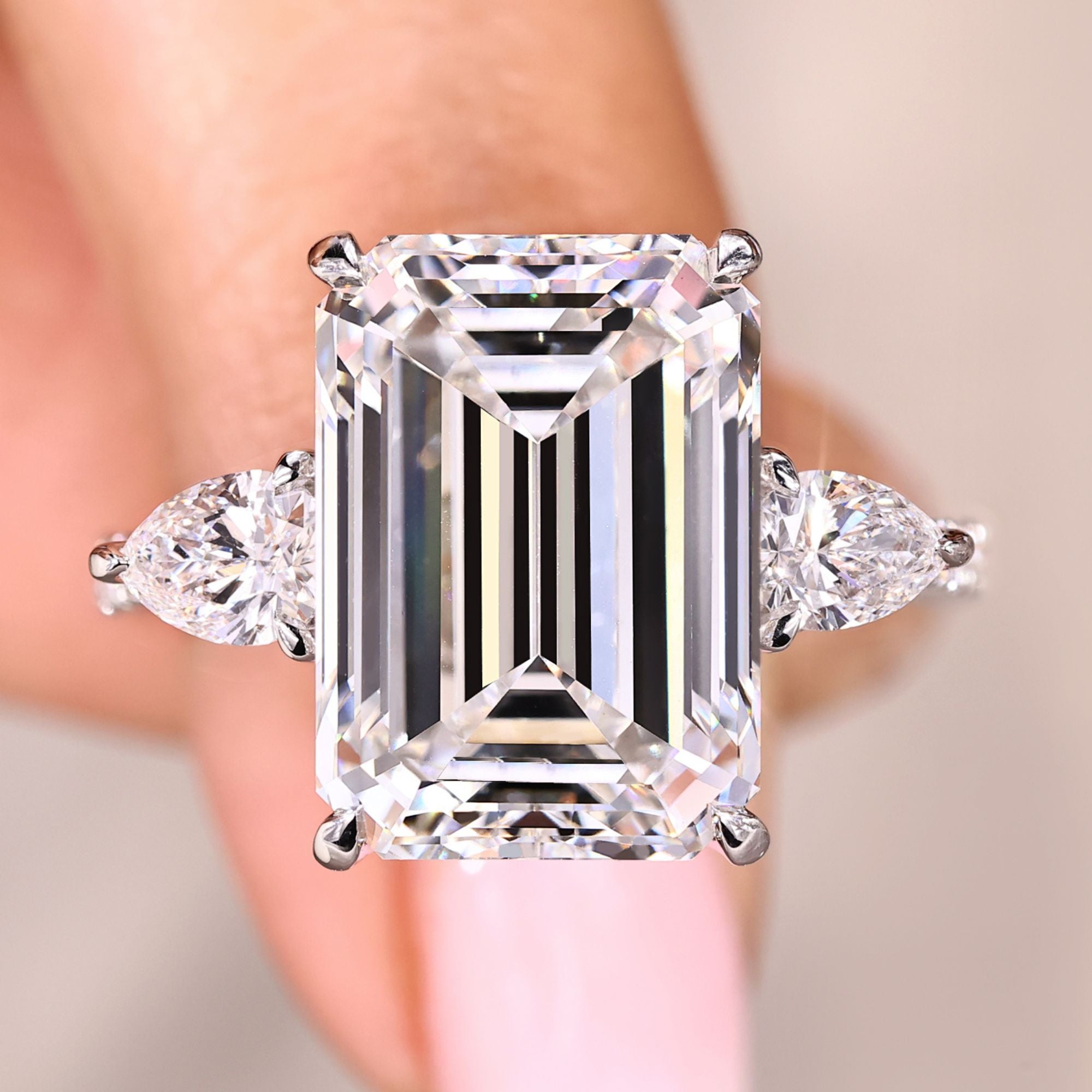
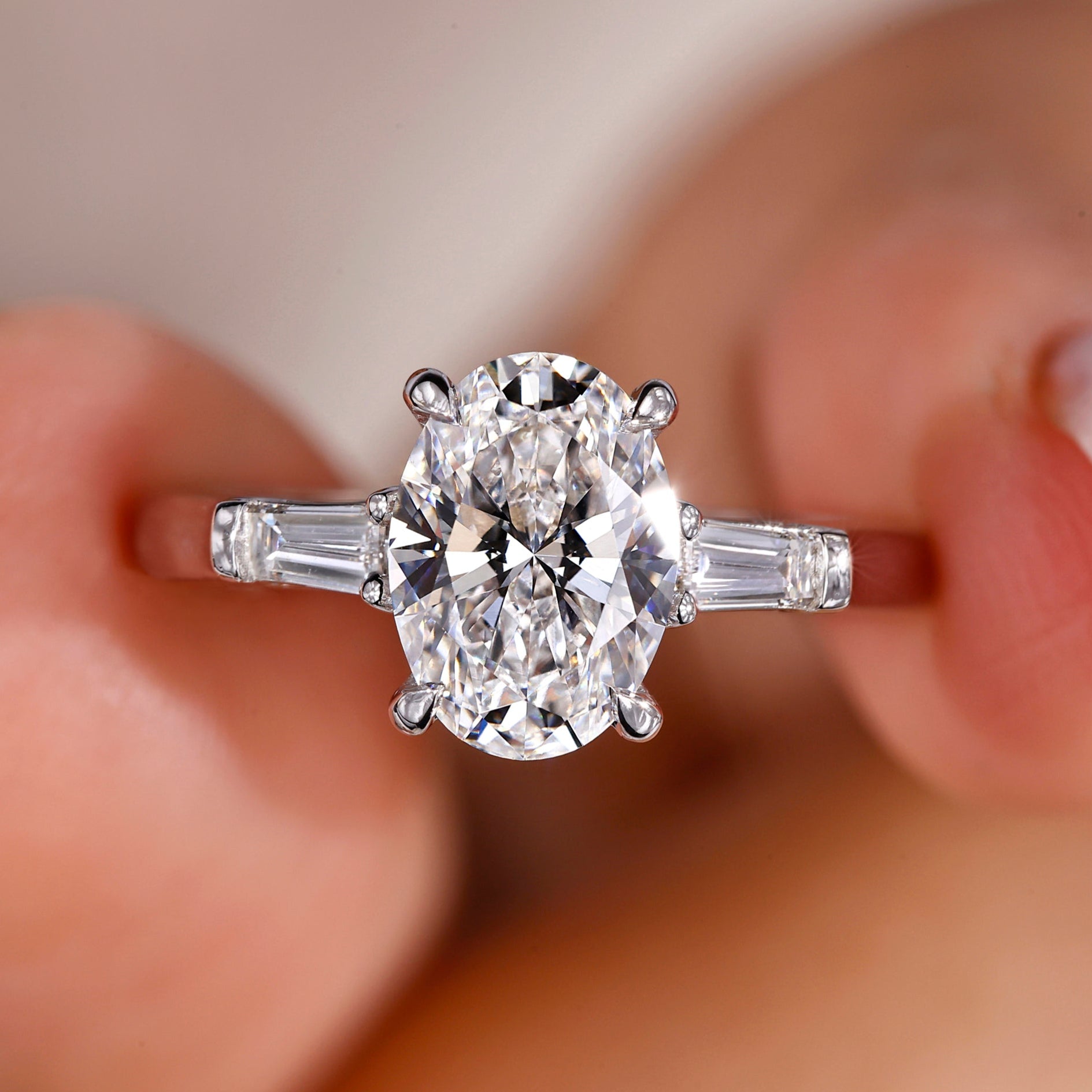
Three-stone settings can work particularly well with elongated center diamonds. For an emerald, tapered baguettes or other geometric side stones can reinforce the straight lines. Oval centers can be paired with round or pear-shaped side stones for a softer combination. The side stones should be proportionate to the center diamond so they support rather than overpower it.
Halo and Hidden Halo
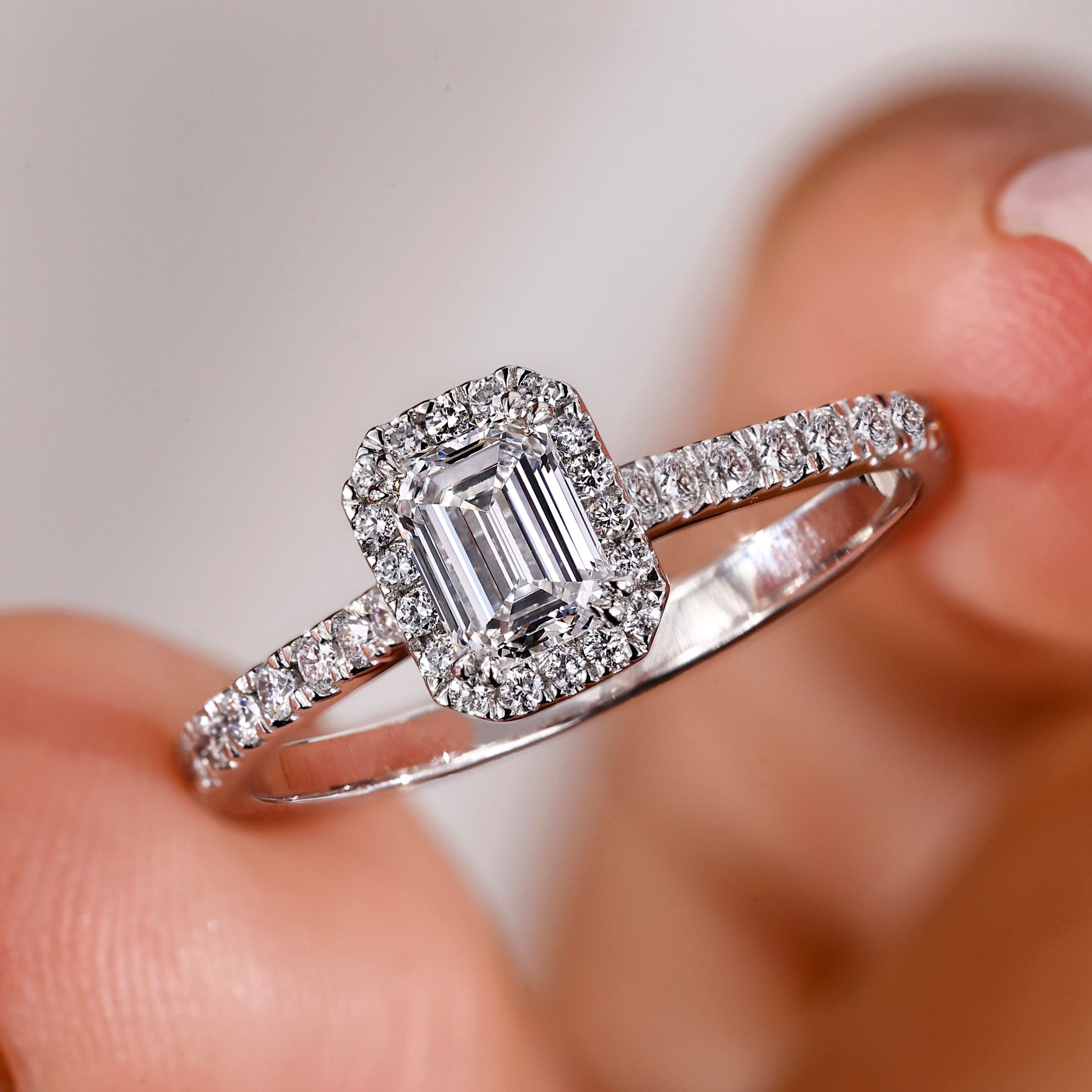
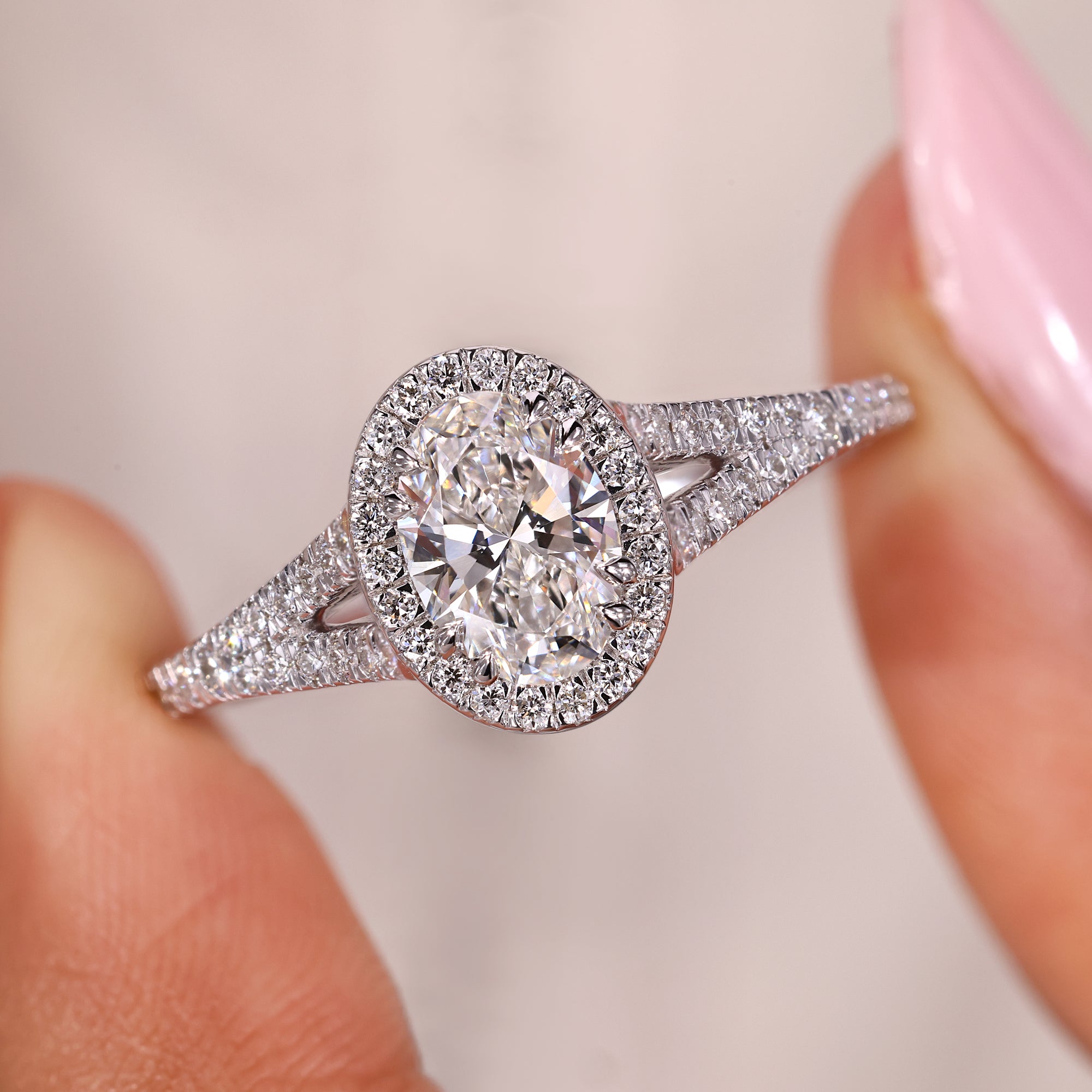
A halo adds smaller diamonds around the center stone and can increase the overall visual presence of the ring. A halo around an emerald can emphasize its rectangular outline, while a halo around an oval can reinforce its rounded shape and add additional sparkle. A hidden halo places smaller stones beneath the center diamond, giving the ring extra detail without changing the main outline as much.
Bezel and Prong Settings
A bezel setting surrounds the diamond's outer edge with metal, offering more protection and creating a clean appearance.
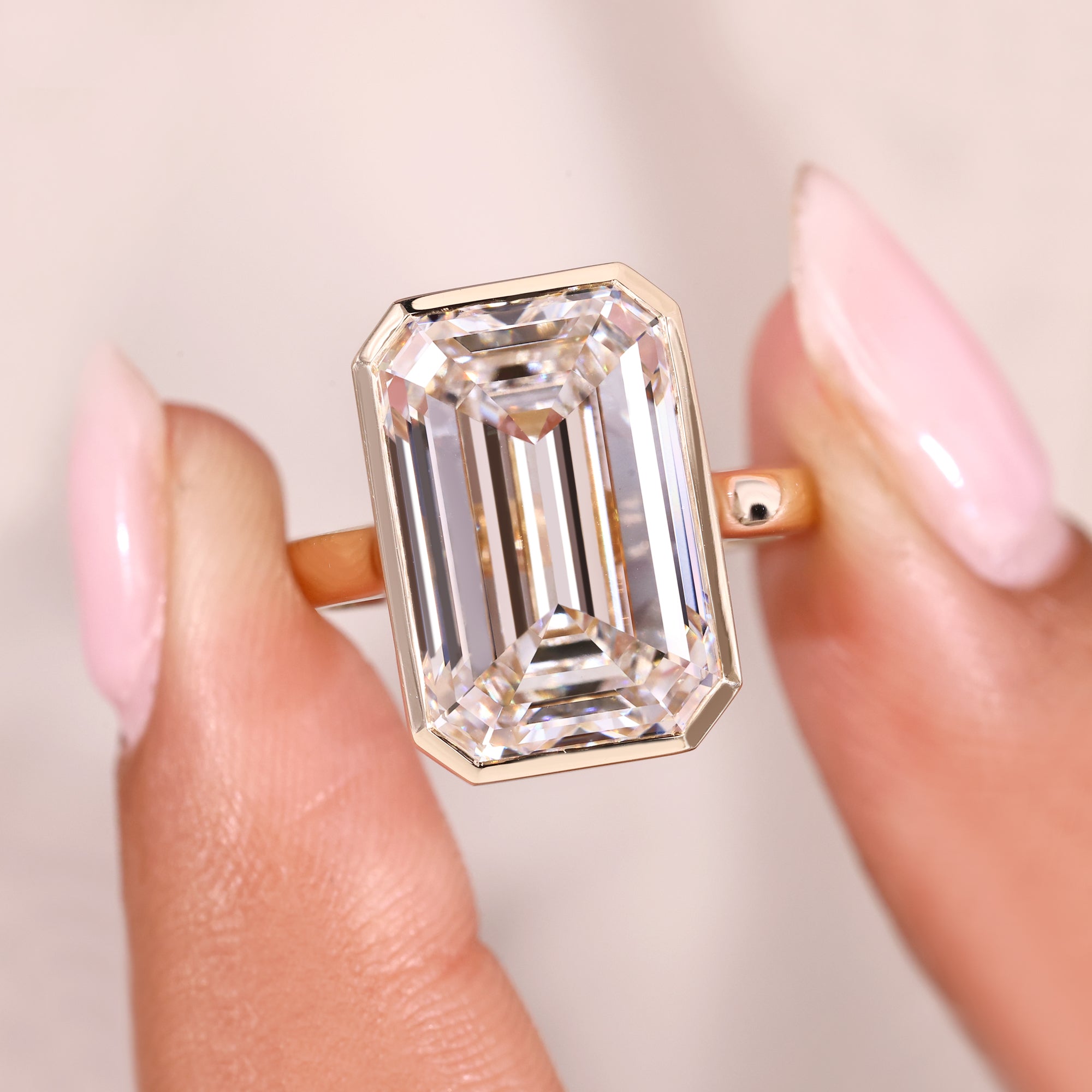

A prong setting leaves more of the diamond exposed and can allow more light to enter around the stone. For an emerald, secure corner protection is particularly useful. The right choice depends on how much of the diamond you want visible and how the ring will be worn.
East-West Settings
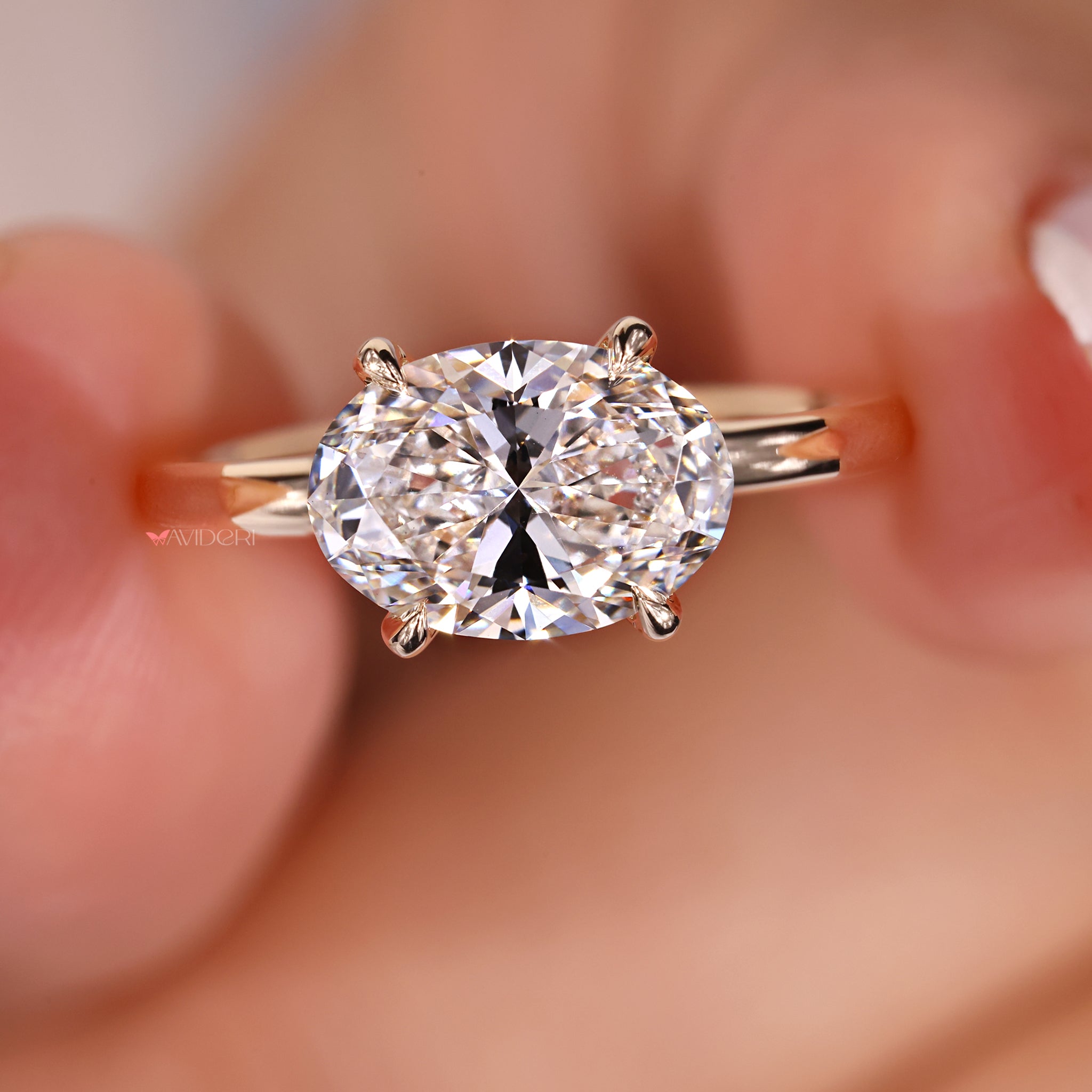
An east-west setting places an elongated diamond horizontally across the finger instead of vertically. This changes the entire appearance of an emerald or oval engagement ring. An east-west emerald can look especially geometric, while an east-west oval creates a softer horizontal silhouette. It is a useful option if you want an engagement ring that feels different from the usual vertical center-stone layout.
Metal Choices for Emerald and Oval Engagement Rings
- Yellow Gold: Adds warmth to both shapes and pairs well with the geometric look of an emerald cut or the rounded outline of an oval.
- White Gold: Creates a cooler appearance around the diamond and works well with clean, simple ring designs.
- Platinum: Offers a cool-toned setting that suits both emerald and oval diamonds, especially in minimal styles.
- Rose Gold: Adds a warm pink tone that can soften an emerald cut or complement the curved shape of an oval.
Wedding Bands and Ring Stacking
Bands for Oval Engagement Rings

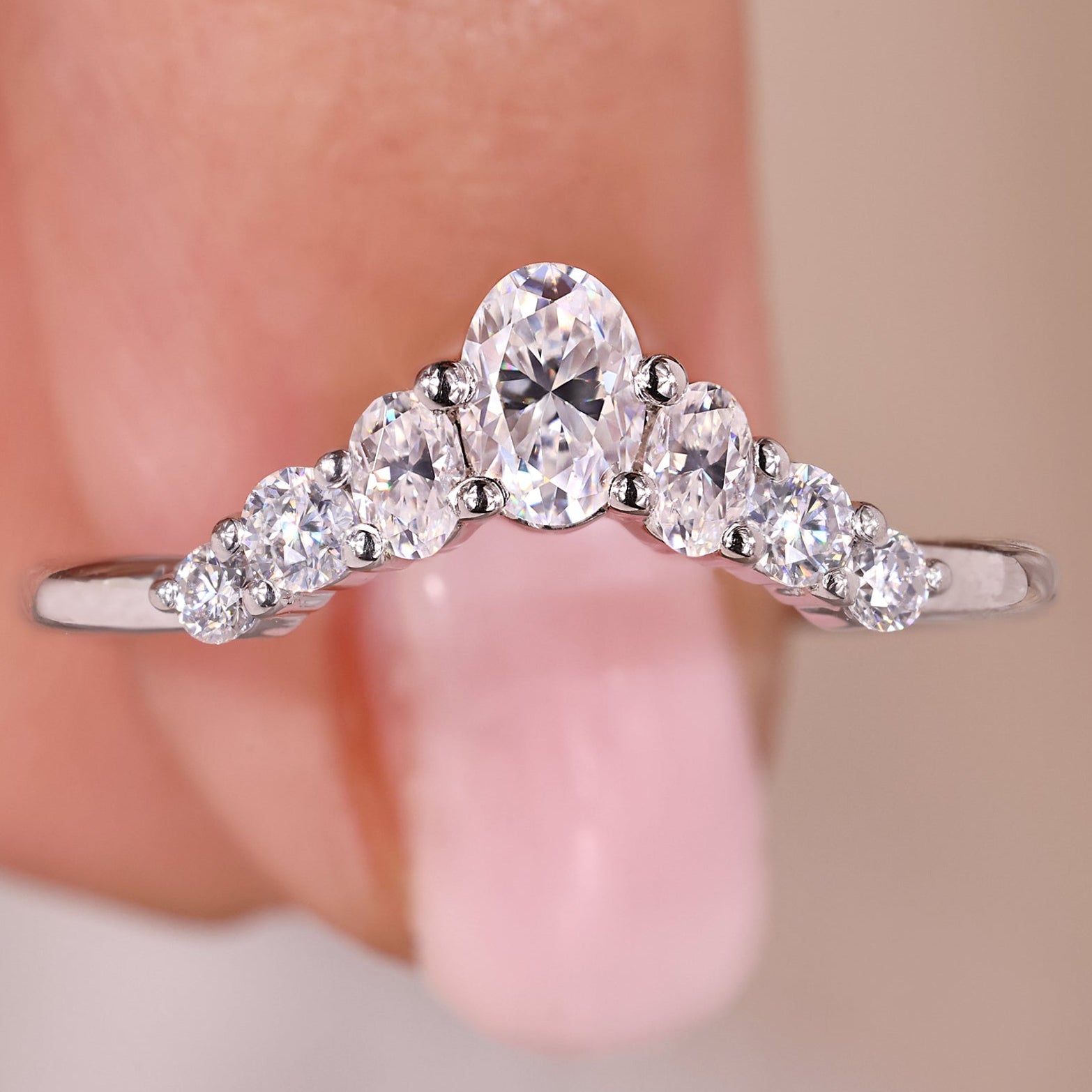
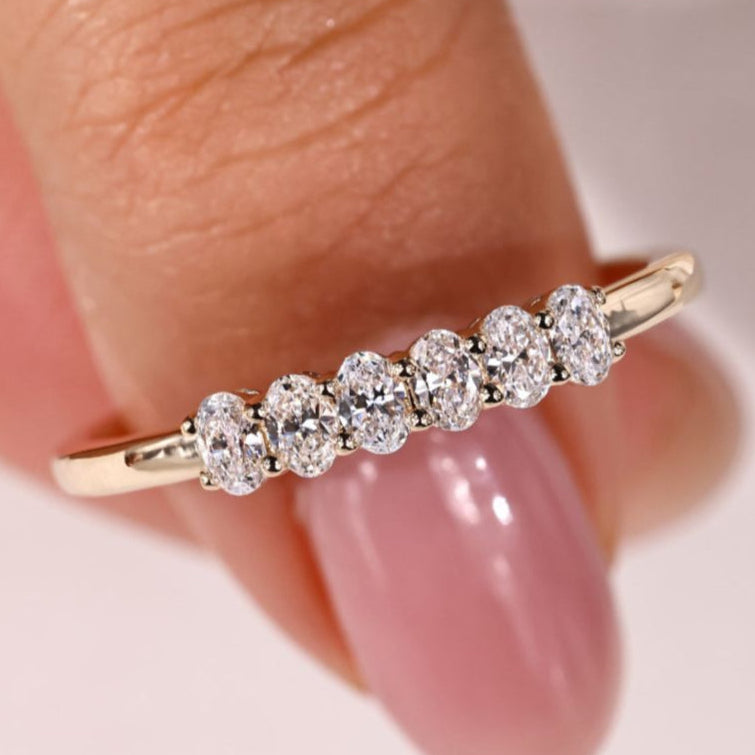
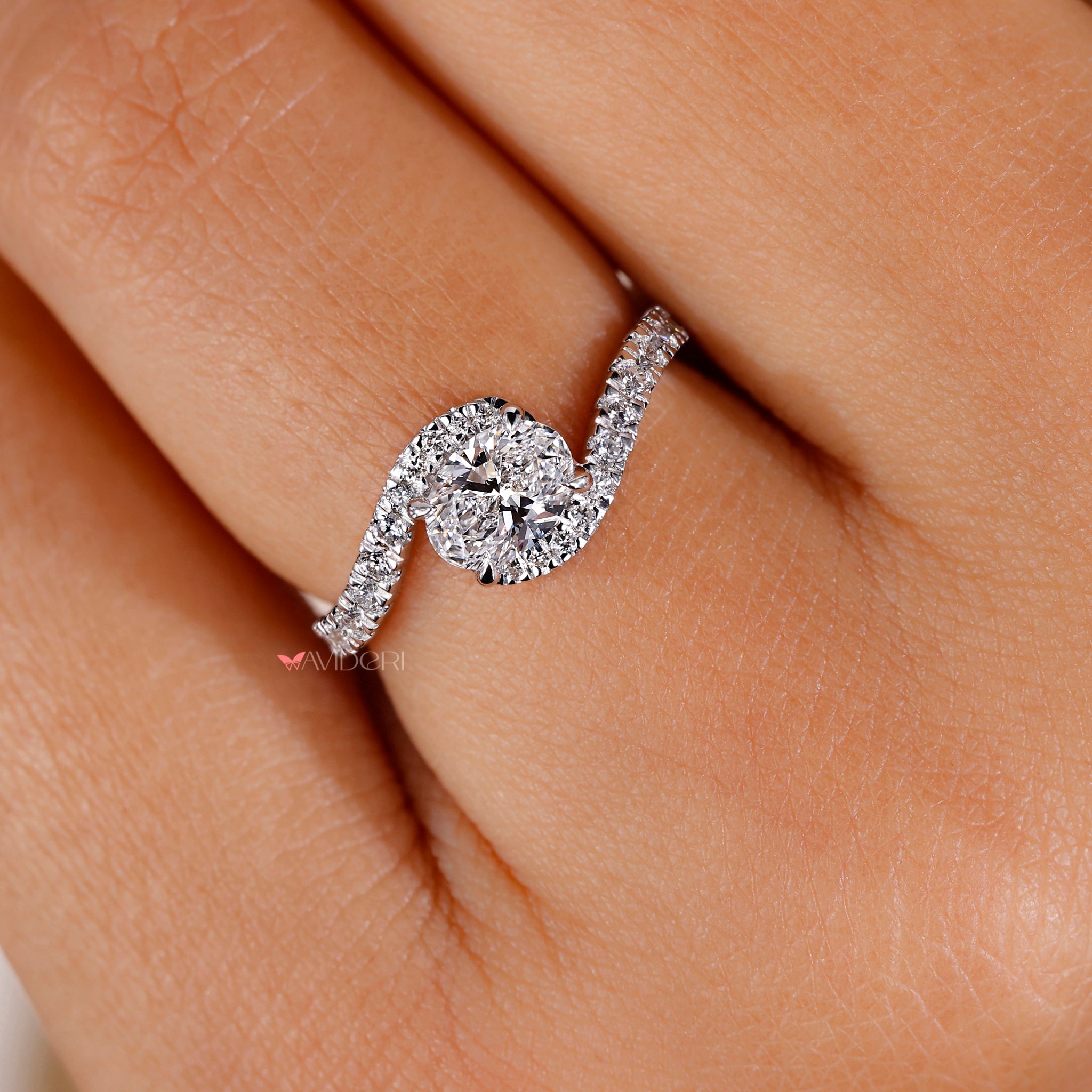
An oval engagement ring can pair with a curved or contoured band designed to follow the shape of the center setting. A straight band can also work, but depending on the setting, there may be a small space between the two rings. This is not necessarily a problem; it is simply something to check before choosing the band.
Bands for Emerald Engagement Rings
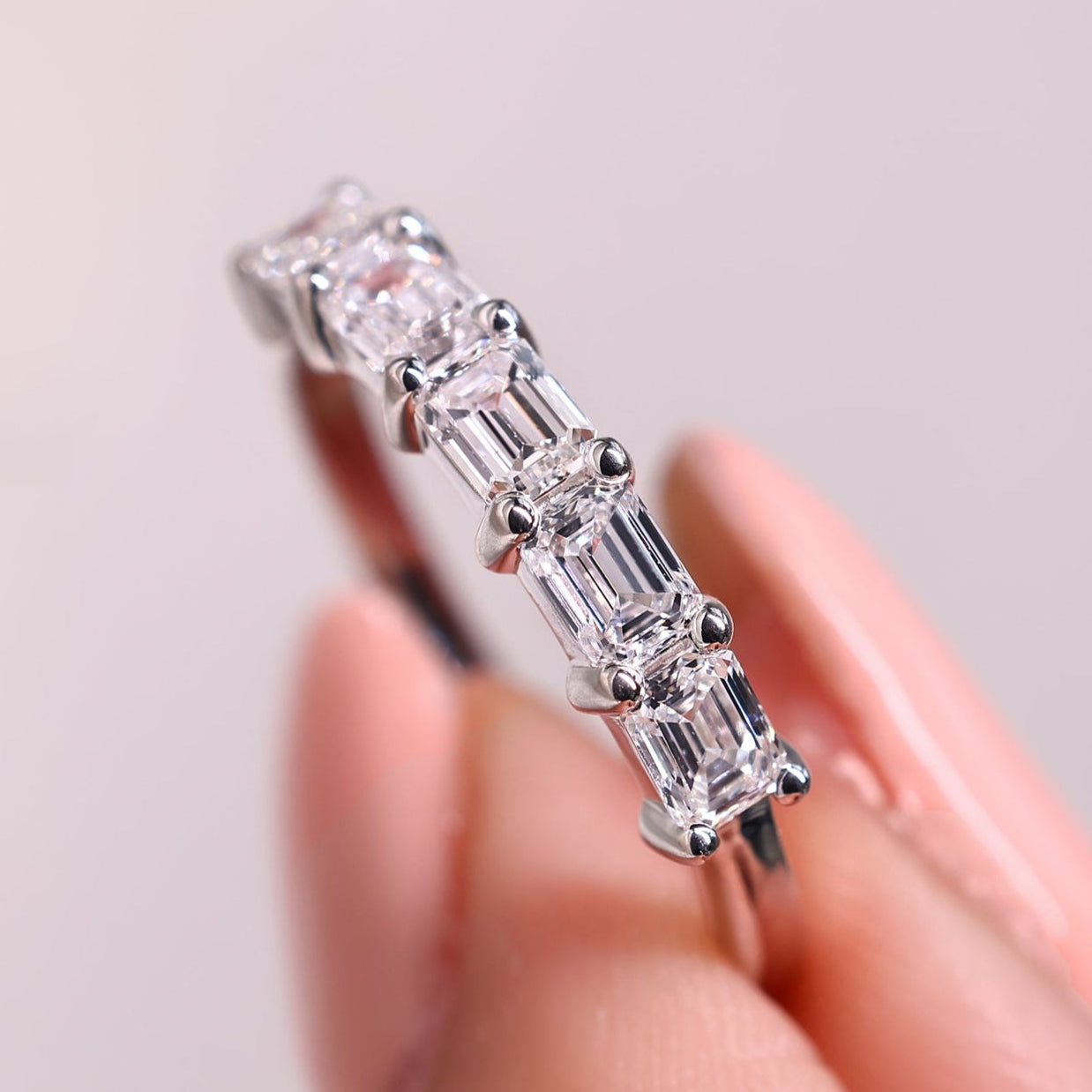
Emerald Cut Five Stone Diamond Band In White Gold
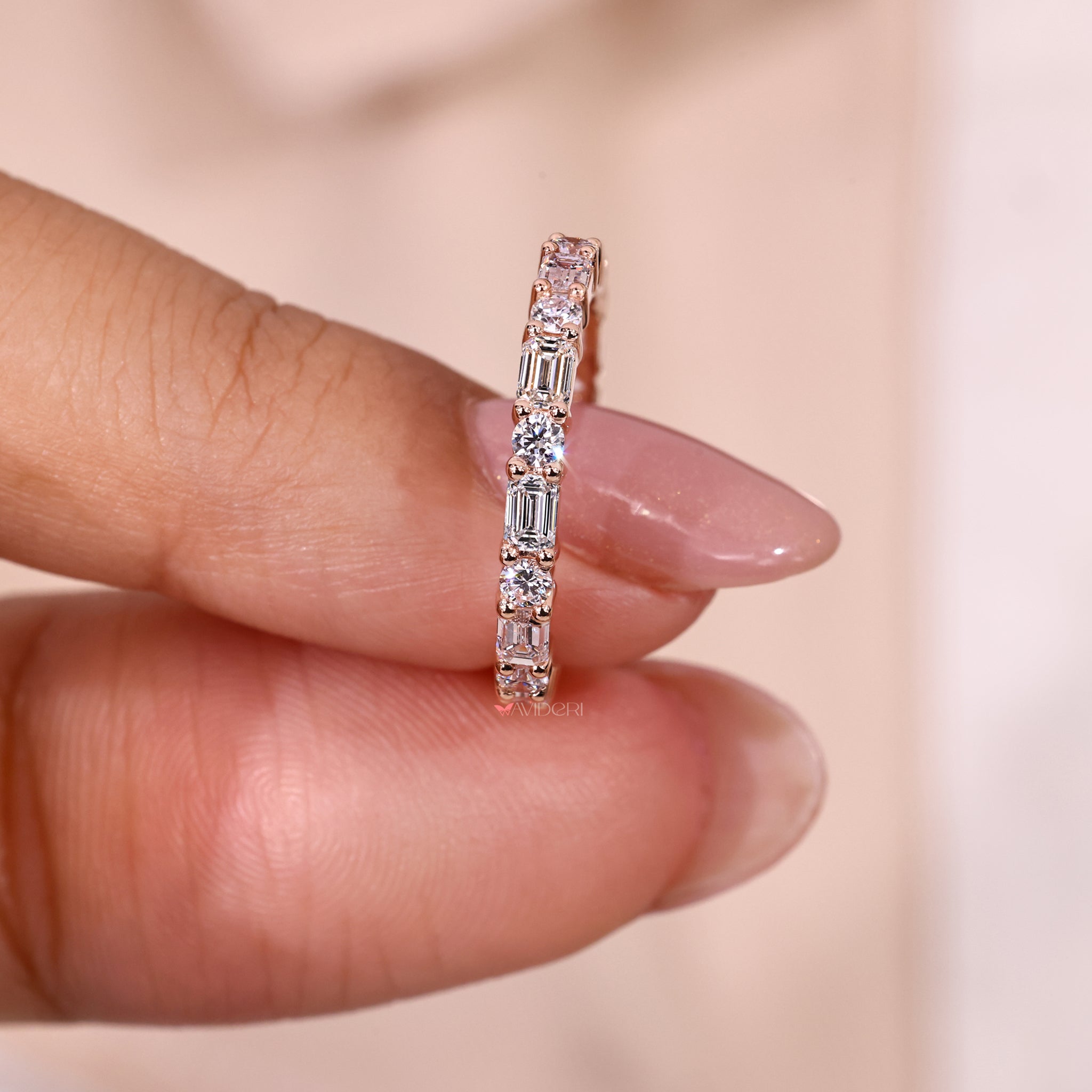
Emerald And Round Wedding Band Rose Gold Tone
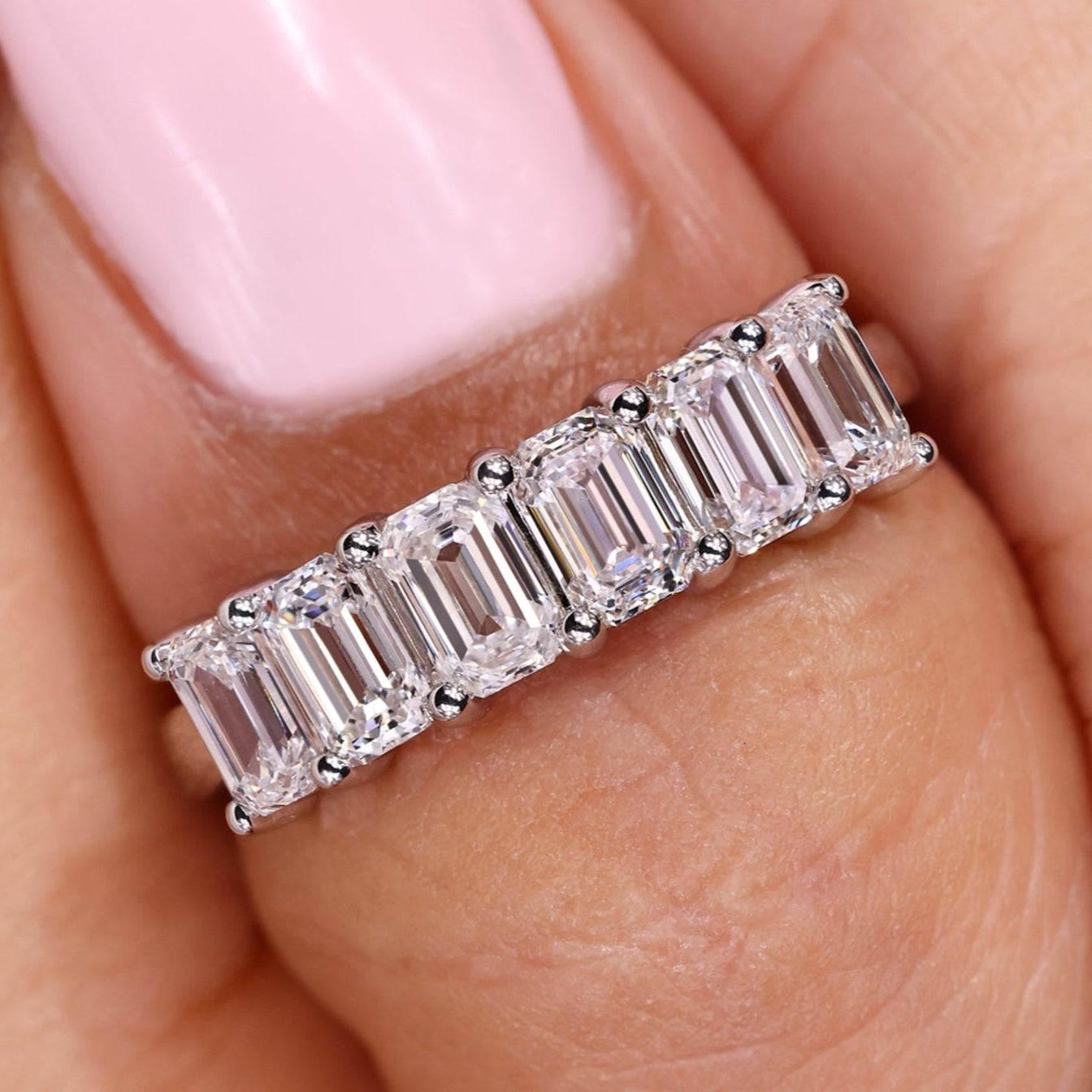
6 Emerald Diamond Wedding Band In White Gold
A straight wedding band can complement the emerald cut's geometric outline. Baguette bands can also work well when you want to continue the rectangular look through the ring stack.
Which Shape Fits Your Style?
Emerald May Suit You If You Prefer
- Clean geometric lines
- Vintage or Art Deco-inspired jewelry
- Broad flashes of light rather than intense sparkle
- A structured center stone
- Simple settings where the diamond remains the focus
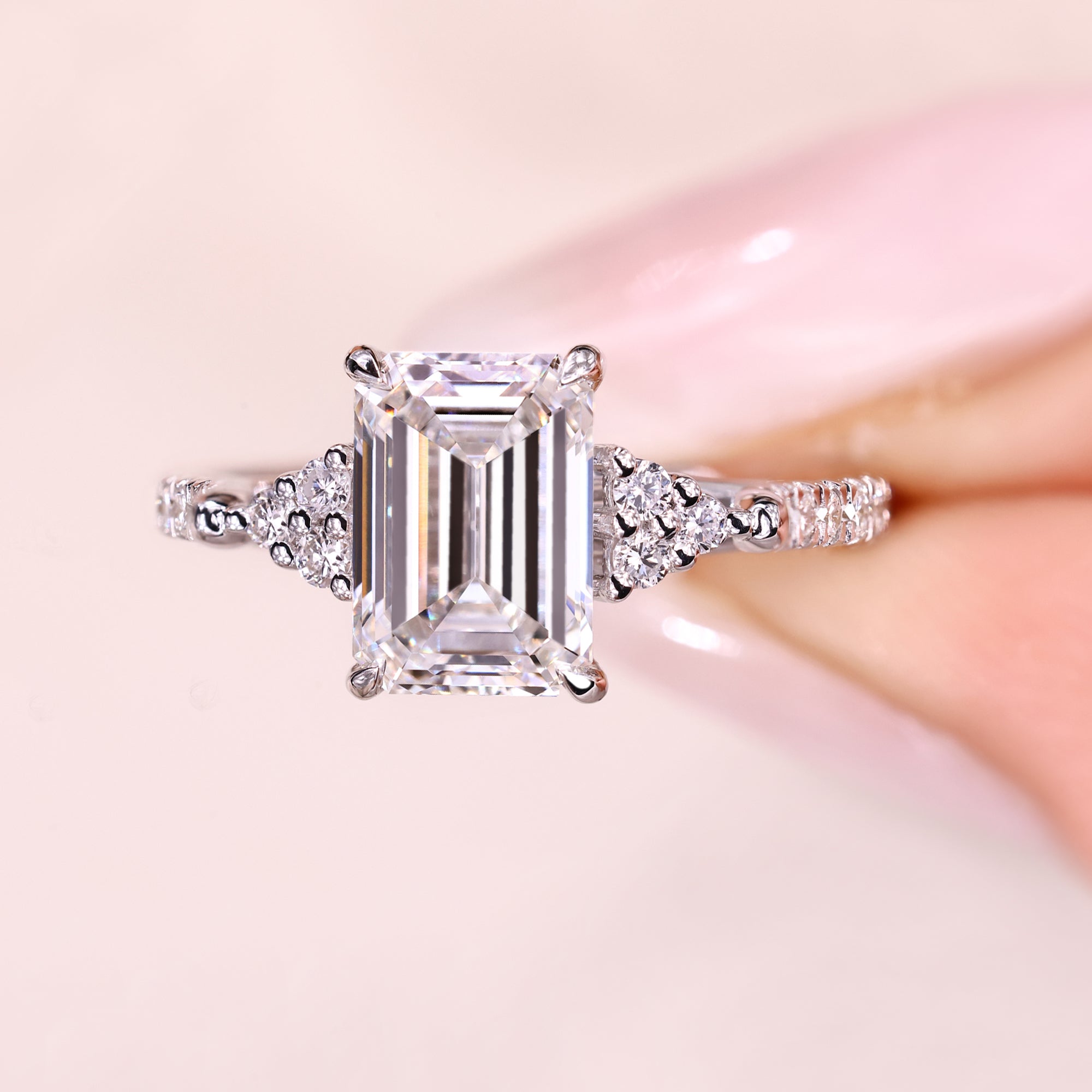
Muse Style Emerald Cut Diamond Engagement Ring
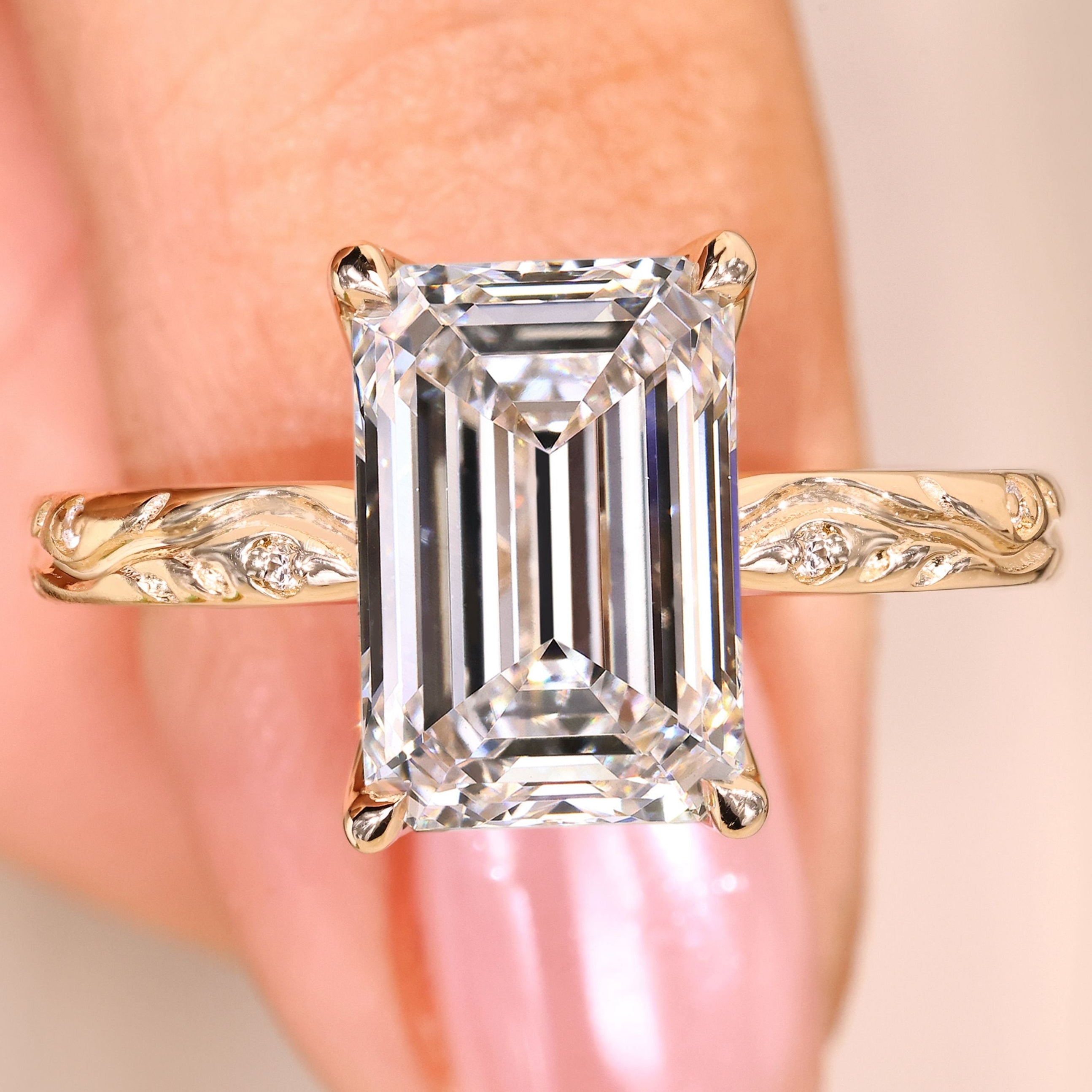
Hand Engraved Emerald Cut Diamond Ring in Nature Inspired Style
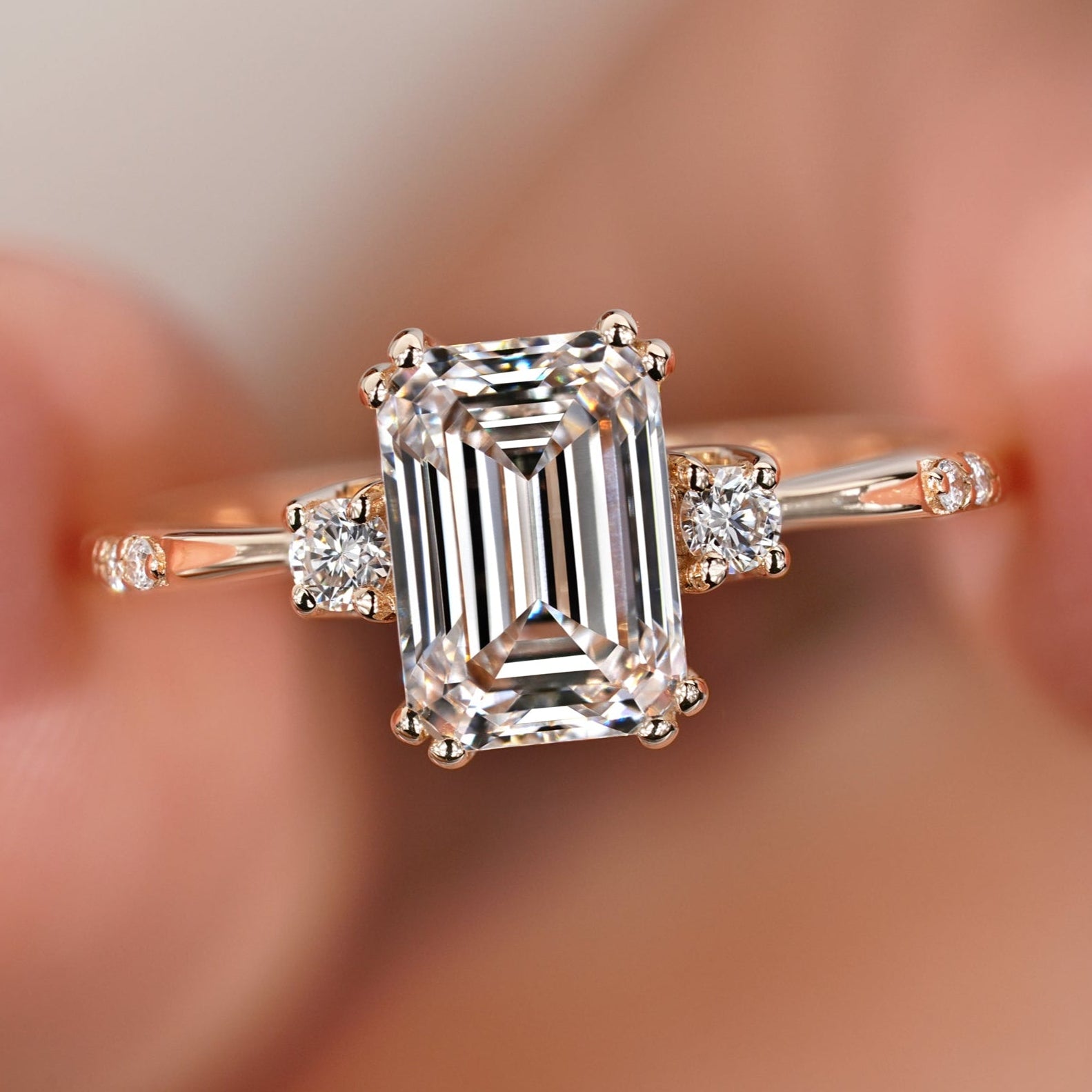
Emerald Engagement Ring - Three Stone Setting
An emerald cut engagement ring can be a strong match if you prefer a more architectural look and appreciate the way step-cut facets reveal the stone's clarity.
Oval May Suit You If You Prefer
- Rounded, elongated outlines
- Noticeable sparkle
- A softer visual appearance
- More variety in engagement ring settings
- The familiar look of brilliant-cut faceting in an elongated shape
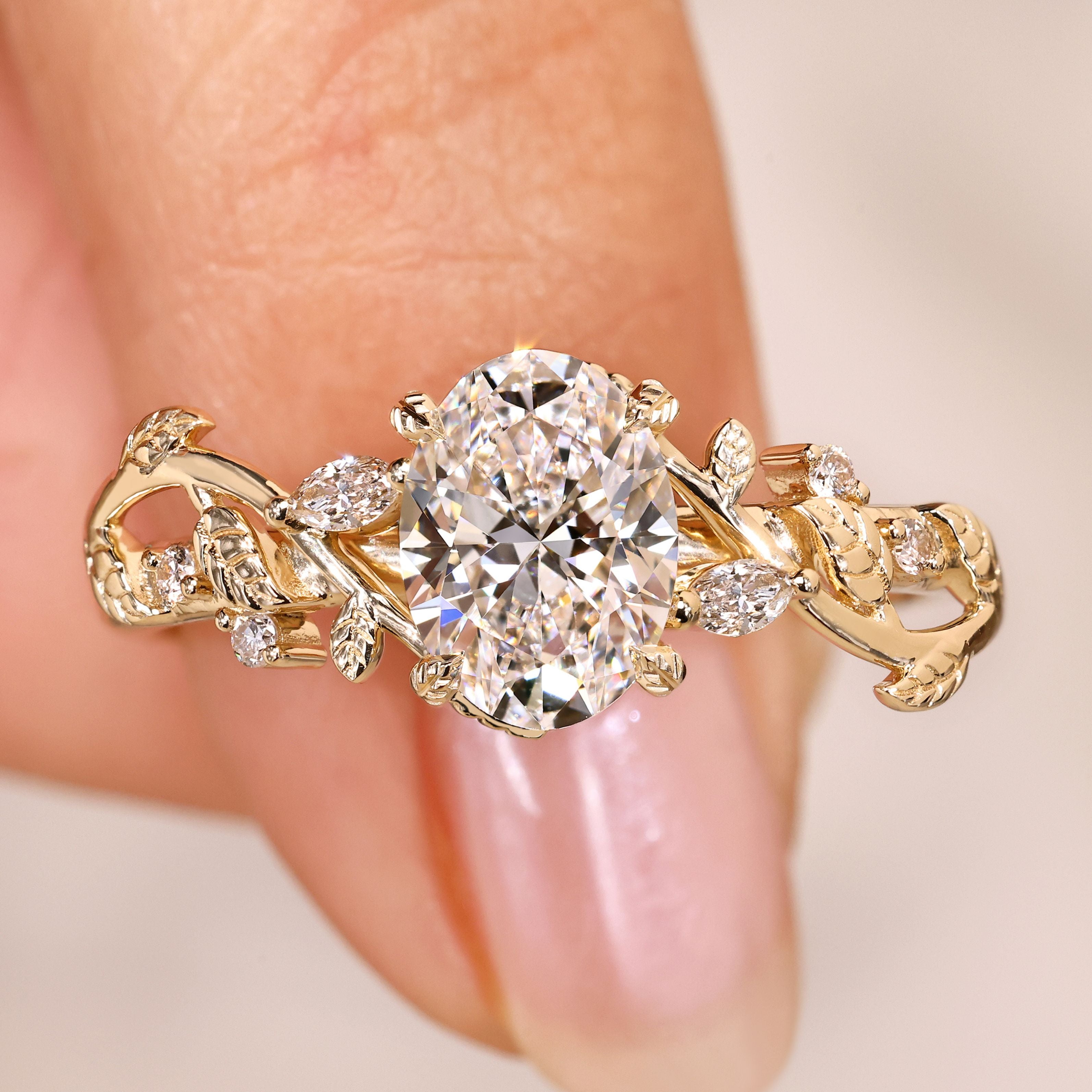
Oval Cut Diamond Engagement Ring in Nature Inspired Style
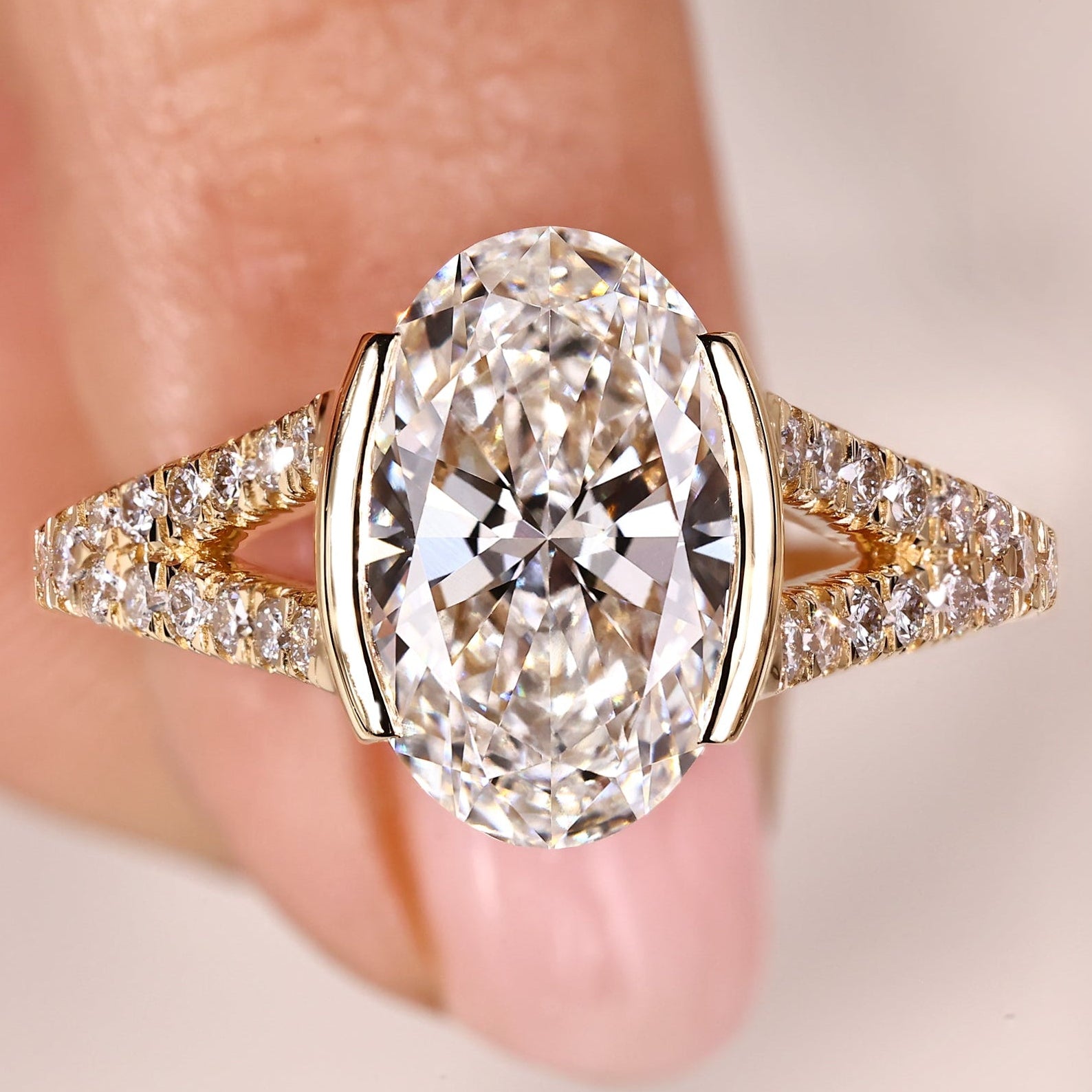
Oval Diamond Engagement Ring In Half Bezel Setting
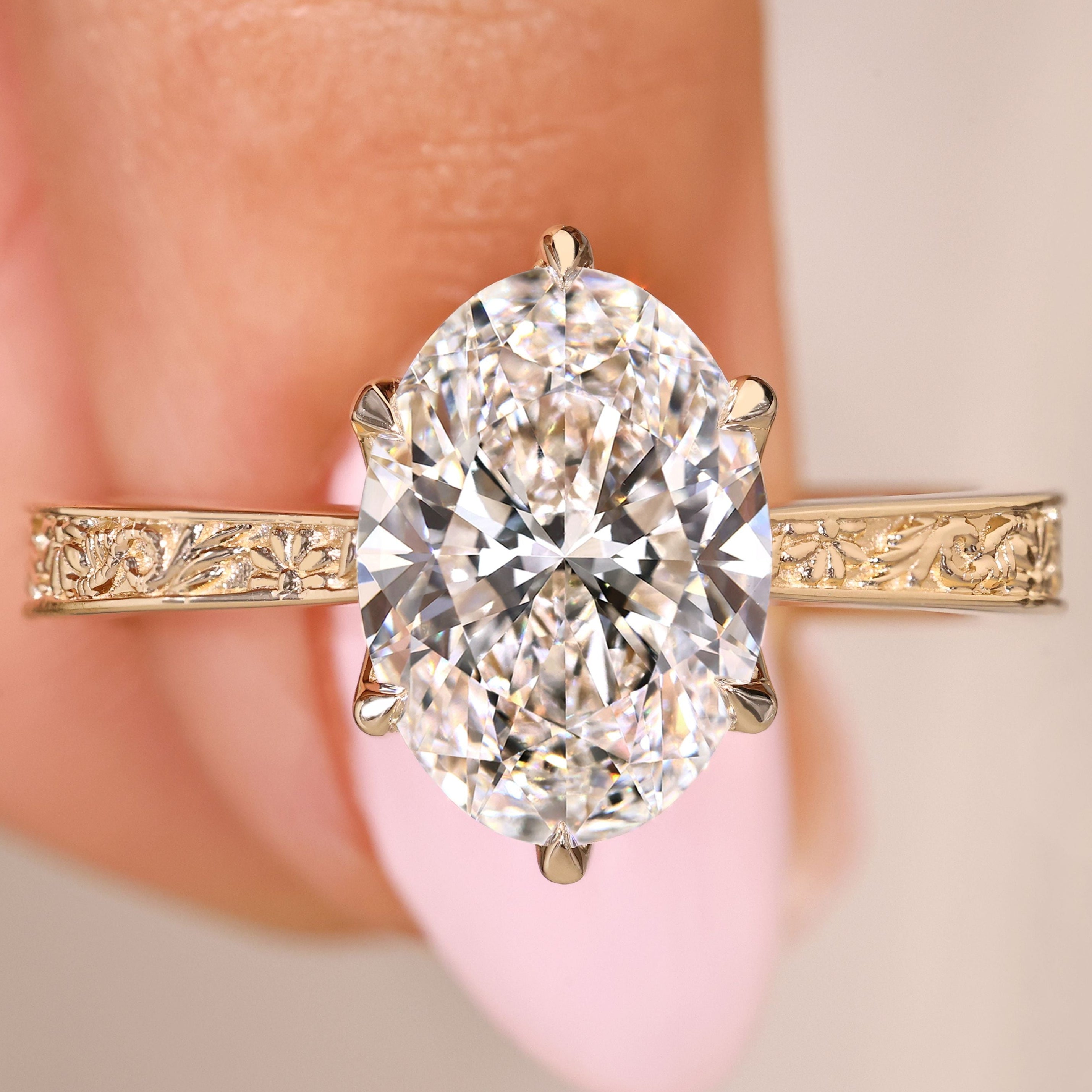
Oval Diamond Engagement Ring in Nature Inspired Style
An oval engagement ring can be a good fit if you want an elongated center stone but still want the lively sparkle associated with brilliant cuts.
Tips Before You Buy
Check the Diamond's Proportions
Compare the length-to-width ratio, measurements, and depth rather than relying only on carat weight. For ovals, check the bow-tie effect, while emerald cuts should be inspected for visible inclusions through the open center.
Review the Diamond Certificate
Check the grading report for carat weight, color grade, clarity grade, measurements, and other important details. For a lab-grown diamond, confirm that the report clearly identifies its laboratory-grown origin.
Compare Both Shapes Side by Side
If you are choosing between an oval or emerald engagement ring, compare similar diamonds under the same lighting. This makes it easier to see the difference between an emerald’s broad reflections and an oval’s brighter sparkle.
Try the Rings on Your Hand
Seeing both shapes on your own hand can help you compare finger coverage, stone length, and how the setting looks. If you plan to wear a ring stack, try the engagement ring with your preferred wedding band as well.
Conclusion
Choosing between emerald vs oval engagement rings ultimately comes down to the look you want from your center diamond. Emerald cuts offer step-cut facets, broad reflections, and a geometric outline, while oval cuts bring brilliant-cut sparkle and a softer elongated shape. Compare both stones by their proportions, clarity, color, setting, and face-up appearance. Most importantly, try both on your hand before deciding which one feels right for your engagement ring.
Emerald or Oval? Choose Your Look
Compare the structured look of an emerald cut with the brighter sparkle of an oval, then personalize your preferred design with Avideri to create a ring that reflects your taste.


